


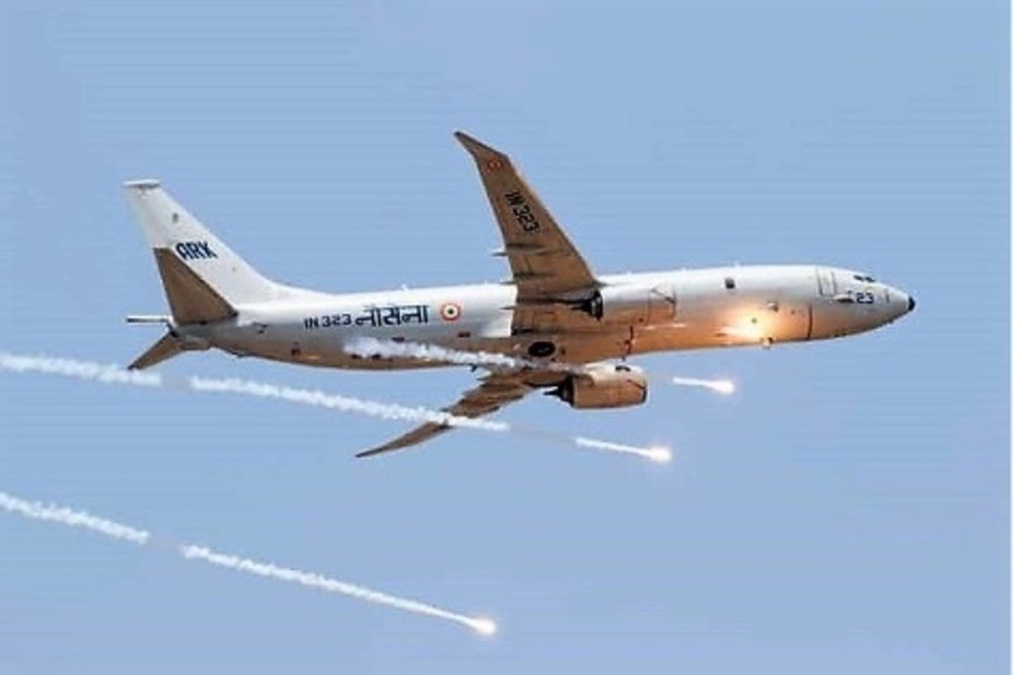
New Delhi: The Indian Navy on Wednesday marked 50 years of long-range maritime reconnaissance (LRMR) operations, highlighting the evolution of its airborne surveillance capability from the Lockheed Super Constellation to the Boeing P-8I.
The milestone coincides with the golden jubilee of Indian Naval Air Squadron (INAS) 312, known as the “Albatross”, which was commissioned at INS Hansa in Goa on November 18, 1976. The Navy said its LRMR aircraft have supported major operations, including Operations Cactus, Vijay, Parakram and Sindoor, as well as anti-piracy and search-and-rescue missions.
But what exactly is long-range maritime reconnaissance, how do these aircraft operate and why is the capability important for India’s security?
What is long-range maritime reconnaissance?
Long-range maritime reconnaissance refers to the use of aircraft to monitor large areas of the sea, gather intelligence and identify potential threats. These aircraft act as the Navy’s eyes in the sky, helping it build a picture of activity across the ocean.
They can locate and track ships, monitor important shipping routes, identify suspicious movements and provide information to naval vessels. Their role is particularly important because warships cannot be present everywhere at once, while aircraft can cover large distances in a relatively short time.
The capability also supports anti-submarine warfare, which involves detecting, tracking and responding to hostile submarines operating beneath the surface.
How do reconnaissance aircraft detect submarines?
Finding a submarine is more difficult than spotting a ship because it can remain underwater and avoid direct observation. Maritime patrol aircraft use a combination of sensors and equipment to locate such threats.
One important tool is the sonobuoy – a small device dropped into the sea that uses underwater sound to detect possible submarine activity and transmits information to the aircraft. Radar and other sensors help identify surface vessels and monitor maritime movements.
Once a potential threat is detected, the aircraft can track its location and share information with naval ships and other platforms. Some maritime patrol aircraft can also carry weapons, including torpedoes and anti-ship missiles, allowing them to engage targets if required.
Why is the P-8I important for India?
The Boeing P-8I is the Navy’s multi-mission maritime patrol aircraft, designed for long-range surveillance, anti-submarine warfare and anti-surface warfare.
Based on the Boeing 737-800 aircraft, it combines advanced sensors, radar and communication systems to monitor wide areas of the sea. It can detect and track surface vessels, search for submarines, gather intelligence and support search and rescue operations.
India received its first P-8I at INS Rajali in Arakkonam, Tamil Nadu, in May 2013. The aircraft was dedicated to the nation in November 2015. The Navy currently operates P-8I aircraft through INAS 312 at INS Rajali and INAS 316 at INS Hansa in Goa.
How has India’s maritime surveillance capability evolved?
The Navy took responsibility for long-range maritime reconnaissance after the 1971 war, recognizing the need for shore-based patrol aircraft that could work alongside ships and helicopters.
INAS 312 began operations in 1976 with five Super Constellation aircraft transferred from the Indian Air Force. The Ilyushin Il-38 followed in 1977, strengthening reconnaissance and anti-submarine warfare capabilities. The Tupolev Tu-142M, inducted in 1988, extended the Navy’s patrol reach across the Indian Ocean Region.
The P-8I later brought more advanced surveillance and operational capabilities. The Navy’s Il-38 aircraft were decommissioned in 2023 after 46 years of service.
Why does this matter in the Indian Ocean?
The Indian Ocean is a major route for international trade and energy supplies. It also has strategic importance because of the movement of commercial vessels and military ships through the region.
Monitoring these waters helps India maintain awareness of maritime activity, protect its interests and respond to emergencies or potential threats. Reconnaissance aircraft can also support anti-piracy patrols and locate vessels or people during search and rescue operations.
The Navy’s 50-year milestone reflects how maritime surveillance has developed from an early patrol capability into a multi-mission operation central to India’s maritime security.