


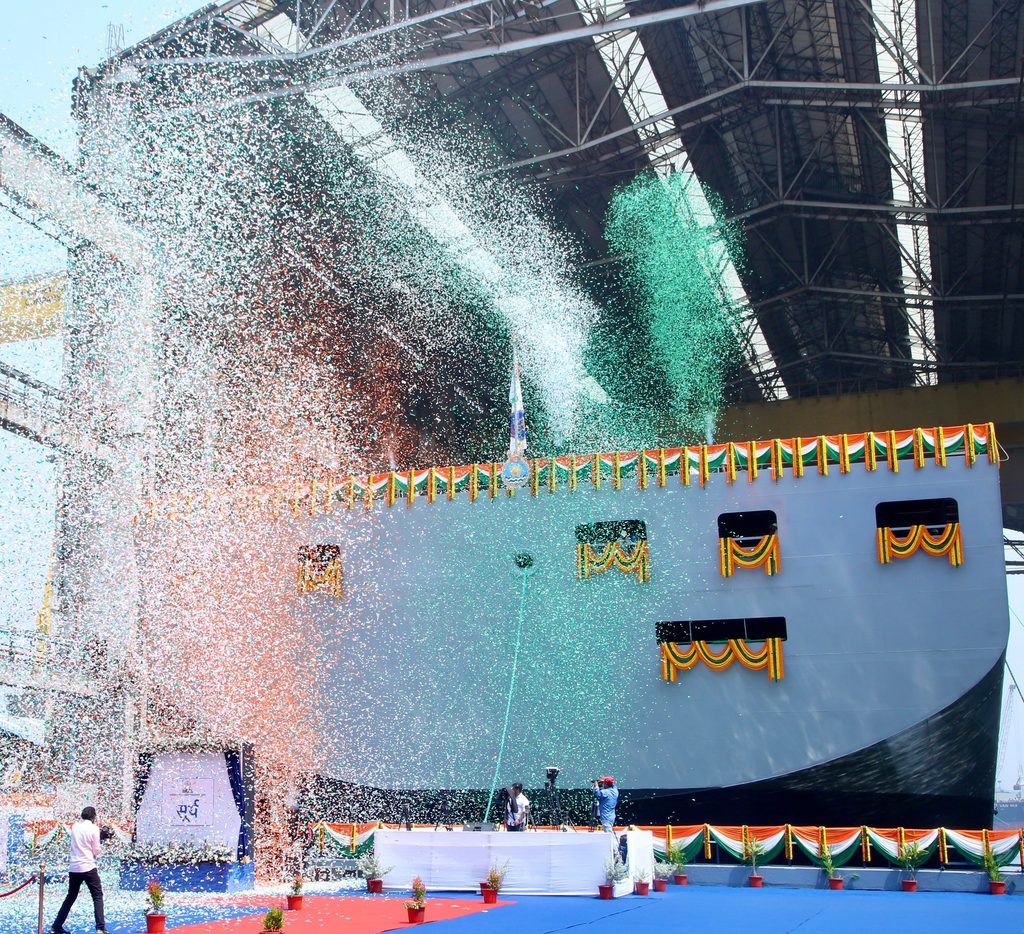
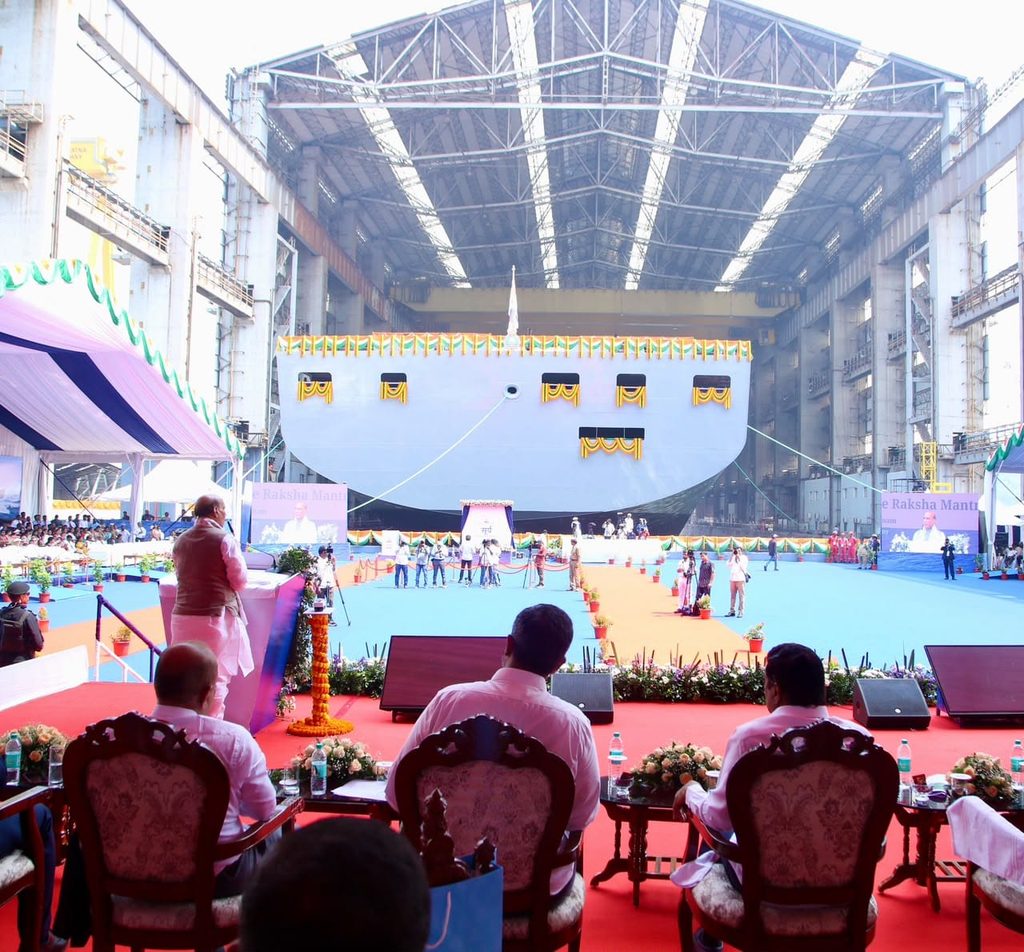
New Delhi: The defence minister, Rajnath Singh, on Tuesday launched India’s first indigenous fleet support ship, INS Surya, at Hindustan Shipyard Limited (HSL) in Visakhapatnam, adding a logistics platform intended to extend the Indian Navy’s reach and endurance at sea. He also laid the keel of the fifth ship in the programme and inaugurated an upgraded slipway and a 300-tonne Goliath Crane, linking expansion of the Navy’s support fleet with greater domestic shipbuilding capacity.
“The launch of FSS-1 is a symbol of achievement, keel laying of FSS-5 is a symbol of resolve and the new Slipway is a symbol of our growing capability,” Singh said.

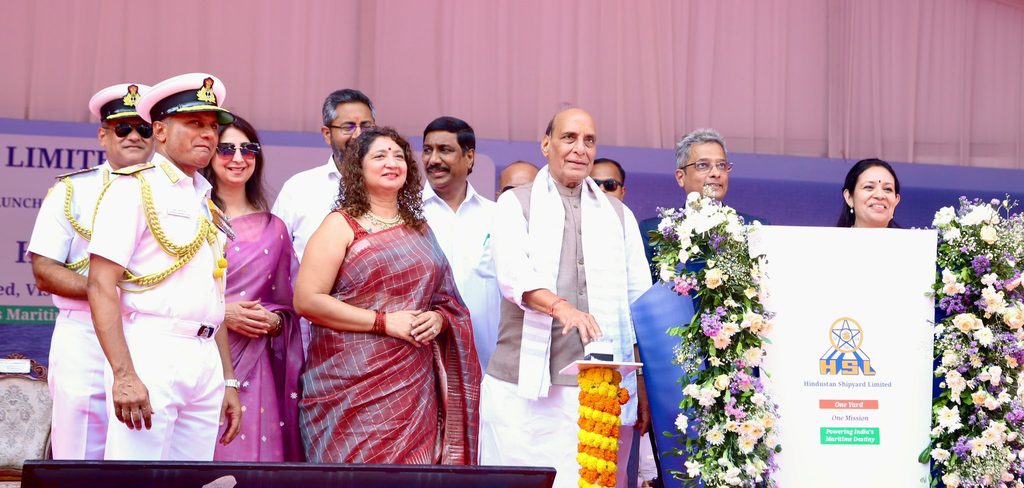
INS Surya is the first of five FSSs being built under an approximately ₹19,000 crore contract signed between the defence ministry and HSL in August 2023. The vessel entered the Bay of Bengal about 18 months after steel cutting, while deliveries under the programme are scheduled to begin from mid-2027.
The class comprises 43,500-tonne vessels, according to PIB. Earlier defence ministry releases said the ships displace more than 40,000 tonnes and will carry fuel, water, ammunition and stores for replenishing warships at sea.
Longer endurance at sea
Unlike a frontline combat warship, an FSS is primarily a naval logistics platform. By transferring fuel, water, ammunition and stores at sea, it allows warships to remain deployed for longer without returning to harbour.
The ships will also have enhanced cargo and fluid capacity, onboard first-line maintenance workshops, a helicopter deck for multi-role helicopter operations and self-defence systems. In a secondary role, they are intended to support humanitarian assistance and disaster relief and non-combatant evacuation operations.

Singh said the programme would strengthen the Navy’s reach, endurance and operational effectiveness in the Indian Ocean Region.
The keel laying of FSS-5 follows its steel cutting ceremony in May, showing progress across the five-ship programme. HSL has also contracted part construction of two vessels to Larsen & Toubro’s Kattupalli shipyard to use wider domestic shipbuilding capacity and support delivery schedules.
HSL expands capacity
The upgraded Slipway-4 has been extended and strengthened to allow HSL to build and launch ships of up to 45,000 deadweight tonnes. That figure refers to the shipyard infrastructure, not to INS Surya’s displacement.
The 300-tonne Goliath Crane spanning slipways 3 and 4, designed and manufactured by L&T Geostructure with Konecranes, will allow heavier ship blocks to be handled for modern modular construction. Its systems include programmable controls, tandem lifting, remote diagnostics and condition monitoring.

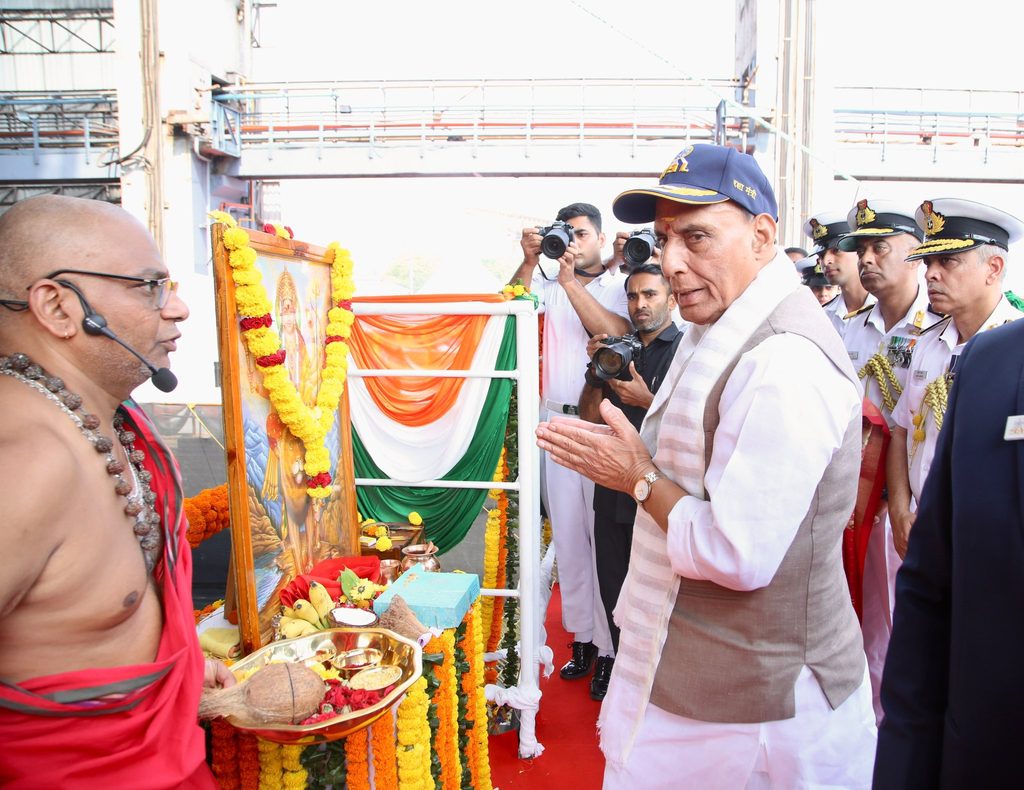
HSL’s shipbuilding legacy dates back to the launch of Jala Usha at Visakhapatnam in 1948, which Singh recalled as the first ship built in independent India. He described the shipyard as a custodian of India’s maritime capability, with more than eight decades of contribution to defence and maritime requirements.
Singh called for Visakhapatnam to be developed as a major maritime industrial hub by integrating the Eastern Naval Command, naval dockyard, HSL, Visakhapatnam Port, industry and skilled manpower. He said micro, small and medium enterprises, universities, technology companies and startups should become part of a wider shipbuilding ecosystem.

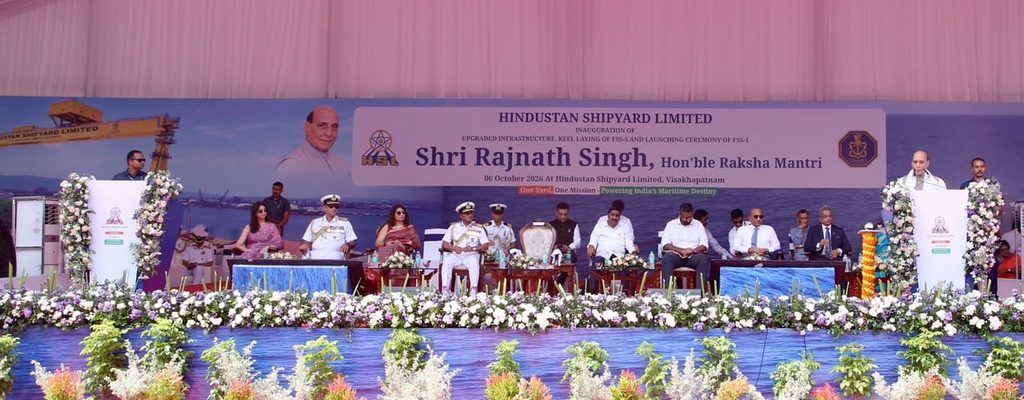
Singh said a national maritime ecosystem would require closer integration among the Navy, HSL, the Defence Research and Development Organisation, academia, industry, MSMEs and startups. “India’s maritime strength cannot be built by the Navy or shipyards alone,” he said.
HSL was granted Miniratna Category I status in 2025. Singh said Indian shipyards must move beyond self-reliance towards global competitiveness in quality, productivity, technology, cost, delivery and reliability.

He also called for timely delivery to become an organizational culture at HSL, stronger indigenous design and lifecycle capability, closer Navy-shipyard coordination and greater participation in international shipbuilding, repair and maintenance markets.
“Our goal should be simple and clear – Design better. Build faster. Deliver on time. Operate efficiently and do Maintenance effectively,” he said.