


New Delhi: The Indian Navy is set to mark a major milestone in its indigenous naval modernization programme with the commissioning of three domestically built frontline vessels – Dunagiri, Sanshodhak and Agray – at a ceremony in Kolkata on June 21. The event will be attended by the prime minister, Narendra Modi, and senior defence officials.
After their commissioning into the Navy, they will be prefixed with the initials “INS” – for “Indian Naval Ship”.
Built at Garden Reach Shipbuilders & Engineers (GRSE) in Kolkata, the three vessels represent different operational roles within the Navy, ranging from high-end maritime warfare and anti-submarine operations to hydrographic surveying and maritime data collection.
Among the vessels being inducted, INS Dunagiri is the fifth warship of the Project 17A stealth frigate class. The frigate is intended to conduct multi-role combat operations and is fitted with sophisticated sensors, network-centric warfare systems and a variety of weapons including BrahMos supersonic cruise missiles and the medium range surface-to-air missile (MRSAM) system. Its induction is anticipated to enhance the Navy’s capability to operate across the Indian Ocean region and beyond.
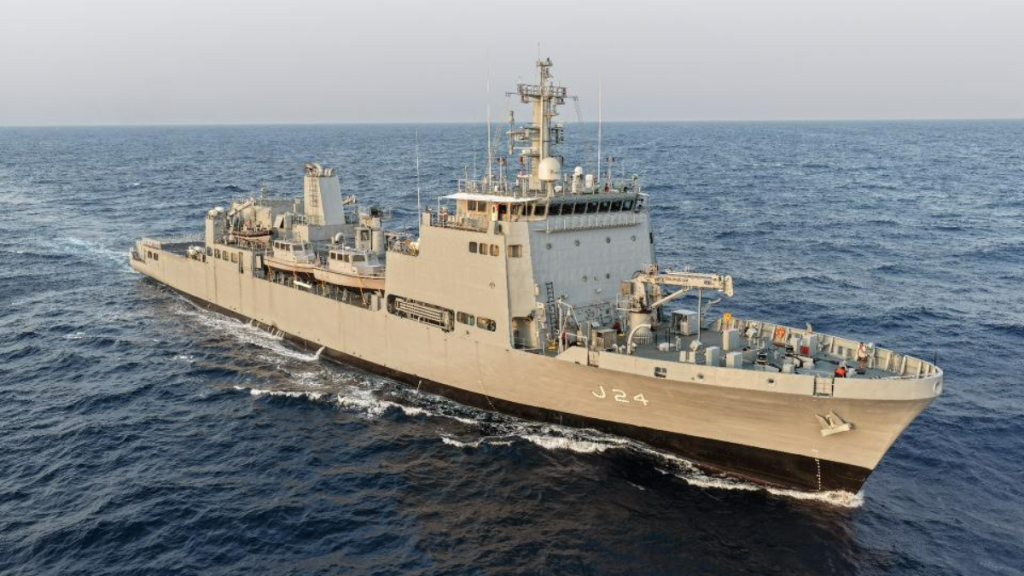
The second ship, INS Sanshodhak, is a large survey vessel designed to perform coastal and deep-sea hydrographic surveys. The ship will facilitate the gathering of oceanographic, geophysical and navigational data essential for both military operations and civilian maritime activities. Fitted with modern survey equipment, autonomous underwater vehicles and remotely operated systems, the vessel will boost India’s maritime domain awareness and seabed mapping capabilities.
The trio is rounded off by INS Agray, the fourth vessel in the Arnala-class anti-submarine warfare shallow-water craft programme. Designed for operations in coastal and littoral waters, the ship is fitted with lightweight torpedoes, indigenous anti-submarine rocket systems and advanced sonar technology to detect and neutralise underwater threats close to shore. The commissioning of the three platforms underscores the rapid growth of India’s indigenous shipbuilding sector.
The vessels had more than 75 per cent indigenous content and were built with contributions from over 200 Indian micro, small and medium enterprises (MSMEs), reflecting the growing participation of domestic industry in defence manufacturing. The defence ministry said the induction was another step in reducing dependence on foreign suppliers and enhancing the Navy’s operational capabilities in multiple domains. The three platforms are expected to strengthen India’s maritime security architecture, improve underwater surveillance and strengthen the country’s ability to protect its extensive coastline and strategic sea lanes.
The ceremony in Kolkata will also be a display of India’s advancement in naval design and construction, a mirror of years of investment into domestic shipbuilding and the broader drive for self-sufficiency in defence production.