


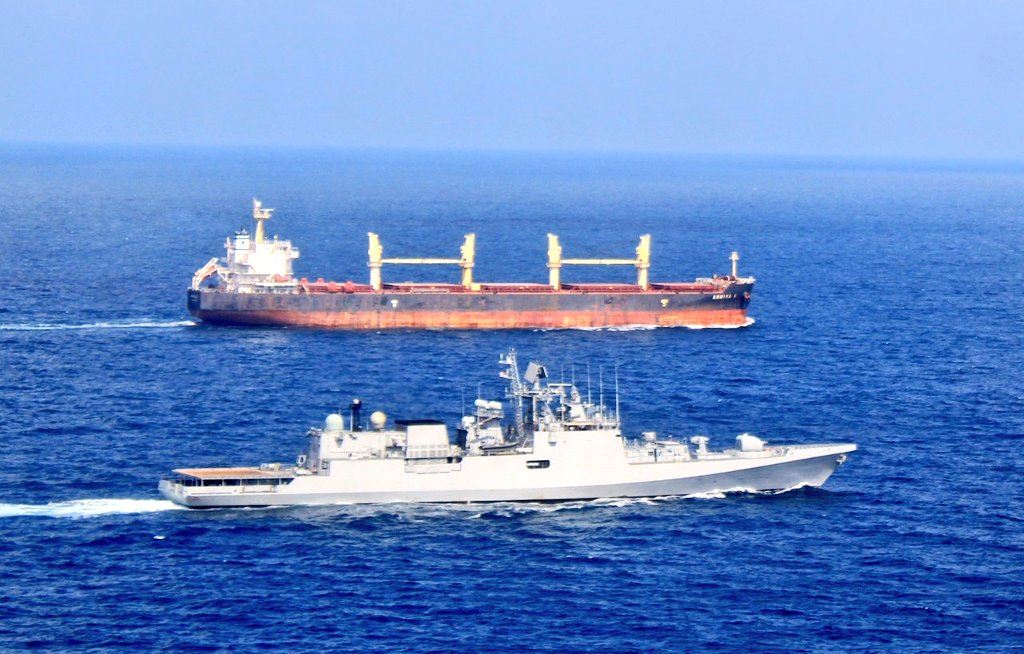
New Delhi: The Indian Navy’s top commanders will meet from September 29 to October 1 to review combat readiness and the protection of India’s maritime interests, with energy security amid the continuing conflicts in West Asia a central concern. The three-day conference at Nausena Bhawan in New Delhi will also examine coordination among the armed forces and the Navy’s adoption of technologies ranging from artificial intelligence to uncrewed systems.
The second of the Navy’s biannual commanders’ conferences will bring together senior naval leaders, including operational and area commanders posted outside the capital. According to the Navy’s pre-event announcement on Monday, discussions will cover military-strategic preparedness and provide an opportunity for commanders to engage directly with senior government officials.
The defence minister, Rajnath Singh, is scheduled to address the opening day, setting out the government’s maritime priorities and expectations of the service. The chief of defence staff and the chief of the Army staff will also interact with naval commanders, with discussions intended to strengthen coordination and integration across the three services.
A principal focus will be the Navy’s contribution to safeguarding energy supplies through the ongoing Operation Urja Suraksha. The operation places the protection of commercial shipping alongside the service’s broader military responsibilities, as insecurity in West Asia continues to affect routes connecting Gulf energy producers with overseas markets.
Since the operation started, Indian warships began escorting and guiding India-bound merchant vessels after they cleared the Strait of Hormuz and entered the Gulf of Oman. The cargoes covered by the security effort included crude oil, liquefied petroleum gas and liquefied natural gas, illustrating the operation’s relevance to both industrial activity and household energy supplies.
The distinction between passage through a contested chokepoint and protection beyond it is significant: naval escorts form one part of the arrangements needed to move commercial cargo safely. The forthcoming conference announcement does not disclose current deployment numbers, escort procedures or proposed changes to the operation.
The wider scale of the Navy’s maritime commitments was outlined in a recent Indian statement at the United Nations. It said that, as of September 14, Indian maritime security operations in the Gulf of Aden and Red Sea had facilitated the safe transit of more than 449 merchant vessels carrying nearly 20.3 million metric tonnes of cargo and oil, valued at over $8.4 billion.
Those figures concern the wider maritime security effort and were not presented as a tally for Operation Urja Suraksha alone. The statement also warned that disruption at maritime chokepoints could raise freight and insurance costs, place pressure on alternative routes and interrupt energy and food supplies far beyond the immediate conflict zone.
During the subsequent conference sessions, the chief of the naval staff and commanders in chief will review operations, equipment readiness, logistics, personnel and training. These discussions will assess how available forces can be deployed effectively while sustaining combat readiness and the Navy’s continuing operational commitments.
The technology agenda includes artificial intelligence, big data analysis, autonomous and uncrewed systems, and cyber operations. The Navy said the discussions would address the absorption of these capabilities and the adoption of emerging approaches to warfare, bringing technological modernization into the wider preparedness review.
The meeting follows the first commanders’ conference of 2026, held at the same venue earlier this year from April 14 to April 17. That conference examined operational and equipment preparedness, infrastructure, logistics and personnel issues against the backdrop of the West Asia conflict.
An important outcome of the April meeting was the release of the Indian Navy Maritime Security Strategy 2026, outlining the service’s approach to protecting national interests over the coming decade. The defence ministry said the document took account of geopolitical changes, disruptive technologies, reforms in higher defence organization and the changing character of warfare.
The September conference will frame its preparedness assessment around three stated priorities – jointness, self-reliance and innovation – abbreviated by the Navy as JAI. These priorities connect operational planning with the government’s push for domestic defence capabilities and its broader goal of a developed India by 2047.
The agenda therefore brings immediate demands, particularly maritime energy security, into the same review as longer-term capability development. With operations continuing during the conference, commanders will examine both the forces available for present commitments and the equipment, training and support needed to sustain future readiness.