


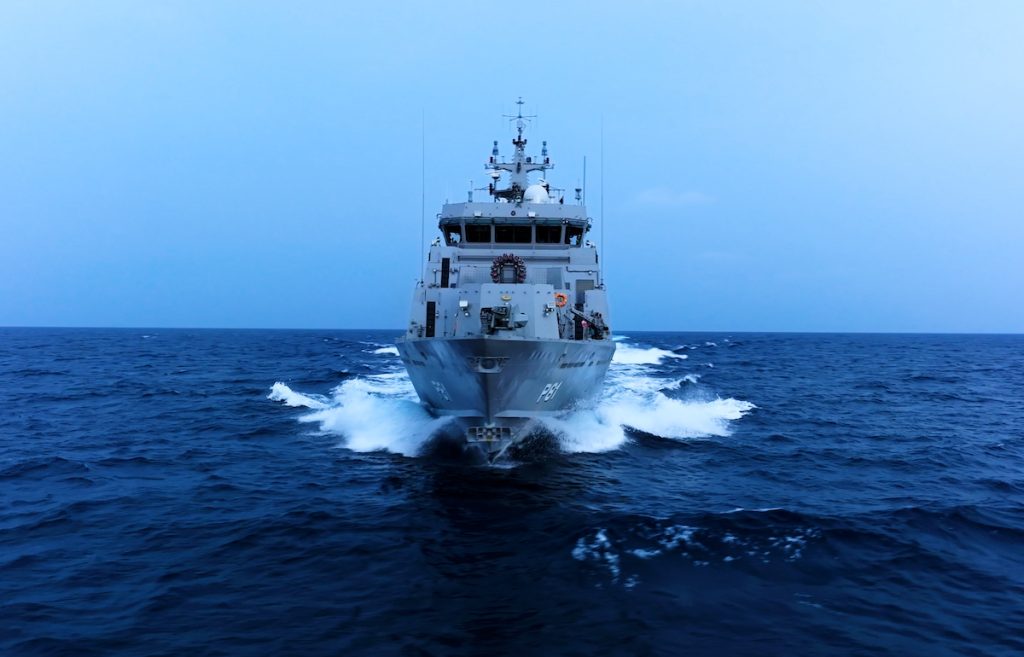
New Delhi: The Indian Navy has commissioned its second indigenously built Mahe-class anti-submarine warfare shallow-water craft (ASW-SWC) at the Karwar Naval Base in Karnataka, on Wednesday. This marks another milestone in India’s drive towards indigenous warship construction and maritime self-reliance.
The commissioning ceremony was presided over by the chief of the air staff, Air Chief Marshal Amar Preet Singh, who attended as the chief guest, underscoring the growing emphasis on jointness among the armed forces.
Built at Cochin Shipyard Limited (CSL), Kochi, with more than 80 per cent indigenous content, Malvan is the seventh warship commissioned by the Navy this year, with at least 12 more to follow. It is also the first ship to be commissioned at Karwar, home to the Navy’s Project Seabird base.

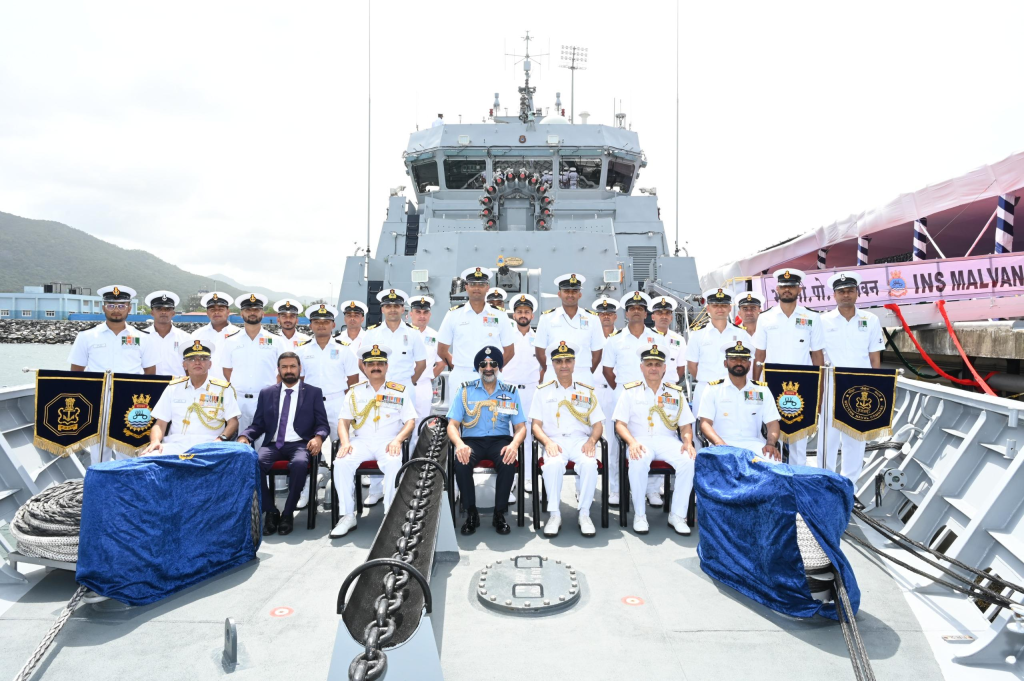
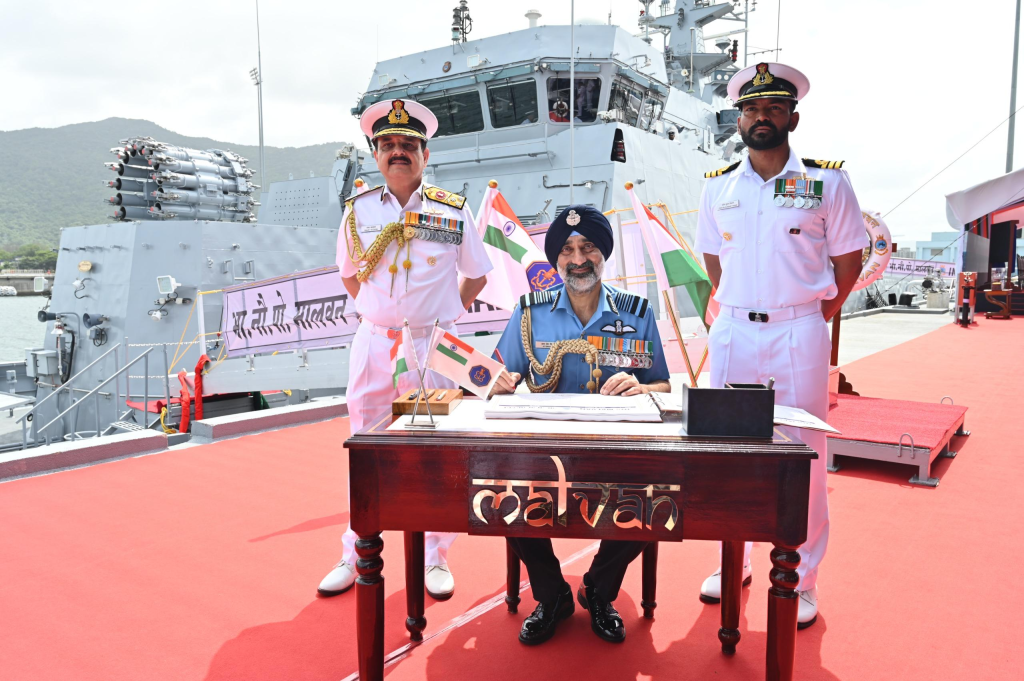
Malvan was symbolically inducted into the Navy through the ceremonial hoisting of the colours by her own colour guard. This followed the commanding officer-designate, Commander Pravin Kumar Tiwari, reading out the commissioning warrant, issued by the chief of the naval staff, Admiral Krishna Swaminathan.
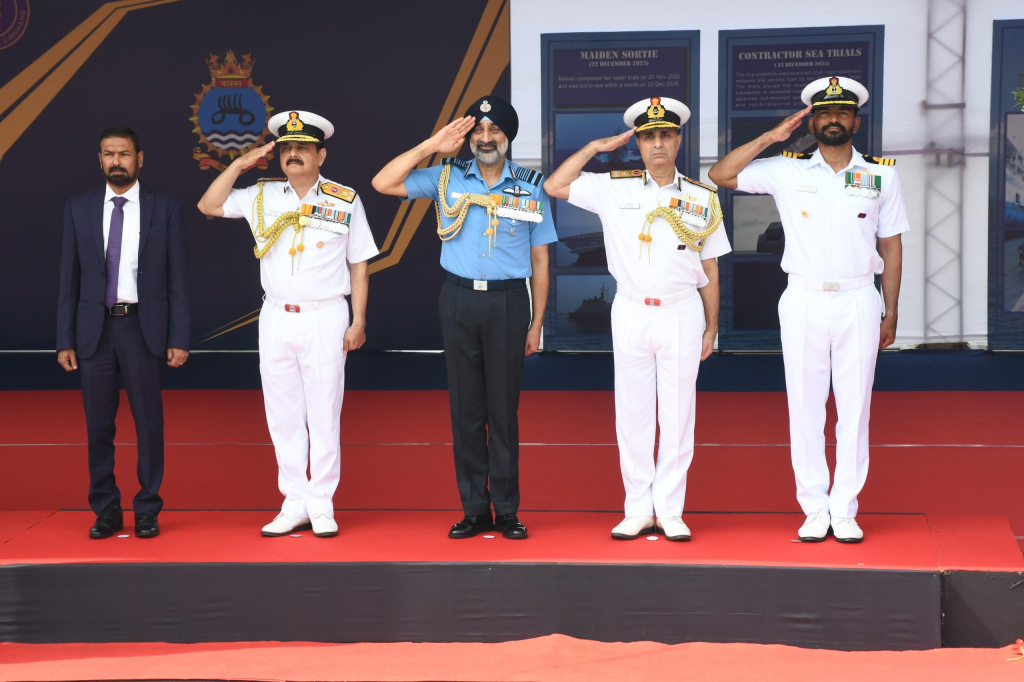
ACM Singh and other dignitaries took the salute from the dais as Yard 524 was formally commissioned as Indian Naval Ship (INS) Malvan, after which a plaque was unveiled, and the guests were taken around the ship.
Addressing the gathering, ACM Singh described the induction of the warship as another significant addition to India’s expanding naval capabilities at a time when secure sea lines of communication had become increasingly vital for the country’s economic growth and strategic interests. Referring to the changing global security environment, he said recent international developments had reinforced the importance of maritime security and uninterrupted trade routes.

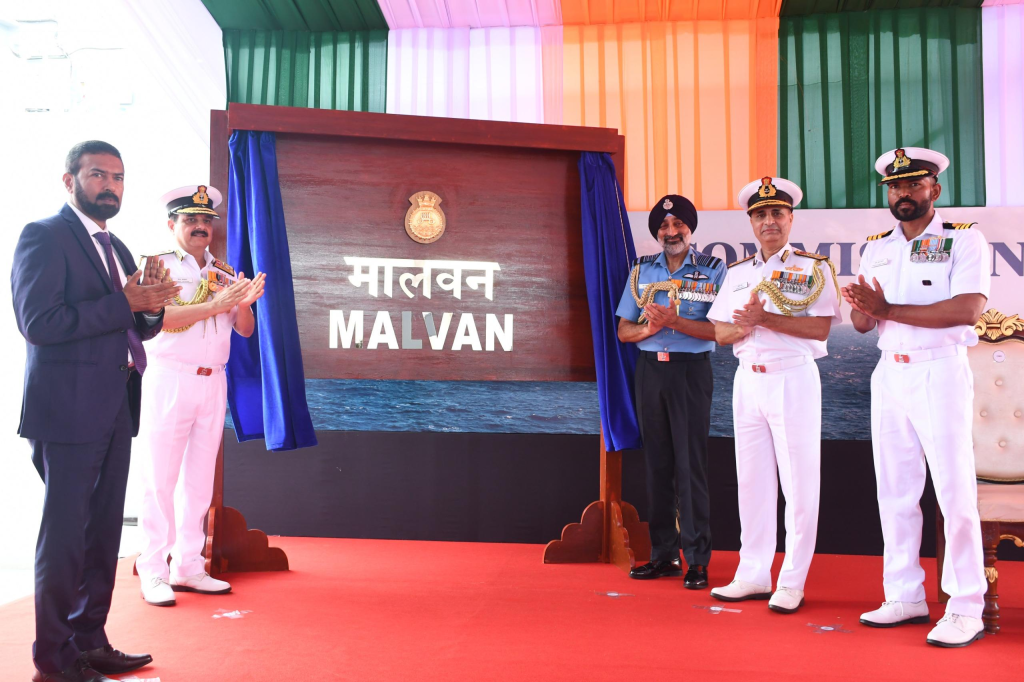
The air chief lauded the Navy’s progress in indigenous warship construction, noting that INS Malvan incorporated about 80 per cent indigenous content.
Stressing that “technology delayed is technology denied”, he called for faster development and production cycles to ensure India remained technologically relevant.
Earlier, Vice Admiral Sanjay Vatsayan, flag officer commanding in chief (FOC-in-C), Western Naval Command, said the warship carried forward the legacy of the earlier INS Malvan, an inshore minesweeper that served from 1983 to 2003, while symbolizing India’s maritime heritage linked to the historic coastal town of Malvan in Maharashtra and the naval traditions of Chhatrapati Shivaji Maharaj.
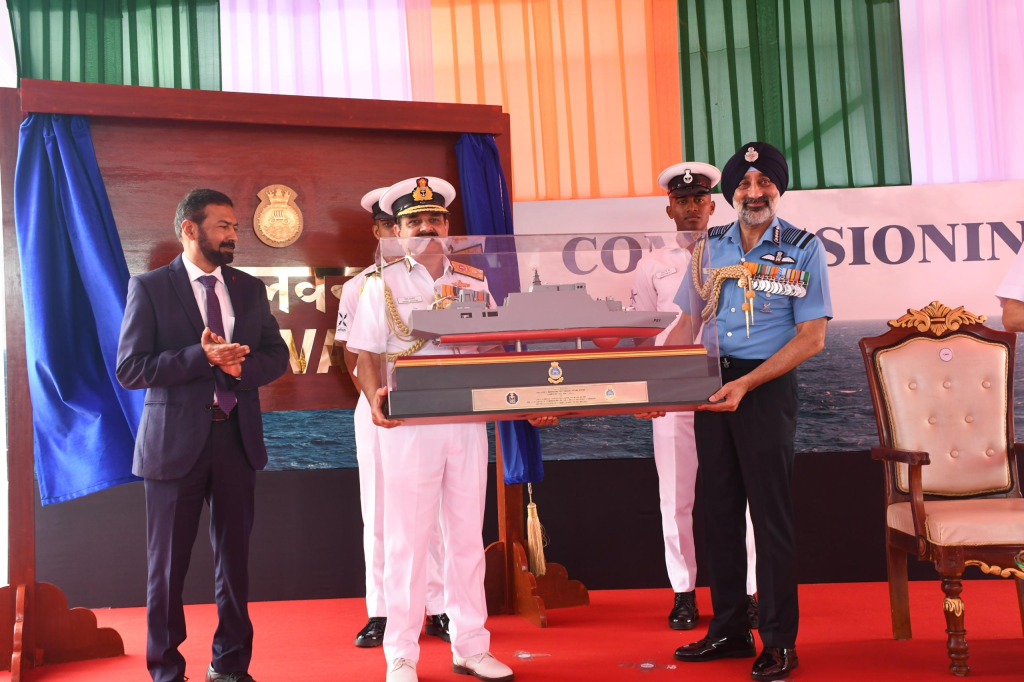
The CSL chairman and managing director, Jose VJ, described the commissioning as another proud moment for the shipyard. He recalled its contributions ranging from building the indigenous aircraft carrier INS Vikrant to delivering advanced naval platforms for India and overseas customers. He said INS Malvan reflected the success of the Make in India initiative, and acknowledged the support of the Ministry of Defence, the Indian Navy, design partners, industry collaborators and hundreds of MSMEs.
About INS Malvan
As RNA Media had reported earlier INS Malvan is the second vessel of the Indian Navy’s indigenous Mahe-class anti-submarine warfare shallow-water craft (ASW-SWC), a new generation of specialized warships designed to detect, track and neutralize enemy submarines operating in India’s coastal and shallow waters. The vessel represents another significant milestone in the Navy’s ongoing modernisation programme and the country’s drive towards self-reliance in defence manufacturing under the Atmanirbhar Bharat initiative.
Designed and built by Cochin Shipyard Limited in Kochi, INS Malvan was delivered to the Navy on March 31, after completing an extensive series of harbour and sea trials. More than 80 per cent of the ship’s components have been sourced domestically, which is a testament to India’s steadily expanding indigenous naval shipbuilding capability. The vessel incorporates equipment and systems supplied by a wide network of Indian defence public sector undertakings and private industry.
The warship belongs to a class of eight ASW-SWCs being constructed by CSL for the Navy. The first ship of the class, INS Mahe, entered service in November last year, with the remaining vessels to be inducted in phases. The programme is intended to replace ageing anti-submarine platforms and strengthen the Navy’s ability to protect India’s long coastline, major ports, naval bases and critical offshore infrastructure from underwater threats.
Measuring about 77 metres in length and displacing around 900 tonnes, INS Malvan has been optimized for operations in shallow littoral waters, where conventional larger warships often face operational limitations. It combines high manoeuvrability with a relatively low acoustic signature, enabling it to hunt submarines while remaining difficult to detect.
The warship is equipped with advanced sonar systems, an integrated combat management system and modern electronic warfare equipment to enhance underwater surveillance and situational awareness.
The primary mission of the vessel is anti-submarine warfare, but the ship has been designed as a versatile multi-role platform. Besides prosecuting hostile submarines using lightweight torpedoes and anti-submarine rockets, it can undertake mine-laying operations, limited mine countermeasure tasks, search and rescue missions, coastal surveillance, low-intensity maritime security operations and the protection of vital sea lanes.
The vessel can also support humanitarian assistance and disaster relief operations when required.
The induction of INS Malvan comes at a time when the Navy is placing increasing emphasis on undersea warfare. China’s People’s Liberation Army – Navy (PLA-N) has maintained a sustained submarine presence in the Indian Ocean Region over the past decade, while Pakistan continues to modernize its submarine fleet. The induction of the Hangor-class submarine is a serious move towards that.
These developments have heightened the importance of robust anti-submarine capabilities, particularly in India’s near-shore waters, where hostile submarines could threaten commercial shipping, naval installations and strategic assets. The Mahe-class is intended to fill precisely this operational niche.
The vessel has been named after Malvan, the historic coastal town in Maharashtra’s Sindhudurg district. It is renowned for its rich maritime heritage and its proximity to the sea fort of Sindhudurg built by Chhatrapati Shivaji Maharaj in the 17th century. The name also revives the legacy of an earlier Indian Navy minesweeper, INS Malvan, which served from 1983 until its decommissioning in 2003.
With INS Malvan joining the fleet, the Indian Navy takes another step towards building a balanced and predominantly indigenous force structure capable of safeguarding India’s maritime interests across the increasingly contested waters of the Indian Ocean.