


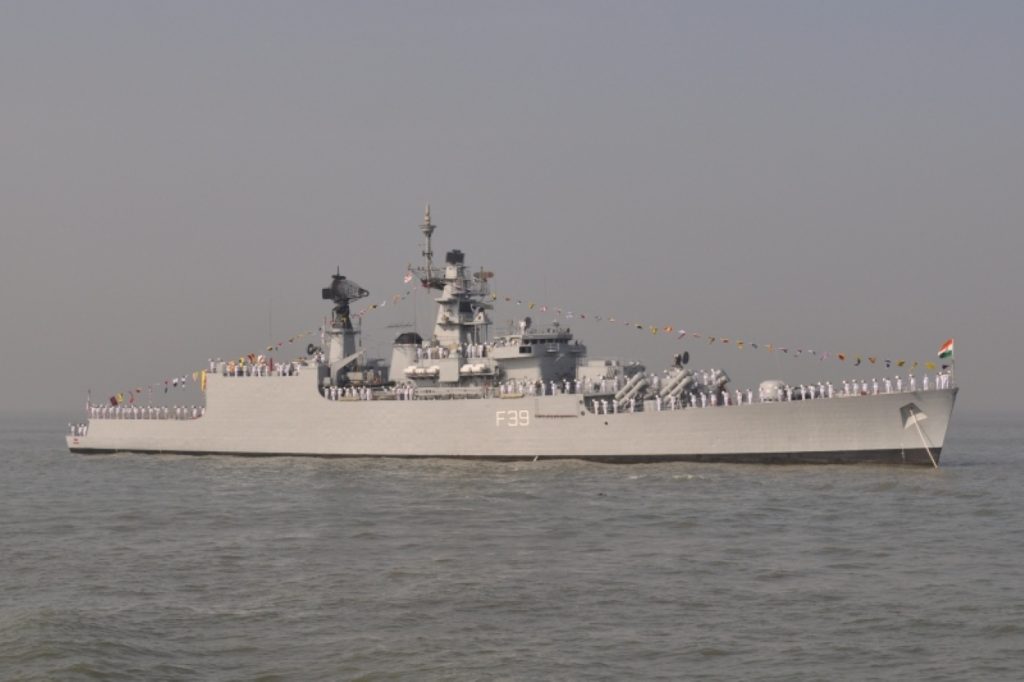
New Delhi: The Indian Navy’s guided-missile frigate INS Betwa is set to undergo an extensive overhaul involving the replacement of its ageing steam-powered propulsion system with modern diesel engines and an upgrade of its weapons and combat capabilities. The defence ministry signed a ₹498.58 crore contract with Cochin Shipyard Limited on Wednesday for the refit and re-powering of the warship, marking another step in the Navy’s programme to modernize older platforms rather than replace them prematurely.
The agreement was concluded in New Delhi in the presence of the defence secretary, Rajesh Kumar Singh, and covers what the ministry has classified as a normal refit and re-powering programme. The project involves far more than routine maintenance, requiring extensive modifications to the ship’s machinery, propulsion arrangements and combat equipment to improve its operational effectiveness.
The most significant element of the overhaul will be the conversion of INS Betwa’s steam-turbine propulsion system to diesel-based machinery, a technically demanding undertaking for a warship originally designed around a different power plant. Such a conversion requires the integration of new engines and supporting systems within an existing hull, with implications for machinery layout, power transmission, cooling, exhaust arrangements and onboard maintenance.
The defence ministry said the refit would also include the installation of a modernized weapons suite to strengthen the frigate’s combat capabilities. However, it did not disclose the weapons and sensors selected for the upgrade, the specifications of the replacement engines or the expected completion date.
Commissioned in July 2004, INS Betwa is one of three indigenously built Brahmaputra-class guided-missile frigates, constructed by Garden Reach Shipbuilders and Engineers in Kolkata. The approximately 3,800-tonne warship belongs to a generation of Indian naval platforms designed for multiple roles, including surface warfare, anti-submarine operations and the protection of larger naval formations.
The latest contract follows an earlier decision to undertake a similar propulsion conversion on INS Beas, another Brahmaputra-class frigate. In October 2023, the defence ministry awarded CSL a ₹313.42 crore contract for the mid-life upgrade and re-powering of INS Beas, identifying it as the first vessel of the class selected for conversion from steam to diesel propulsion.
The INS Beas project was intended to establish an indigenous capability for undertaking complex propulsion conversions on existing naval combatants, with its completion originally scheduled for 2026. The subsequent contract for INS Betwa indicates that the Navy is extending this modernization approach to another vessel of the class, although the ministry has not provided an updated assessment of the earlier project’s progress.
Converting older steam-powered frigates to diesel propulsion can offer operational and maintenance advantages, particularly by reducing dependence on ageing steam-generation machinery and its associated support infrastructure. The actual benefits for INS Betwa, including any improvements in fuel efficiency, reliability, endurance or operating costs, will depend on the specifications of the replacement machinery and the results of post-refit trials.
INS Betwa also has a notable history of recovery from a serious dockyard accident. On December 5, 2016, the frigate toppled onto its side during an undocking operation at the Naval Dockyard in Mumbai, killing two sailors and injuring several others before being successfully brought upright in February 2017.
The vessel subsequently underwent further work, with the Navy reporting its successful undocking in June 2017 following the salvage operation. Its latest modernization represents a substantially different engineering exercise, centred on replacing a major propulsion system and upgrading combat capabilities rather than repairing damage from the earlier accident.
Beyond the operational benefits, the ₹498.58 crore project is expected to support India’s domestic naval maintenance and ship-repair industry. According to the defence ministry, more than 50 micro, small and medium enterprises (MSMEs) are expected to participate in the programme, generating employment and creating opportunities for companies involved in marine engineering, equipment integration and associated services.
The contract also reinforces CSL’s expanding role in the maintenance and modernization of Indian naval vessels, complementing its established shipbuilding capabilities. For the Navy, developing domestic expertise in complex propulsion conversions could provide greater flexibility in managing the service lives of existing warships as newer platforms enter service.
The government has positioned the project within its broader “Atmanirbhar Bharat” and “Make in India” initiatives, emphasizing the development of indigenous engineering and ship-repair capabilities. Its longer-term significance will depend on the successful integration and testing of the new propulsion and weapons systems, as well as the extent to which the experience can be applied to future naval modernization programmes.