


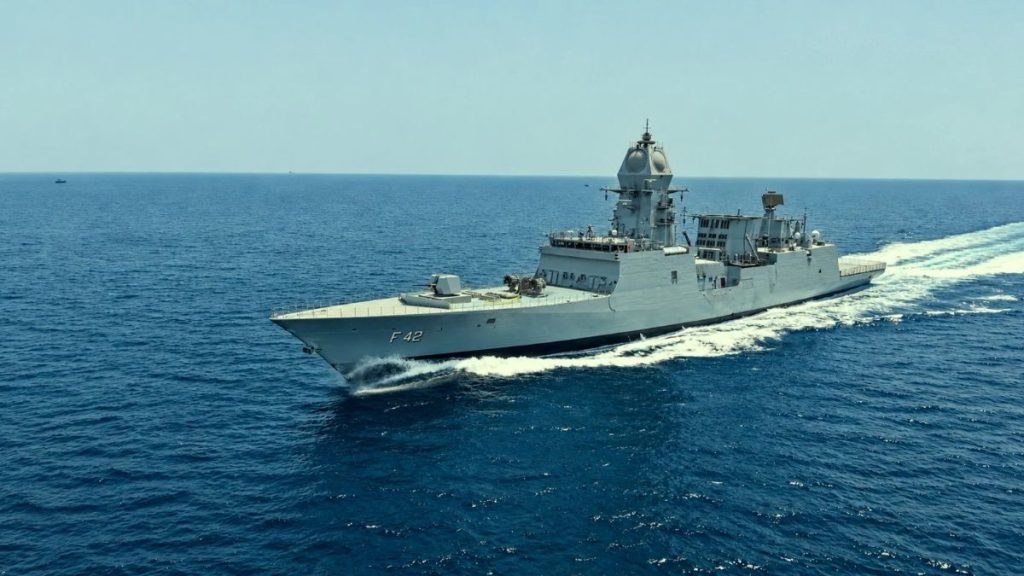
New Delhi: The Indian Navy has received Vindhyagiri, the seventh and final Nilgiri-class stealth frigate under Project-17A, completing deliveries of the seven-warship programme. The vessel, designated yard 3024, was handed over by garden reach shipbuilders and engineers Ltd (GRSE) in Kolkata on Friday.
The handover comes approximately 23 months after the first frigate, INS Nilgiri, was delivered on December 20, 2024. Vindhyagiri is the third Project-17A frigate built by GRSE, while Mazagon dock shipbuilders limited in Mumbai constructed the remaining four.
The Ministry of Defence said the programme demonstrated India’s progress in indigenous warship design, engineering and manufacturing. The frigates were designed by the Indian Navy’s warship design bureau, with Vindhyagiri’s construction overseen by the warship overseeing team in Kolkata.
Faster construction strengthens indigenous shipbuilding
Vindhyagiri’s construction was completed in 68 months, compared with 84 months for the first-of-class Nilgiri, according to the ministry’s Friday statement. The 16-month reduction was attributed to experience gained from building the preceding six frigates, which helped improve construction efficiency.
The project achieved 75 per cent indigenous content and involved more than 200 micro, small and medium enterprises (MSMEs). The ministry estimated that the programme generated approximately 4,000 direct jobs and more than 10,000 indirect employment opportunities.
The involvement of shipyards in Kolkata and Mumbai also helped distribute complex production work across India’s defence-manufacturing ecosystem. Domestic suppliers contributed components, engineering services and equipment, strengthening industrial capabilities for future naval construction.
Advanced combat systems and naval capabilities
The Nilgiri-class frigates are successors to the Project-17 Shivalik-class warships, incorporating more advanced weapons, sensors and stealth features. They are designed for anti-surface, anti-air and anti-submarine warfare, with improved survivability and automation to support operations in demanding maritime environments.
The ships use combined diesel or gas (CODOG) propulsion, allowing diesel engines or gas turbines to power controllable-pitch propellers according to operational requirements. An integrated platform management system (IPMS) monitors and controls onboard machinery and associated systems, supporting efficient operation and maintenance.
Vindhyagiri takes its name from the Vindhyagiri mountain range in Karnataka and honours an earlier Indian Navy frigate of the same name. The former INS Vindhyagiri, a Leander-class warship, served from July 8, 1981, to June 11, 2012, completing approximately 31 years of naval service.
The delivery concludes the construction and handover phase of Project-17A, representing a significant milestone in India’s naval modernization. However, Vindhyagiri’s formal commissioning and induction into operational service remain separate milestones following the handover.