


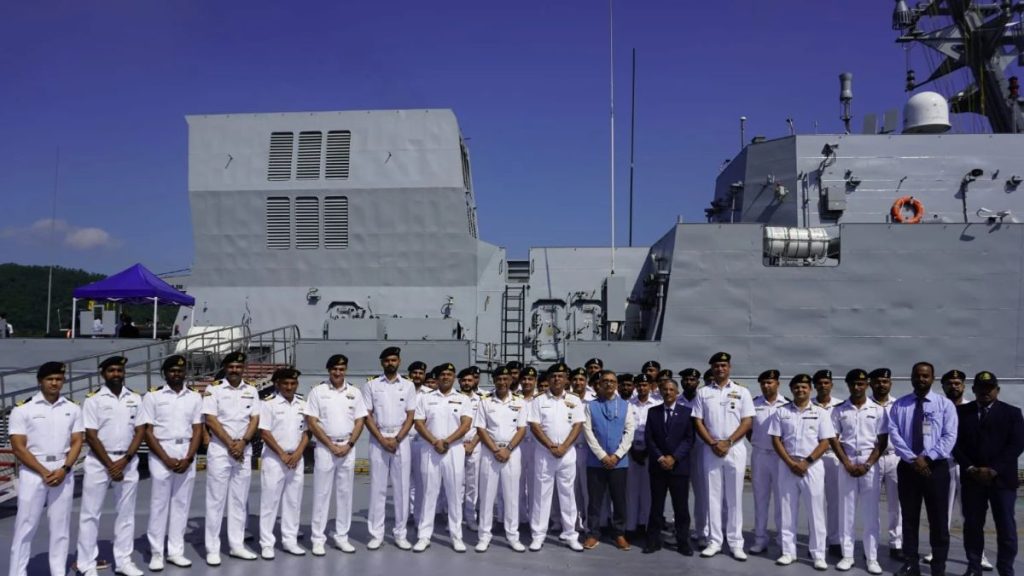
New Delhi: Garden Reach Shipbuilders and Engineers (GRSE) delivered the anti-submarine warfare shallow-water craft Ashank to the Indian Navy at Visakhapatnam on Monday, marking its second such handover in 18 days. The delivery follows Amini, handed over on November 5, and adds another indigenously built vessel intended for operations in India’s coastal waters.
Rear Admiral Gautam Marwaha, VSM, chief staff officer (Technical), Headquarters Eastern Naval Command, accepted Ashank on behalf of the Navy. The Ministry of Defence confirmed the delivery of the vessel, designated Yard 3036, while programme records identify it as the sixth craft handed over under GRSE’s eight-vessel series.
In its post on X, the Kolkata based shipbuilder described Ashank as its 120th warship and its 82nd delivery to the Indian Navy. The handover does not constitute commissioning, which is a separate step before a vessel formally enters naval service.
Built for coastal anti-submarine operations
Ashank is an anti-submarine warfare shallow water craft (ASW-SWC) designed to locate, track and engage submarines in near-shore areas. Its intended duties also include coastal surveillance and mine-laying, giving the Navy a platform tailored to tasks that differ from those of larger destroyers and frigates.
According to the defence ministry, the craft carries advanced sonar systems, lightweight torpedoes and indigenous anti-submarine rocket launchers. Sonar helps crews detect underwater contacts, while torpedoes and rockets are intended to engage hostile submarines once identified.
Ashank belongs to a class of vessels that the defence ministry describes as among the largest Indian naval warships propelled by waterjets. This propulsion arrangement supports manoeuvrability in shallow and confined waters, while the craft has been designed and constructed in accordance with the classification rules of the Indian register of shipping.
Indigenous shipbuilding milestone
GRSE said the ASW-SWC programme incorporates approximately 88 per cent indigenous content, including a 30mm naval surface gun manufactured by the shipyard. The defence ministry separately described Ashank as having more than 80 per cent indigenous content, a broader figure that should not be confused with GRSE’s programme-level estimate.
The ministry linked the delivery to the government’s Aatmanirbhar Bharat (self-reliance) initiative, aimed at strengthening domestic defence manufacturing and reducing dependence on imports.
GRSE’s official X announcement said the name Ashank signifies “fearlessness and an undaunted spirit”. The yard also reported that it was building 12 frontline naval platforms: one Project 17A advanced stealth frigate, two ASW-SWCs, four next generation offshore patrol vessels and five next generation corvettes.
The two remaining ASW-SWCs form part of GRSE’s continuing production programme, following the delivery of Ashank. No delivery dates for these vessels were specified on the Monday announcement.
In addition, the shipbuilder said 36 other vessels were under construction, including 13 for export. Its order book shows that the shallow-water craft programme is part of a broader effort to manufacture increasingly complex naval platforms in India.
Why the delivery matters
Detecting submarines close to shore can be difficult because seabed conditions, commercial shipping and other underwater noise complicate acoustic surveillance. Specialized shallow-water craft can operate in these environments and support monitoring of approaches to ports, naval bases and other important maritime facilities.
Deliveries of Amini and Ashank within the same month advance the Navy’s programme to develop a dedicated coastal anti-submarine fleet. They also demonstrate the pace of GRSE’s shipbuilding work, although Ashank’s commissioning and operational deployment remain separate milestones yet to be announced.