


New Delhi: The release on bail of five men arrested near RAF Fairford has raised questions about the suspected threat to the US bomber base and the evidence gathered so far. British counterterrorism police say their investigation remains active, but they have not publicly established that the men had a viable explosive device, intended to attack the base or acted for a foreign government.
The men were detained near the Gloucestershire airbase early on Sunday after police received a call about three suspicious vehicles apparently heading towards it. Officers initially arrested them on suspicion of explosives offences and later on suspicion of preparing a terrorist act.
The response was substantial: armed police secured the area, military specialists examined the vehicles, and about 85 nearby households were evacuated. Yet after extensive interviews and examination of the scene, investigators released all five men on police bail on Monday.
That sequence has put the initial alarm and the subsequent assessment of the threat under scrutiny. A source familiar with the inquiry told Reuters that the three vans associated with the men contained no viable explosives, while police have not publicly said what their examination found.
The head of UK counterterrorism policing, Laurence Taylor, cautioned against treating bail as the end of the case. He said the suspects remained under investigation and faced stringent conditions restricting their movements and contact with others, while detectives pursued several lines of inquiry.
All five are British nationals from London, aged between 23 and 25, police said. None has been charged, and investigators have yet to establish publicly what the men were doing near the base, what they knew about the vehicles’ contents or whether their actions were connected to a wider plan.
Another question concerns what authorities knew before the arrests. The US president, Donald Trump, said the men had been under observation, but a source told Reuters that Sunday’s response was triggered by a civilian report rather than intelligence directly tracking the five suspects; heightened security at Fairford before the incident may have reflected a broader warning.
A local farmer said she contacted police after encountering three vans and seeing people with covered faces run away. The account explains why officers acted urgently, but it cannot, by itself, establish what those people intended to do or whether they posed an immediate threat to the airbase.
The bail decision has also prompted unease in Washington. Trump said he would have kept the suspects in custody, while the US secretary of state, Marco Rubio, asserted that a foreign actor was involved without naming a country or publicly offering evidence.
Taylor has taken a more guarded position, saying detectives are considering whether individuals could have acted knowingly or unknowingly on behalf of a foreign state. A possible Iranian connection is among the questions being examined, but investigators have announced no finding that Tehran directed the men; Iran has denied involvement.
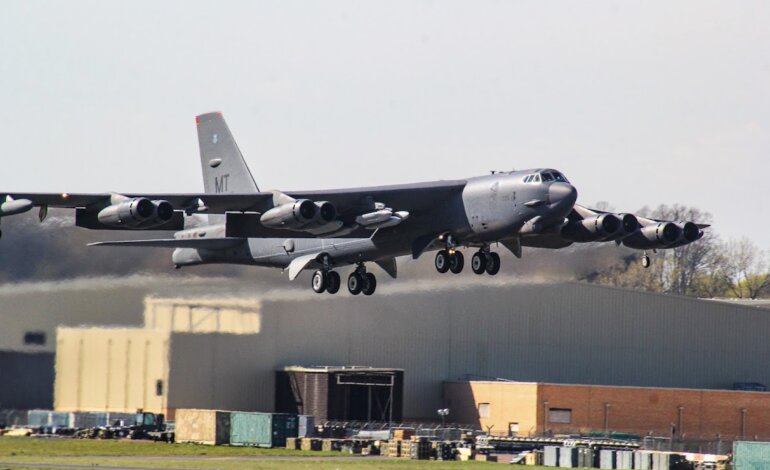
Fairford’s military role explains the intense attention on the case. The base is the US Air Force’s preferred forward operating location for bombers in Europe and has been used by American aircraft during the conflict with Iran.
Britain authorized US use of its airbases in March this year for specific, limited defensive operations against Iranian missile facilities. Under the arrangements governing American forces in Britain, combat operations from UK bases require a joint decision by the two governments, making Fairford both a valuable military asset and a politically sensitive one.
For now, the scale of the emergency response and the release of the suspects are facts that sit uneasily together, without settling whether the original concern was justified. The police inquiry must still establish what was in the vehicles, what the men intended and whether the evidence supports any allegation of an attack or foreign direction.