


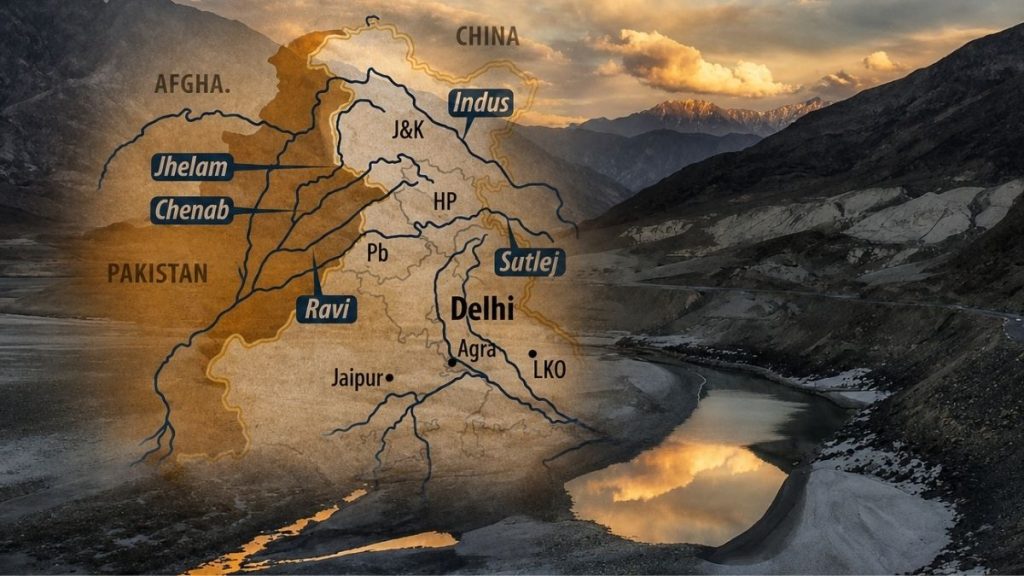
New Delhi: India has rejected the latest ruling by the court of arbitration (CoA) on the Indus Waters Treaty, calling the tribunal “illegally constituted” and saying the decision will have no bearing on its ongoing hydroelectric projects. The Ministry of External Affairs issued the rejection on Monday, hours after the CoA delivered its ruling, from Bishkek, where the prime minister, Narendra Modi, is attending the Shanghai Cooperation Organization summit.
The CoA issued two separate decisions on Monday. The first dealt with India’s decision to keep the Indus Waters Treaty in abeyance, while the second concerned interim restrictions on the Ratle Hydroelectric Power Project.
On the treaty itself, the tribunal ruled that the reasons cited by India do not justify suspending or terminating the pact. It said India remains bound by its obligations under the treaty, including provisions governing the design and operation of hydropower projects on the western rivers.
The tribunal also imposed restrictions on construction work at the Ratle project. It ordered India to limit concreting on parts of the dam wall and power-intake structure above specified levels.
The restrictions will remain in place until 90 days after the treaty’s neutral expert issues a final decision, which is expected around mid-2027. The tribunal has also asked India to continue submitting regular updates on the project’s construction schedule.
India, however, dismissed the orders.
The MEA said the CoA had been established by the World Bank in “patent breach” of the procedures laid down under the Indus Waters Treaty. It reiterated that India has never accepted the tribunal’s jurisdiction or appeared before it.
“This so-called court of arbitration has no jurisdiction whatsoever to pronounce on India’s sovereign decisions,” the ministry said, adding that the tribunal’s present and future rulings would not affect India’s ongoing projects.
New Delhi also reiterated that its decision to hold the Indus Waters Treaty in abeyance remains unchanged.
As reported earlier by RNA Media, India has boycotted the PCA proceedings since 2023, arguing the tribunal lacks jurisdiction. India placed the treaty in abeyance in April 2025, following the Pahalgam terror attack in Jammu & Kashmir.
Monday’s ruling is the latest in a series of decisions by the CoA that India has rejected. New Delhi had similarly dismissed a supplemental award in June 2025 and a ruling on maximum pondage in May 2026.
Pakistan, meanwhile, has continued to pursue the dispute through the arbitration process. Islamabad maintains that India cannot unilaterally suspend the treaty, while New Delhi has refused to participate in the proceedings.
The result is a continuing India-Pakistan dispute over the legal status of the treaty and the mechanisms for resolving it. Pakistan continues to rely on the CoA, while India maintains that the tribunal has no jurisdiction and that the treaty remains in abeyance.