


New Delhi: The government has said it is closely monitoring developments in India’s neighbourhood that could affect the country’s strategic and economic interests. The government also maintained that New Delhi’s relationship with Bangladesh remains independent of Dhaka’s ties with any third country.
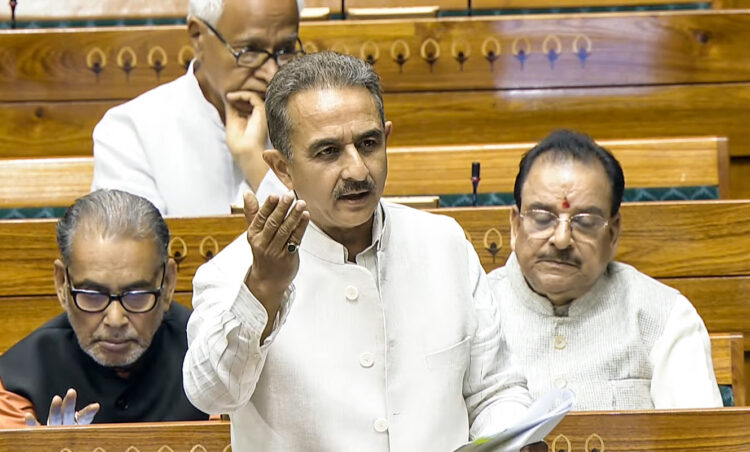
Responding to an unstarred question in the Lok Sabha on Friday, the minister of state for external affairs, Kirti Vardhan Singh, said the government was keeping a constant watch on developments relating to Bangladesh’s engagement with China and would take all necessary measures to safeguard India’s interests.
The issue was raised by MPs Kaushalendra Kumar and Krishna Devi Shivshankar Patel, who sought to know whether the government was concerned that growing Bangladesh-China relations could adversely affect India. They also asked whether New Delhi was aware of Bangladesh entrusting the Teesta River Project to China and the proposed China-Myanmar-Bangladesh Economic Corridor, and what steps were being taken to protect India’s economic and strategic interests.
In its reply, the Ministry of External Affairs did not directly characterize Bangladesh’s expanding engagement with China as a security concern. Instead, it said the government “constantly monitors all developments in our immediate neighbourhood having a bearing on India’s interests and takes all necessary measures to safeguard it.”
The ministry emphasized that India continues to engage Bangladesh on the basis of their longstanding historical and cultural relationship.
“Given our historic and close cultural ties, India continues to engage with Bangladesh with a view to advancing mutual interests. India’s relationship with Bangladesh is independent of its relationship with third countries,” Singh said in his reply.
Addressing the specific issues raised by the MPs, the junior foreign minister said the MEA had “noted references” to the Teesta River Comprehensive Management and Restoration Project and reports regarding the proposed China-Myanmar-Bangladesh Economic Corridor. He added that all related developments would be taken into account while shaping India’s broader approach to the Teesta issue as well as its trade and economic relations with Bangladesh.
The reply, however, did not elaborate on any specific diplomatic or strategic measures being considered.
The Teesta River has long been a sensitive issue in India-Bangladesh relations. The sharing of Teesta waters remains unresolved despite years of negotiations, with a proposed bilateral agreement yet to be finalized because of the need for consensus among stakeholders within India.
China’s interest in infrastructure projects connected to the river has attracted attention in strategic circles, particularly because of the Teesta basin’s proximity to the Siliguri Corridor, the narrow land link connecting the country’s mainland to its northeastern states.
Similarly, the proposed China-Myanmar-Bangladesh Economic Corridor has figured in regional strategic discussions as part of China’s wider connectivity initiatives in South Asia. While details of the project remain limited, analysts have closely watched its potential implications for regional trade routes and strategic influence.
India has consistently maintained that its neighbourhood policy is guided by bilateral engagement and mutual interests, even as it monitors the expanding presence of external powers in South Asia. The government’s latest parliamentary response reflects that approach by reaffirming continued engagement with Bangladesh while indicating that evolving regional developments will be factored into New Delhi’s policy decisions.