


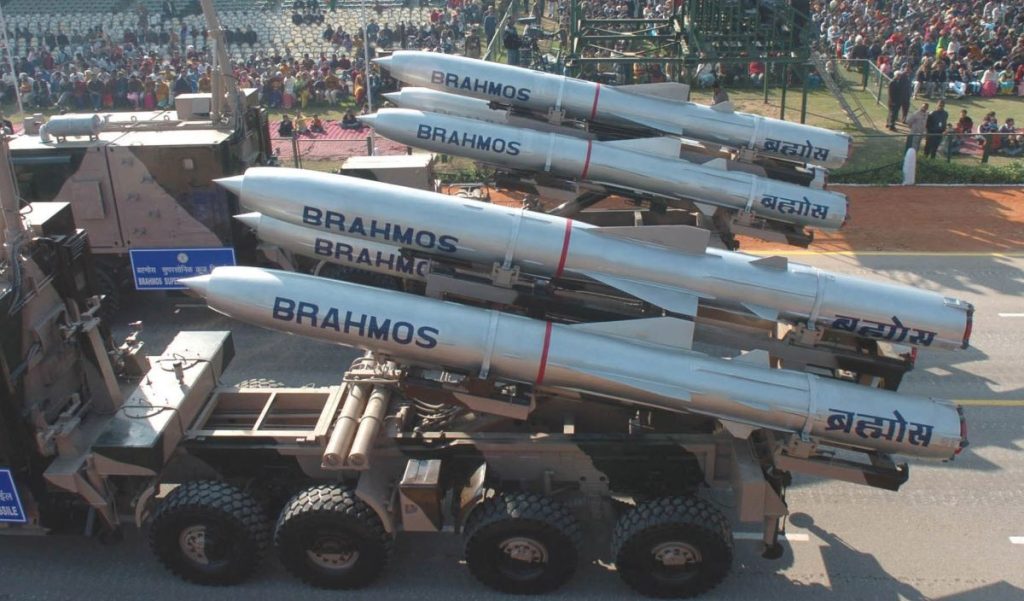
New Delhi: India and Indonesia have taken one of the biggest steps yet in their growing strategic partnership, announcing a series of defence agreements during Prime Minister Narendra Modi’s, state visit to Jakarta that significantly expand military cooperation between the two Indo-Pacific democracies. The agreements, unveiled after summit talks between Modi and Indonesia’s president, Prabowo Subianto, cover missile systems, defence industrial collaboration, military training, maritime security and technology cooperation, reflecting a shared intent to strengthen regional stability amid an increasingly complex security environment.
The defence package marks a milestone in India’s effort to emerge as a major defence exporter while reinforcing Indonesia’s strategy of diversifying its military acquisitions and reducing dependence on any single supplier. It also signals growing strategic convergence between New Delhi and Jakarta as both countries seek to preserve a free, open and rules-based Indo-Pacific.
The headline announcement was Indonesia’s decision to procure the BrahMos supersonic cruise missile system, jointly developed by India and Russia. The agreement makes Indonesia the second Southeast Asian nation, after the Philippines, to acquire the weapon and represents another significant breakthrough for India’s expanding defence exports.
Capable of engaging both land and maritime targets at supersonic speeds, the BrahMos missile has attracted increasing international attention because of its operational performance, versatility and relatively rapid deployment capability. For Indonesia, an archipelagic nation with one of the world’s longest coastlines and responsibility for securing critical sea lanes, the system is expected to strengthen coastal defence and maritime deterrence.
The agreement also underlines India’s ambition to transform itself from one of the world’s largest arms importers into a leading supplier of advanced military equipment. Defence exports have become an important pillar of New Delhi’s broader strategic engagement with friendly countries, particularly across the Indo-Pacific, where demand for credible and cost-effective military systems continues to grow.
Alongside the BrahMos agreement, the two governments announced cooperation involving the Astra BVRAAM (beyond-visual-range air-to-air missile), another indigenous Indian weapons system developed by the Defence Research and Development Organisation. Although the detailed scope of the arrangement has not been made public, the agreement reflects Indonesia’s growing interest in India’s expanding defence technology ecosystem.
Beyond specific weapons systems, the two countries agreed to widen collaboration in defence manufacturing, research and development, logistics, military education and industrial partnerships. Officials from both sides are expected to explore opportunities for joint production, technology sharing and cooperation between public and private defence industries.
The agreements also envisage greater interaction between the armed forces of both countries through regular military exchanges, professional training programmes, staff-level consultations and high-level defence dialogues. Such initiatives are expected to improve interoperability and build institutional familiarity between the two militaries.
Maritime security emerged as another central pillar of the defence partnership. India and Indonesia reaffirmed their commitment to maintaining freedom of navigation, respecting international law and ensuring the security of sea lanes that carry a substantial share of global trade. The leaders agreed to deepen cooperation between their navies and coast guards through more frequent exercises, coordinated patrols, information sharing and maritime domain awareness.
The two countries also committed themselves to strengthening cooperation against piracy, illegal fishing, maritime terrorism, smuggling and other transnational maritime crimes that continue to challenge security across the eastern Indian Ocean and adjoining waters.
One of the strategically significant outcomes of the visit was the renewed commitment to jointly develop Indonesia’s Sabang port, located on Weh Island at the northern entrance to the Strait of Malacca. Although discussions on Sabang have continued for several years, both governments reaffirmed their intention to accelerate cooperation in developing the port and its supporting infrastructure.
Sabang occupies an exceptionally important geographical position close to one of the world’s busiest maritime chokepoints, through which a substantial proportion of global trade and energy shipments passes every year. The port also lies relatively close to India’s Andaman and Nicobar Islands, making it strategically relevant for maritime connectivity, logistics, disaster relief and regional security cooperation.
For India, greater access to Sabang complements its efforts to enhance its maritime presence across the eastern Indian Ocean under the Act East Policy and the MAHASAGAR vision for regional maritime cooperation. While the project is intended primarily for commercial and connectivity purposes, analysts have long viewed it as carrying considerable strategic value because of its location overlooking the approaches to the Strait of Malacca.
The defence understandings announced during the visit extend beyond hardware procurement. India and Indonesia also agreed to increase cooperation in cybersecurity, emerging technologies, space applications relevant to defence, disaster management and humanitarian assistance operations. The two governments see these areas as increasingly important in responding to evolving security challenges that extend well beyond conventional military threats.
The agreements reflect broader geopolitical realities shaping the Indo-Pacific. Both India and Indonesia have consistently advocated an inclusive regional architecture that respects sovereignty, international law and ASEAN centrality while avoiding bloc politics. Although neither country formally aligns itself with military alliances, both have steadily expanded defence cooperation with like-minded partners as regional strategic competition intensifies.
Indonesia’s decision to deepen defence ties with India is particularly significant because Jakarta has traditionally maintained a carefully balanced foreign policy, engaging multiple global powers without becoming overly dependent on any one country. Expanding cooperation with India provides Indonesia with another reliable defence partner while broadening opportunities for technology transfer and industrial collaboration.
For New Delhi, the agreements reinforce India’s growing role as a security partner in Southeast Asia. They also demonstrate the increasing international acceptance of India’s indigenous defence capabilities, including missile systems, aerospace technologies and maritime security solutions.
The defence outcomes of Modi’s visit therefore extend well beyond individual procurement contracts. They establish a broader framework for sustained military engagement, industrial cooperation and strategic coordination between two of the Indo-Pacific’s most influential democracies. As both countries confront common maritime challenges and seek resilient regional partnerships, the agreements are expected to become an important pillar of India-Indonesia relations in the years ahead.