


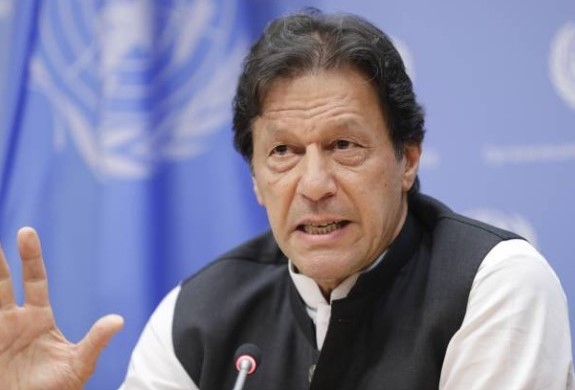
New Delhi: Twenty-one former international cricket captains, including three from India, have written to the Pakistani prime minister, Shehbaz Sharif, demanding that the country’s jailed former prime minister, Imran Khan, be given a full and independent medical examination. The letter, sent on Sunday marks the second such intervention by the cricketing fraternity in six months, reflecting growing international concern over the 73-year-old’s deteriorating health in custody.
The appeal was organized by the former Australia captain, Greg Chappell, and carries the signatures of some of the sport’s most recognizable names. Among the Indian contingent are Sunil Gavaskar, Kapil Dev and Dilip Vengsarkar, who played alongside and against Khan during a storied era of subcontinental cricket rivalry.
Other signatories include Allan Border, Michael Atherton, Michael Brearley, Ian Chappell, Adam Gilchrist, David Gower, Nasser Hussain, Clive Lloyd, Arjuna Ranatunga, Andrew Strauss and Steve Waugh, among others. Together, they represent nine cricket-playing nations, lending the appeal a rare cross-border weight that transcends the political sensitivities usually surrounding Khan’s case.
The letter comes six months after 14 former captains, including many of the same names, first wrote to Sharif in February this year urging “humane treatment and proper medical care” for Khan. That earlier appeal drew no formal response from Islamabad, though Pakistani authorities maintained at the time that Khan was receiving adequate facilities in prison.
What prompted this second letter was a sequence of events that unfolded over the past week. Pakistan’s supreme court, in a seven-page order issued on August 18 had directed jail authorities to shift Khan from Rawalpindi’s Adiala jail to the private Shifa International Hospital in Islamabad for examination by a multidisciplinary medical board.
That board, as specified by the court, was to comprise a physician, a general surgeon, an internal medicine specialist, an ophthalmologist and a cardiologist. Crucially, the court also ordered that Khan’s own physician, Faisal Sultan, and his sister, Uzma Khan, be permitted to remain associated with the assessment and treatment process.
Khan was duly transferred to Shifa Hospital, but his stay lasted only a few hours before he was returned to Adiala jail on August 21, 2026. According to the cricketers’ letter, he was examined by a state-appointed medical team rather than the board the court had specifically directed, and was then declared medically fit before the mandated board could complete its work.
Khan’s family and legal team have said this falls short of what the Pakistani supreme court ordered. The former captains echoed that concern, noting that the truncated hospital visit raised fresh doubts about whether due process was being followed.
The letter set out three specific demands. First, that the court-mandated medical board, including Khan’s personal doctors, be allowed to complete a full and independent assessment of his health, with particular attention to the reported loss of vision in his right eye. Second, that any treatment recommended following that assessment be provided without delay. Third, that the weekly family visits reinstated by the supreme court continue without administrative interruption.
Concern over Khan’s eyesight has been building since late January, when he was first taken to hospital for eye treatment. His lawyer, Salman Safdar, said at the time that Khan had lost around 85 per cent of the vision in his right eye, a claim that has since become central to the broader campaign for his medical access.
The supreme court’s order also touched on other aspects of Khan’s welfare in custody. It permitted weekly family meetings and twice-weekly telephone calls with his sons, and directed the government to ensure adequate security throughout his hospital stay, while warning that any violation of its directions could result in the withdrawal of the facilities granted.
The matter is not yet closed. The supreme court has kept the case part-heard, with the next hearing scheduled for September 16, 2026, when complete medical reports concerning Khan’s examination and treatment are expected to be submitted.
Khan, who captained Pakistan to its only cricket World Cup title in 1992, served as prime minister from 2018 until his removal from office in 2022. He has been in custody since August 2023, having been convicted on corruption charges that he and his Pakistan Tehreek-e-Insaf party describe as politically motivated.
The involvement of figures such as Gavaskar and Kapil Dev carries particular symbolic resonance given the fraught state of India-Pakistan relations, where sporting ties have long served as one of the few remaining channels of goodwill between the two countries. The captains, in their letter, were careful to frame their appeal in humanitarian rather than political terms, stating they did not seek to adjudicate Pakistan’s domestic legal processes but believed that ensuring a court-ordered medical process was completed was a basic matter of decency.
Islamabad has not yet issued a formal response to the latest letter. Given the timing, with the supreme court set to revisit the case in September, the cricketers’ intervention adds a layer of international scrutiny to what has increasingly become a test of how far Pakistan’s executive is willing to comply with its own judiciary’s directions on a high-profile prisoner’s welfare.