


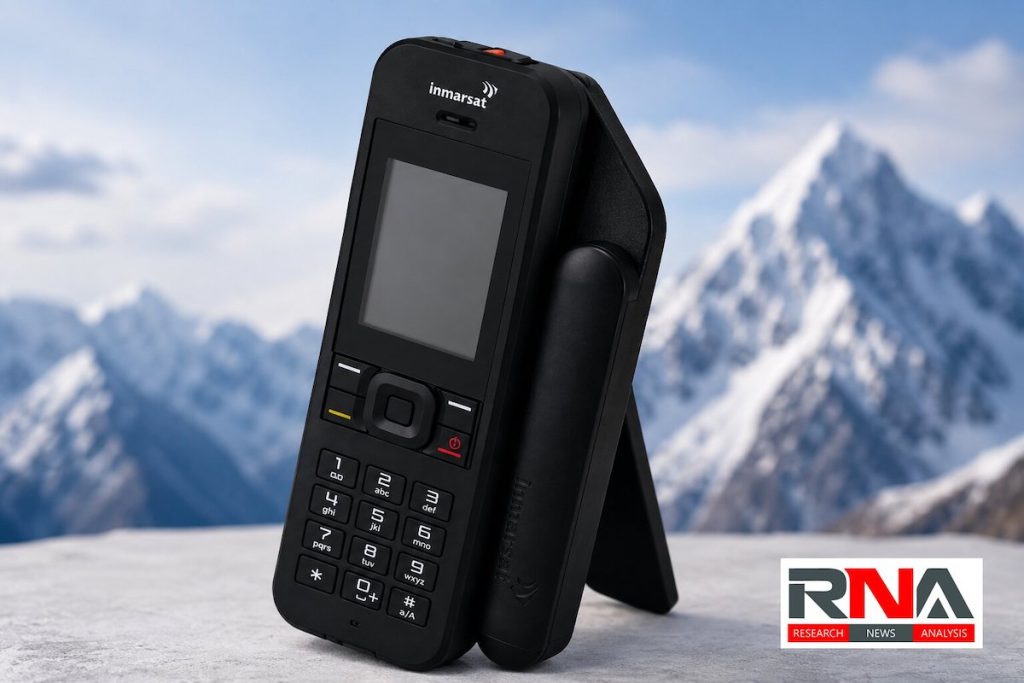
New Delhi: In a renewed bid to strengthen satellite-based communications for users operating beyond the reach of conventional mobile networks, the state-owned Bharat Sanchar Nigam Limited (BSNL) has announced the availability of a satellite phone priced at ₹134,166. The targeted market also includes the defence sector, maritime operators, disaster-response agencies and enterprises working in remote locations.
In a post on X, on Thursday, BSNL said the handset, priced inclusive of all taxes, has been developed for use in challenging environments where terrestrial telecom infrastructure is unavailable or unreliable. The device supports voice calls and SMS services through satellite connectivity, allowing users to remain connected even in isolated regions.
Unlike conventional smartphones that rely on mobile towers, the BSNL satellite phone communicates directly through satellites, making it suitable for border regions, offshore waters, mountainous terrain, forests and disaster-hit areas where cellular networks are often disrupted or do not exist. The company has described the product as a communication solution for “beyond boundaries”, emphasizing reliability over consumer-oriented features.
The launch is aimed primarily at specialized users rather than the mass market. Defence personnel, maritime operators, emergency response teams, mining companies, remote industrial projects, adventure expeditions and pilgrims travelling through isolated regions are expected to be among its principal users. The handset also offers an SOS emergency feature, a rugged design suitable for harsh operating conditions and a battery optimized for extended field deployment.
BSNL has clarified that the satellite phone cannot be freely purchased or operated by the general public. Under the Department of Telecommunications’ regulations, prospective users must obtain the necessary government authorization before acquiring or using the device. Unauthorized possession or operation of satellite phones in India can attract legal action because satellite communications remain tightly regulated for national security reasons.
Although the handset’s price exceeds that of many premium smartphones, including several flagship devices currently on the market, industry observers note that comparisons are largely misplaced. The cost reflects specialized satellite communication hardware, access to satellite infrastructure and the niche operational role the device is intended to perform rather than mainstream consumer use. Satellite communication services also involve significantly higher operating costs than terrestrial mobile networks, with voice tariffs remaining substantially above conventional cellular rates.
The announcement comes as India witnesses growing interest in satellite communications, driven by increasing demand for resilient connectivity in strategic, commercial and emergency applications. Policymakers are simultaneously working on a broader regulatory framework for satellite communication services as multiple domestic and international operators prepare to enter the market.
For BSNL, the launch also complements its wider efforts to modernize its telecom infrastructure. The public sector operator has been expanding its indigenous 4G network across the country while continuing to offer Global Satellite Phone Service, which has been available under government regulations for approved users since 2018. The latest offering reinforces BSNL’s role in providing specialized communications for sectors where uninterrupted connectivity can be critical for safety, security and operational continuity.