


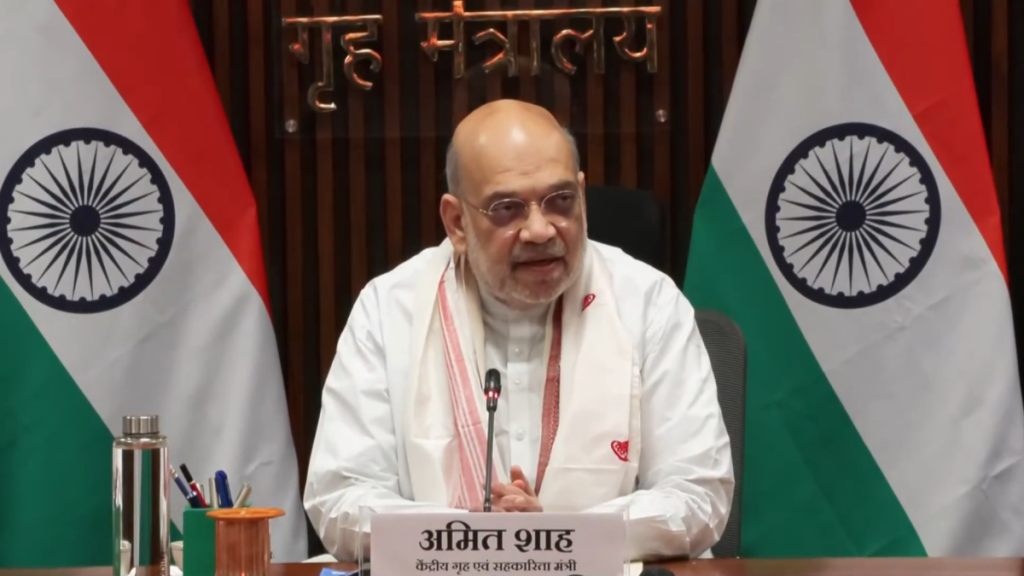
New Delhi: Union home minister Amit Shah on Saturday reviewed a recently constituted High-Level Committee on Demographic Changes (HLCDC) and guided its members to undertake extensive field studies in border districts, metropolitan cities and industrial hubs to assess evolving population patterns and their wider implications.
During a meeting attended by senior ministry of home affairs officials and committee members, Shah highlighted the need for a comprehensive examination of demographic changes across the country, particularly in regions witnessing significant population shifts. Officials said the panel has been asked to conduct on-ground assessments and gather first-hand inputs from affected areas.
The committee, established by the ministry of home affairs in May 2026, is chaired by former Supreme Court judge Justice Prakash Prabhakar Naolekar. Its members include census commissioner Mritunjay Kumar Narayan, former IAS officer Durga Shankar Mishra, former IPS officer Balaji Srivastava and economist Dr Shamika Ravi.
The panel has been tasked to examine demographic trends that may be linked to factors such as illegal immigration, cross-border movement, economic migration and other socio-environmental influences. The exercise is aimed at identifying the causes behind unusual population changes and evaluating their impact on governance, security and social stability.
Shah said demographic changes are not just about population numbers but can also impact national security, law and order, social stability, and local communities. He said the committee will pay special attention to border areas where such changes may have security implications.
As part of its mandate, the HLCDC will study demographic variations among different religious and social groups, especially in locations where population growth patterns differ sharply from broader regional trends. It will also examine settlement patterns and migration flows to identify factors driving these changes.
The committee will collect information from central and state government departments and other authorities. It can also consult experts, research institutions, security agencies and social organisations as part of its study.
One of the committee’s major responsibilities is to recommend a permanent framework for the identification, detention and deportation of illegal immigrants in a manner that is legal, transparent and time-bound. It is also expected to suggest measures to strengthen border management, population monitoring systems and coordination between the Centre and states.
The Ministry of Home Affairs will provide all administrative and logistical support required for the committee’s functioning. Headquartered in New Delhi, the panel has been mandated to submit its final report within one year. The government has also directed that the resolution constituting the committee be communicated to all its members and published in the Gazette of India for public information.