


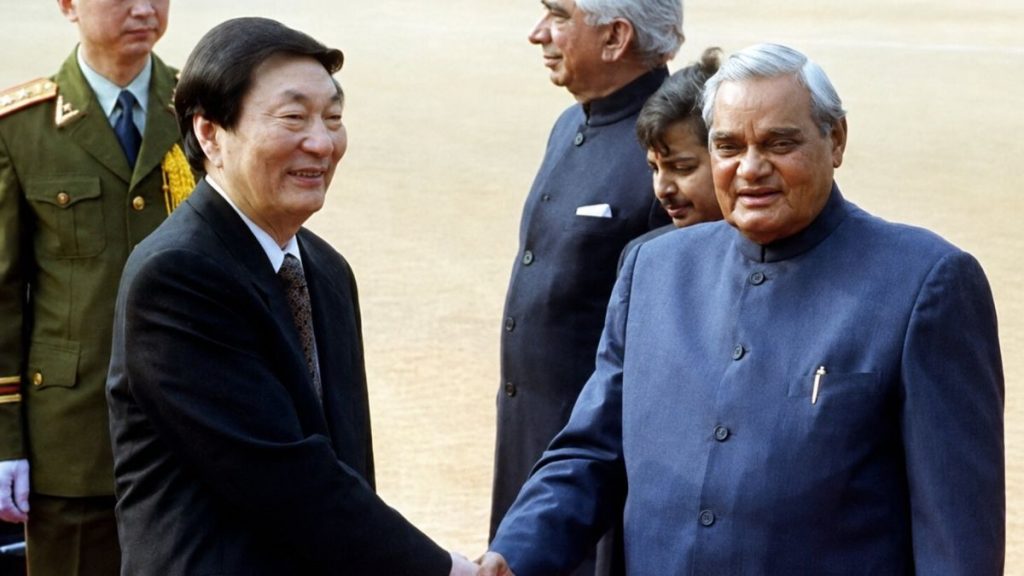
New Delhi: Zhu Rongji, the former Chinese premier who helped transform China into a global trading power, died in Beijing on Wednesday at the age of 98, according to China’s official Xinhua news agency. Zhu served as premier from 1998 to 2003 and became one of the most recognizable faces of the country’s economic opening.
Known for a blunt administrative style and a willingness to confront entrenched interests, Zhu pushed reforms in banking, taxation, housing and state-owned enterprises at a time when China was trying to modernize its economy without loosening political control.
Technocrat who pushed through reform
Zhu’s tenure coincided with one of the most consequential phases of China’s economic transition. He moved to curb inflation, strengthen central tax revenues, tighten bank lending and force loss-making state enterprises to become more commercially viable.
Those reforms carried a heavy social cost, with millions of workers losing jobs as inefficient state-owned firms were restructured or shut.
His most enduring international achievement was helping steer China into the World Trade Organization in December 2001 after years of difficult negotiations. Membership gave Chinese exporters far greater access to global markets while opening parts of the domestic economy to increased foreign competition.
The shift accelerated China’s rise as a manufacturing and trading powerhouse.
Zhu also backed private home ownership and wider financial reforms that reshaped urban China, even as later governments grappled with problems including debt, property speculation and inequality.
India visit put trade at centre
Barely a month after China joined the global trade body, Zhu travelled to India from January 13-18, 2002, for talks with the-then prime minister, Atal Bihari Vajpayee. His itinerary included New Delhi, Mumbai and Bengaluru, reflecting an effort to widen engagement beyond politics and bring business, finance and technology into the relationship.
The visit produced a bilateral trade agreement and several other understandings aimed at expanding economic cooperation. The trade pact provided for most-favoured-nation treatment and sought to create a more predictable framework for commercial exchanges.
Zhu’s Bengaluru stop became one of the most remembered moments of the visit.
At Infosys headquarters on January 17, he argued that China’s strength in computer hardware and India’s advantage in software could complement each other. Infosys also said Zhu granted the company permission during the visit to establish an office in China, giving an early boost to Indian technology companies seeking access to the Chinese market.
The visit did not remove political differences, but it helped place commerce and technology more firmly within the bilateral relationship.
Trade surged, imbalance widened
India-China trade was still relatively modest when Zhu visited. It has since grown into one of India’s largest bilateral trading relationships, although the expansion has been heavily tilted in China’s favour.
Official Indian data show bilateral goods trade reached $151.10 billion in 2025-26, up more than 18% from the previous financial year. India exported goods worth $19.47 billion to China while imports reached $131.63 billion.
The trade deficit widened to a record $112.16 billion.
Chinese machinery, electronics, components, batteries and other manufactured goods account for a large share of India’s imports, while New Delhi has repeatedly sought greater access for Indian products and services.
The figures capture both sides of the economic relationship that expanded rapidly after Zhu’s era, deep commercial integration alongside a persistent imbalance that remains a concern for India.
Zhu’s legacy in India will therefore extend beyond the symbolism of his 2002 visit because he helped establish economic engagement as a durable pillar of a relationship otherwise marked by political distrust and border tensions. More than two decades later, the scale of bilateral trade reflects the success of that opening, while its deep imbalance underscores how far the promise of mutually beneficial economic complementarity remains from being fulfilled.