


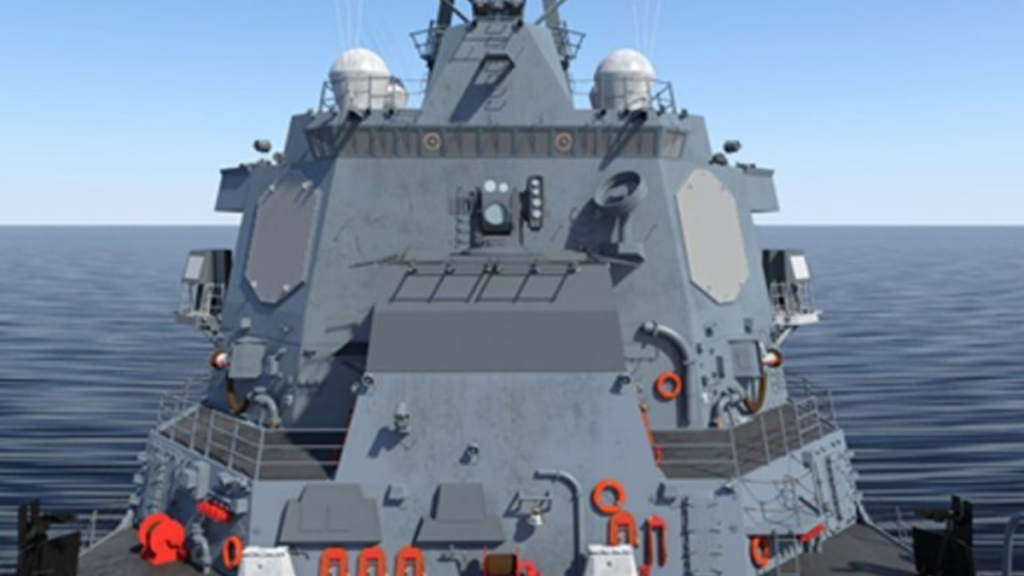
New Delhi: The United States military is using high-energy laser weapons in the Strait of Hormuz to target drones and incoming cruise missiles. The systems are different from conventional air-defence weapons because they use a beam of energy instead of firing a missile at every target.
The lasers work by taking power from generators or battery packs and turning it into a concentrated beam of light. When the beam stays on a target for several seconds, the heat can damage its sensors or destroy the drone.
According to New York Post, the United States war department said the weapons can destroy drones and incoming cruise missiles at a much lower cost than conventional missiles. The report said the US has been working on laser weapons for about 50 years and is now testing them in real-world operations.
Mark Neice, president of directed energy consultants, told NYP that operators can track a drone and aim the beam at a particular part of it. This allows them to disable its sensors or destroy the drone itself.
Soldiers use Xbox-style controllers
One unusual part of the system is the way it is operated. US soldiers are using modified Xbox-style controllers to control the laser weapons, with the military choosing a familiar gaming-style setup instead of creating a completely new controller.
Jared Keller, who writes the Laser Wars newsletter, told NYP that laser weapons are now moving from laboratories into real-world environments. He said the US Army’s roughly $500 million contract for production of combat-ready laser systems is an important step in that process.
The US has also been testing the technology along its southern border against drones linked to Mexican drug cartels, according to the report
The laser systems currently being used in the Middle East are too large and heavy to be carried around by individual soldiers. Instead, they are fitted onto warships, including systems such as the high-energy laser with integrated optical-dazzler with surveillance, or Helios.
The Helios system can reportedly produce a 60 kilowatt laser that can be used against aerial targets. Boeing has also developed a Compact Laser Weapon System, designed to take on larger Group 3 drones weighing up to 1,300 pounds. Lasers could also reduce the need to carry large stocks of missiles because the weapon itself does not run out of ammunition in the same way.
However, the technology still has limits. Laser weapons work best when skies and atmospheric conditions are clear, while dealing with large groups of drones at the same time can be difficult because the beam has to remain focused on a target for several seconds.
The reports also said experts were not aware of these laser systems being used against human targets so far. In June, the United States war secretary, Pete Hegseth, successfully shot down a drone with a laser weapon after getting a fast training at the White Sands Missile Range in New Mexico.