


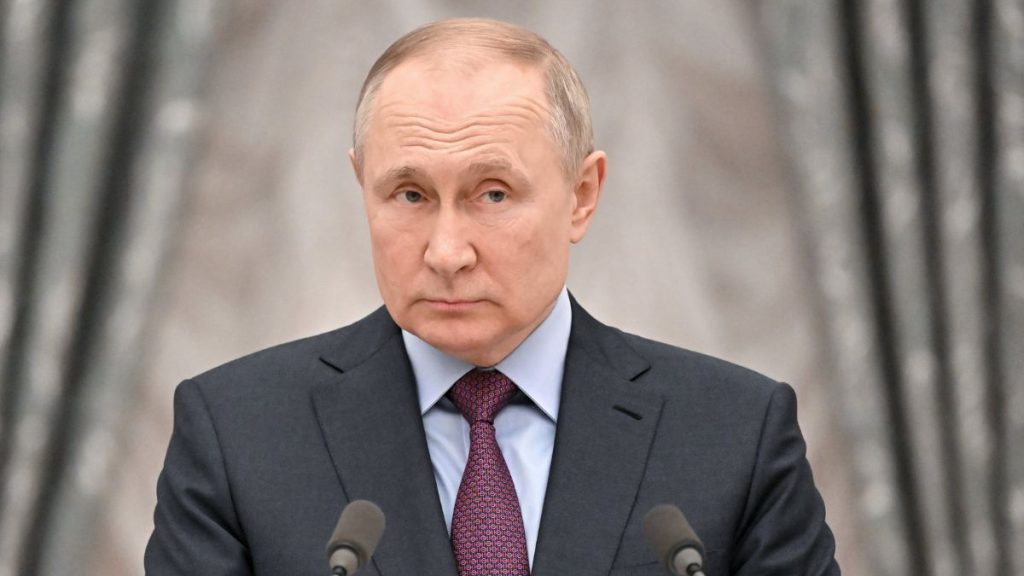
New Delhi: Russian president Vladimir Putin has slammed the US, albeit without naming it, for the “external influence” in the “delicate” and “multifaceted” Sino-Indian ties. The two Asian giants are attempting to normalize their diplomacy after four-plus years of military faceoff in eastern Ladakh between April 2020 and October 2024.
In his remarks at the St. Petersburg International Economic Forum (SIEF) on Friday, Putin pointed out the growing weight of major economies in geopolitics, saying, “India ranks third, Russia ranks fourth in terms of GDP…China, the US, India, and Russia are the top four countries.”
Underscoring the sensitivity in the bilateral relationship between India and China, the Russian president said, “These are delicate, multifaceted relations, and interfering in them is not a good idea. We interact with our friends in both India and China.” He was indirectly alluding to the American interest in pitting the two Asian neighbours against each other for its own geopolitical gains.
Russia’s close ties with India, China
He said Moscow maintained close engagement with both New Delhi and Beijing, and that he was confident in their ability to manage bilateral challenges through dialogue. “We interact with our friends in both India and China. Chinese president Xi and Indian prime minister Modi are both trying to resolve all the issues of mutual interest, including the relations on the borders,” he said about the recent talks and bilateral engagement between the two nations.
Putin stressed that Russia’s ties with India and China should not be viewed as mutually exclusive, and these do not generate friction among the three nations. “As for Russia, we have our own relations with China and India. No one is holding grudges. Relations between Russia and India do not disturb China. Our relations with China do not disturb India,” he said.
Pakistan-China nexus against India
He added that Russia was “well aware of the intricacies of the issues concerning the border” between India and Pakistan. “I don’t think Pakistan is a country that is fully under the control of China. Pakistan is a large country, and it has multifaceted relations with different nations. They need to consider the cooperation with China, but everyone is developing ties with China,” he said.
He also talked about the BRICS grouping and its evolution as a multilateral platform for cooperation and cited it as evidence to “constructive engagement” among major, emerging economies. “Take BRICS, for example. At one point, I suggested that the leaders of India and China meet here (in Russia), which is how the Russia-India-China (RIC) trilateral was established. We had things to talk about, to agree upon, which we started doing later. Then, we were joined by Brazil,” he said.
India and China were in a military faceoff in eastern Ladakh between 2020 and 2024. A breakthrough in the de-escalation talks, both at the military and diplomatic levels, was achieved in Kazan, Russia, during the BRICS summit in 2024. At Putin’s prodding, both Xi Jinping and Narendra Modi talked in Kazan, which resulted in the two Asian neighbours agreeing to end their localised conflict.