


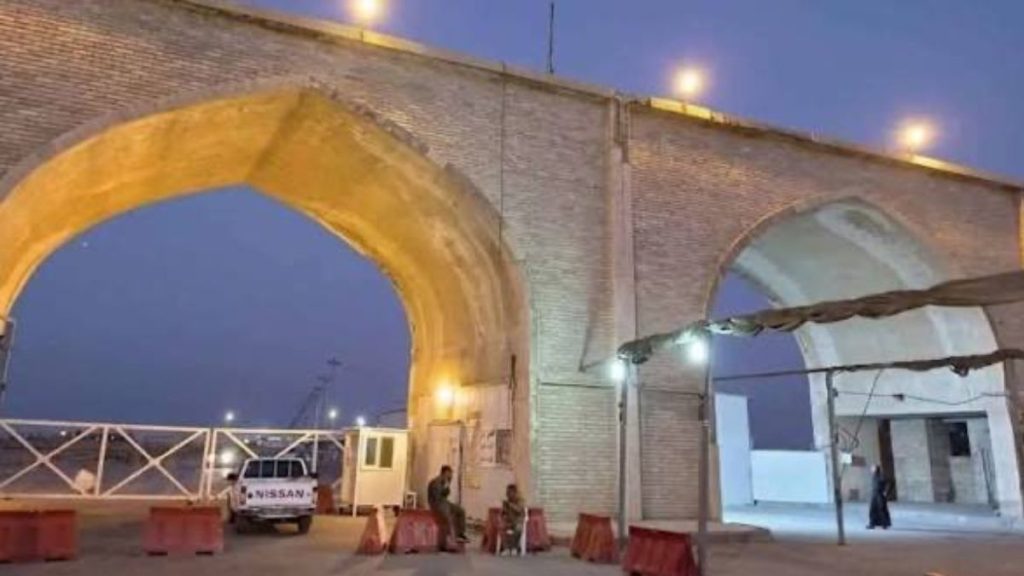
New Delhi: Iraq closed the Sheeb border crossing with Iran on Wednesday, halting the movement of passengers, vehicles and commercial trucks until further notice. The move, reportedly ordered by the prime minister, Ali al-Zaidi, comes as Baghdad reviews security arrangements at an important trade and travel route.
Sheeb, also known as al-Shaib or al-Sheib, is in Iraq’s southeastern Maysan province, opposite Iran’s Khuzestan province. The crossing carries food products and building materials and serves pilgrims travelling to Najaf and Karbala. The National Iraqi News Agency reported that the shutdown had taken effect.
Al Jazeera, citing an Iraqi government source, said additional crossings could close gradually over the coming days. The report referred to six Iraq-Iran border crossings, but no official timetable or list of other affected routes has been announced. Nor has Baghdad specified whether further restrictions would cover both passengers and freight. The latest order does not establish that the entire border is closed.
Why has Iraq closed the crossing?
An Iraqi border official told Reuters that existing security measures at Sheeb were inadequate and that the closure would allow inspections to be reviewed and detection equipment installed to prevent prohibited materials being smuggled through the facility. Two other sources confirmed that passenger and freight traffic had been suspended.
The explanations are not identical. A source in Maysan’s provincial council described the shutdown as necessary for technical reasons, while an Iraqi government source cited by Al Jazeera referred to logistical and administrative arrangements at several crossings.
None of these accounts identifies a particular security breach, confiscated shipment or attack as the immediate trigger. The government has not publicly provided a detailed explanation, and concerns about smuggling do not establish that a fresh operation was uncovered.
Iran has already expressed displeasure. Its interior ministry said Tehran had not received advance notice, while a spokesperson said a bilateral arrangement required at least a day’s warning for closures lasting longer than 24 hours. No immediate Iraqi response to that complaint was reported.
What happened during September’s shutdown?
The latest move follows the temporary closure of the Sheeb, Shalamcheh and Mandali border crossings in September after drone attacks on Saudi Arabia’s East-West oil pipeline. Riyadh said the drones had been launched from Iraq, while two Iraqi security sources told Reuters that a large-scale operation was underway to identify those responsible. The Iraqi prime minister later dismissed a local military commander, while Baghdad agreed to an Iranian request for a joint investigation into drone-launch platforms discovered near the border.
The Iraqi border ports commission later said the restrictions were temporary and intended to strengthen inspection, operational readiness and border control.
The security media cell authorized passenger entry through Sheeb and Shalamcheh from September 13, followed by staged freight resumptions at Shalamcheh on September 14, Mandali on September 15 and Sheeb on September 17.
Officials said Zurbatiyah and al-Mundhiriya continued operating throughout September’s restrictions. That history shows how Baghdad has used temporary closures while reviewing border operations, but it does not establish that October’s decision has the same cause.
What is at stake for trade and regional security?
Iraq and Iran recorded more than $10bn in bilateral trade in 2025, according to official figures cited by Reuters, largely reflecting Iranian food and consumer-goods exports to Iraq. Border disruptions and higher transport costs have already weighed on trade this year.
Sheeb is also an important route for religious pilgrims. During the 2025 Arbaeen season, up to 26,000 visitors entered through the crossing daily, with Iraqi authorities opening 128 processing counters, according to the Iraqi News Agency. These figures illustrate the crossing’s importance but do not represent its normal daily traffic.
A prolonged closure could divert travellers and freight to other routes, increasing transport costs and pressure on customs facilities. The impact will depend on whether alternative crossings remain accessible, particularly if further restrictions are introduced.
Baghdad is balancing border control with close commercial and social ties to Tehran amid wider US-Iran and Israel-Iran tensions. No Iraqi official has publicly linked Wednesday’s order to US sanctions, a new attack or a diplomatic break with Iran.
The immediate test is whether authorities explain the security deficiencies, identify additional crossings facing restrictions and establish conditions for reopening Sheeb. Until then, the suspension remains indefinite rather than permanent, and its wider consequences remain uncertain.