


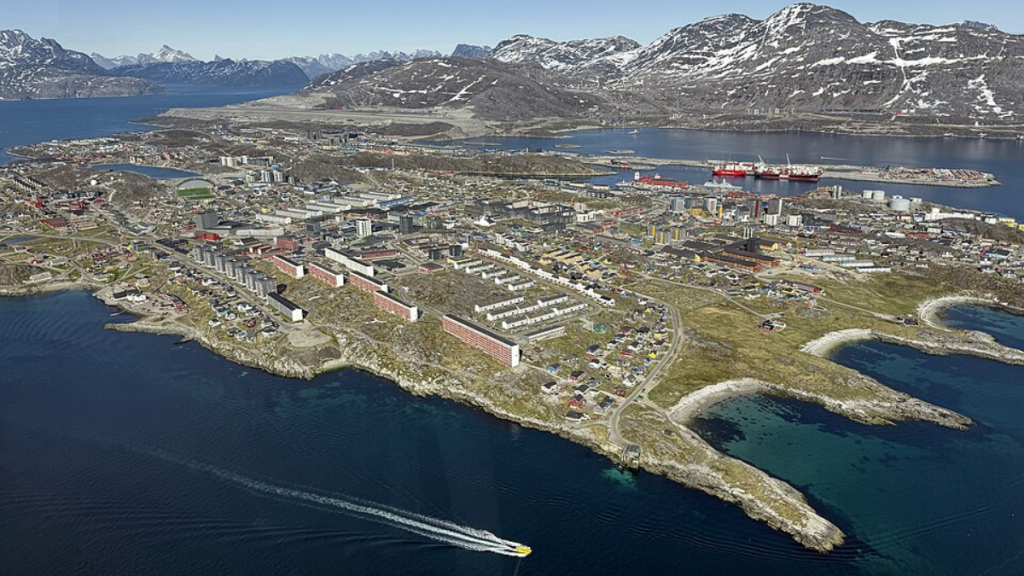
New Delhi: The United States and Denmark have reached a new agreement covering the security of Greenland, potentially giving the US a much larger military role in the territory. The announcement follows months of tension after the US president, Donald Trump, repeatedly called for greater American control over Greenland and refused to rule out military action.
In a post on Truth Social, he said the deal gives the US “permanent control over security, and all other needs” in Greenland, and claimed there would be “NO COST” to the United States.
The agreement does not transfer Greenland to the United States. Greenland remains an autonomous territory within the Kingdom of Denmark, while the new arrangement is focused on American security access, military activities, and preventing countries seen as US adversaries from establishing a strategic foothold.
Trump said the agreement guarantees that Washington will “FOREVER have the complete ability to do what is necessary in Greenland” to protect the territory and the United States. He also described it as an “Infinite Life” agreement, indicating that he expects the security arrangements to continue without an expiry date.
The agreement could significantly expand the American military presence in Greenland, although the exact scale of the deployment has not yet been made clear. Trump said the United States would develop a large military presence on the island, but it remains unclear whether this would involve new bases, expanded facilities or greater use of existing military infrastructure.
The United States already has a major military installation at Pituffik Space Base in northwestern Greenland. The base plays an important role in US missile warning, missile defence and space surveillance operations, given Greenland’s location between North America and Europe.
Here’s what Denmark and Greenland say
The Danish prime minister, Mette Frederiksen, said the agreement would strengthen security in the Arctic and North Atlantic while recognizing the sovereignty and territorial integrity of Denmark and Greenland. Frederiksen also said the deal upheld the Greenlandic people’s right to self-determination and would strengthen security for Nato and Europe.
The Greenland prime minister, Jens-Frederik Nielsen, said the agreement recognized Greenland’s interests and its place in international cooperation. Nielsen said the arrangement would also strengthen Greenland’s security while benefiting all three governments.
Why does the US want a stronger military role?
Greenland occupies a strategically important position in the Arctic and North Atlantic. Its location provides access to key air and maritime routes and allows the United States to monitor activity across a region that has become increasingly important for military and economic competition.
Russia and China have also been active in the Arctic. For Washington, greater control in Greenland is linked to tracking those developments and protecting the wider security web that binds North America and Europe.
Behind Trump’s motive of pushing for Greenland
Trump has repeatedly described Greenland as important to US national security and has sought greater American control over the territory. His earlier proposal to acquire Greenland was rejected by Denmark and Greenland, with Greenlandic leaders maintaining that the island is not for sale.
The latest deal is a new twist, with Washington seeking greater security and military access rather than a handover of sovereignty. Greenland continues to have extensive self-rule, while Denmark remains responsible for areas including defence and foreign affairs.
Despite Trump’s description of the agreement as permanent, several practical details remain unclear. The exact military plans, the number of additional US personnel or assets involved, and whether new military facilities will be constructed, have not been fully outlined.
The agreement also does not change Greenland’s sovereignty or constitutional status. Its significance will therefore depend largely on how the new security arrangements are implemented, and how much additional access and military activity Washington eventually seeks.
Reuters had earlier reported that the United States and Denmark were closing in on a deal that would result in an increased US military presence in Greenland, but would stop well short of Trump’s long-held ambition of acquiring the island for the United States.