


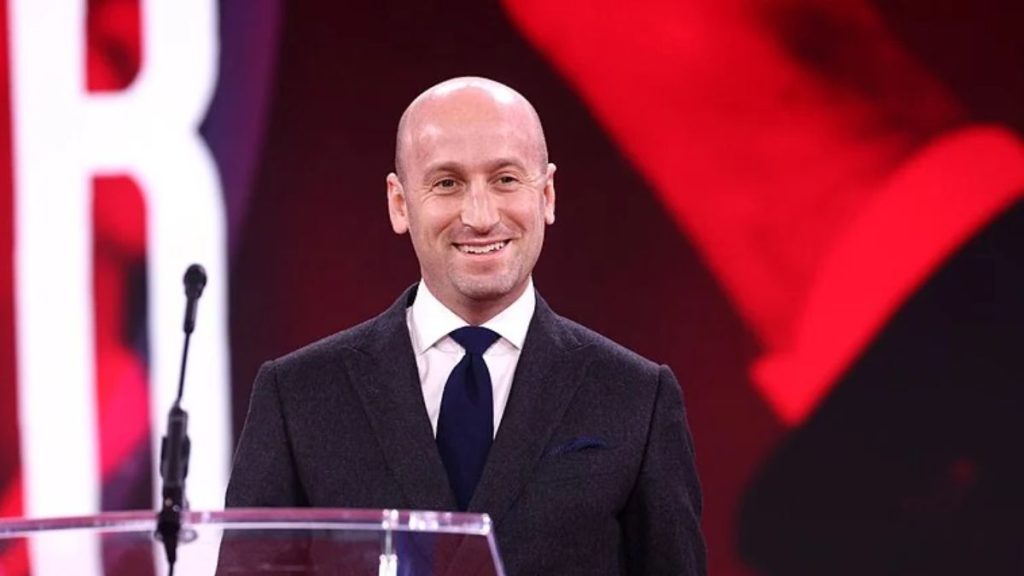
New Delhi: The US president, Donald Trump, has appointed his longtime adviser, Stephen Miller, as White House chief of staff, replacing Susie Wiles after Republican losses in the November 3 midterm elections. Miller, who shaped many of Trump’s immigration policies, moves into one of the most senior posts in the White House more than 10 years after he joined Trump’s first presidential campaign as a speechwriter.
Miller, 41, will take office on November 9. Trump described him as “one of my most trusted advisors” in Friday’s announcement. Wiles, the first woman to hold the position, resigned on Thursday and will move to Trump’s political operation.
From conservative student to Republican insider
Born in Santa Monica, California, Miller developed his conservative political identity during his school years, frequently challenging policies he considered liberal. At Duke University, he led the Duke Conservative Union and became involved in campus political debates before graduating in 2007.
He then moved to Washington and worked for Republican lawmakers, including the then Alabama senator Jeff Sessions, who advocated stricter immigration controls. His work with Sessions helped build his reputation in conservative circles and his connections with Republican policymakers.
Miller joined Trump’s presidential campaign in January 2016 as a speechwriter, helping shape speeches centred on immigration, national identity and the “America First” agenda. Trump’s former strategist Steve Bannon told the Associated Press in 2017 that Miller had helped Trump find his political voice.
Architect of Trump’s immigration policies
After Trump’s 2016 election victory, Miller entered the White House as a senior adviser and became influential in shaping the administration’s immigration restrictions.
He helped develop the 2017 travel restrictions affecting several Muslim-majority countries, efforts to end the Deferred Action for Childhood Arrivals programme and the 2018 zero-tolerance border policy.
The 2018 policy led to thousands of migrant children being separated from their parents and drew criticism and legal challenges. Supporters defended stricter enforcement as necessary for border security, while civil rights organizations condemned the effect on migrant families.
Miller faced further scrutiny in 2019, when the Southern Poverty Law Center published emails that it said showed him promoting white nationalist literature and ideas. Democratic lawmakers demanded his removal, while the White House at the time rejected the organization’s allegations.
After Trump’s 2020 election defeat, Miller founded America First Legal in 2021, a conservative legal organization challenging government policies and institutional practices. He remained closely associated with Trump’s political movement during the years outside government.
Return to power in 2025
Miller returned to the White House in January 2025 as deputy chief of staff for policy and homeland security adviser, with influence over domestic policy and immigration enforcement.
He became a central figure in Trump’s mass-deportation programme, advocating expanded Immigration and Customs Enforcement operations.
In May 2025, Miller publicly discussed an administration target of at least 3,000 immigration arrests a day. Enforcement operations later expanded to include migrants who had lived in the US for decades, including people without serious criminal records, Reuters reported.
His influence extended to restrictions on legal immigration and efforts to limit birthright citizenship, several of which faced constitutional challenges. Trump’s renewed attempt to restrict citizenship rights prompted further legal disputes, as RNA Media reported in August.
Miller also became involved in federal workforce reductions, initiatives targeting diversity programmes and national security discussions involving Venezuela, Iran and Greenland.
Why has Trump promoted him now?
Miller’s appointment follows Republican defeats in the midterm elections, which gave Democrats control of both congressional chambers from January 2027. But Trump denied that the leadership change was a response to the election results, saying it was time for a change.
Wiles, who helped oversee Trump’s political comeback and second-term White House operations, submitted her resignation on Thursday. The US vice-president, JD Vance, welcomed Miller’s promotion, while Democratic lawmakers have indicated that his immigration policies could face closer congressional scrutiny.
As chief of staff, Miller will oversee White House personnel, coordinate policy implementation, manage access to the president and help maintain relations with Congress. Miller’s ability to carry out those policies will depend on presidential decisions, court rulings and congressional oversight.