


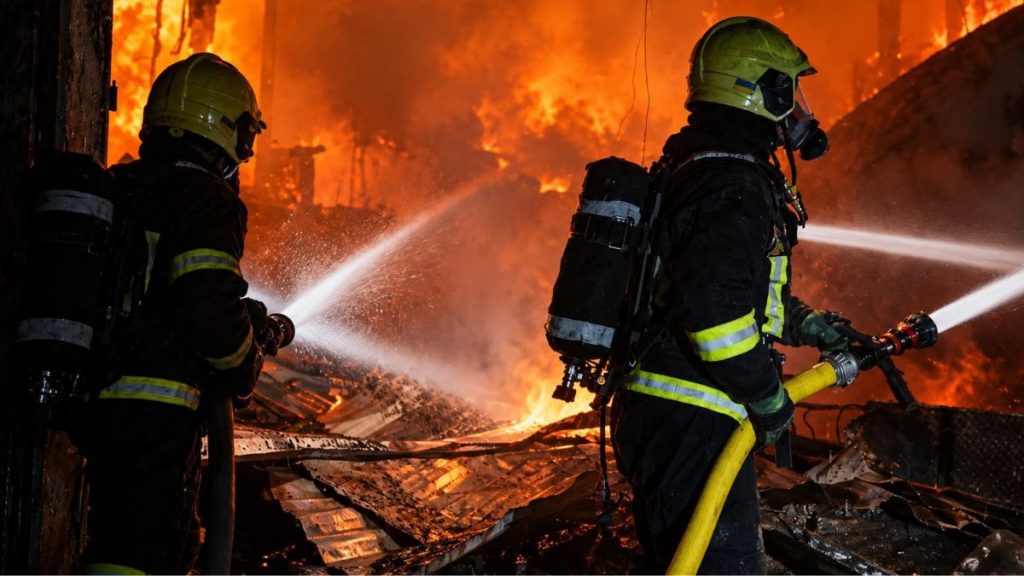
New Delhi: Ukraine struck an oil refinery in Russia’s Ryazan region on Thursday, triggering a fire after Kyiv abandoned a brief pause in attacks on Russian energy facilities. The strike followed renewed Russian attacks on Ukrainian power infrastructure and deepened a diplomatic rift over the United States president, Donald Trump’s proposed energy truce, fuel agreement with Moscow and restrictions on military communications.
Ryazan governor Pavel Malkov confirmed the fire at the Rosneft-owned refinery, which accounts for nearly 5% of Russia’s refining capacity. A senior Ukrainian official confirmed Kyiv’s involvement in the attack.
Trump announced on October 11 that Russia and Ukraine had agreed to halt attacks on energy infrastructure but provided no detailed terms, while Moscow did not confirm a formal agreement. Kyiv said it suspended refinery strikes for three days, although Russian missile and drone attacks continued hitting Ukrainian power facilities.
“The block (on attacking refineries) is out. We’re done,” Zelenskyy told the Financial Times, confirming Ukraine would resume its strikes. Trump subsequently called the renewed refinery attacks a “disgrace”, arguing they were contributing to higher global diesel prices.
US-Russia diesel deal and Starshield restrictions deepen tensions
Asked by British journalist Piers Morgan whether he felt betrayed by Trump, Zelenskyy replied, “Really, yes, between us.” He said Ukraine was losing a strong partner in Washington amid disagreements over the energy truce, Russian diesel exports and restrictions affecting military communications as RNA Media reported earlier.
Trump criticized Zelenskyy during a Newsmax interview, saying, “I think I find Zelenskyy to be more difficult to deal with than Putin.”
The dispute intensified after Washington eased restrictions on Russian diesel supplies. Trump announced an initial supply exceeding 300,000 tonnes, followed by 500,000 tonnes in November and another million tonnes thereafter. Zelenskyy warned that the arrangement could provide Moscow with additional revenue to sustain its military campaign.
Ukraine also reported that restrictions on SpaceX’s military-focused Starshield satellite communications service disrupted drone missions and battlefield coordination. Starshield operates separately from commercial Starlink, although both use related satellite infrastructure.
“Starshield systems are owned and controlled by the US government. Any limits on speed or usage are decided by the US military and ultimately POTUS,” SpaceX chief Elon Musk wrote on X.
An order to restrict Starshield reportedly originated within the White House, according to officials cited by Reuters. However, a senior US official denied that Trump had requested the restrictions. Ukrainian officials subsequently reported partial restoration of connectivity, with moving terminals operating at speeds of up to 160 kilometers per hour.
Kyiv separately raised concerns about missing advance warnings of Russian ballistic missile attacks, although Trump maintained that Washington had not stopped sharing intelligence.
Russian drone barrage intensifies as Ukraine seeks European support
Russia launched more than 850 drones overnight, Zelenskyy said in a post on X. Ukraine’s air force reported intercepting 536 drones, with impacts recorded at 31 locations. Three civilians were killed and six injured in the Kirovohrad region, according to emergency officials.
In another post on X, Zelenskyy claimed a Ukrainian Neptune missile strike destroyed four Russian Su-34 fighter-bombers and damaged two others at the Borisoglebsk airfield. Russia separately claimed to have intercepted 166 Ukrainian drones. The reported aircraft losses remain independently unverified.
Meanwhile, Zelenskyy sought further European support during meetings in Brussels following his London visit. Britain announced £45 million in air-defence missiles and accelerated deliveries, while European leaders discussed additional assistance to Ukraine.
Neither Moscow nor Kyiv has confirmed a renewed, mutually agreed halt to attacks on energy infrastructure.