


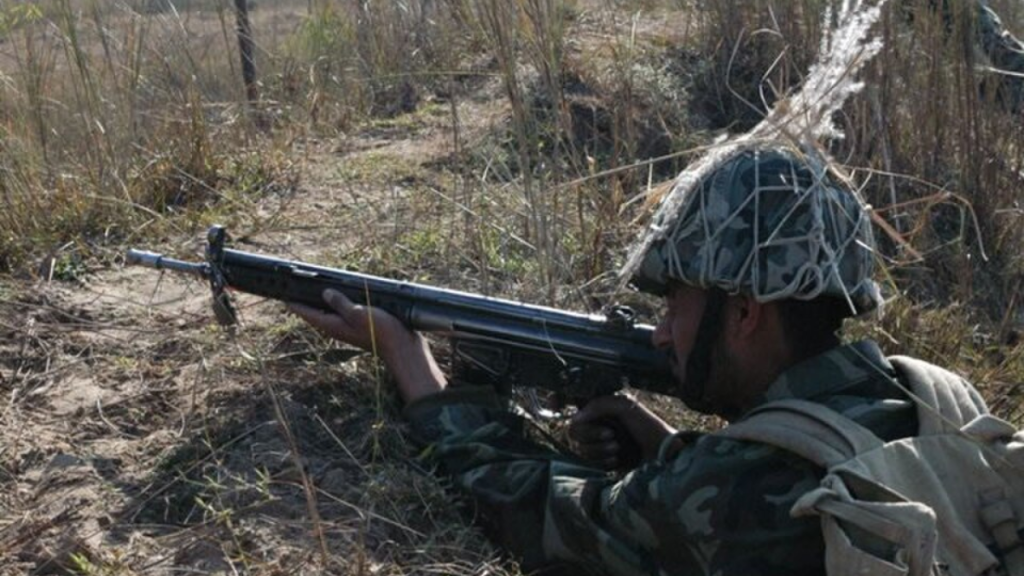
New Delhi: The US government publicly reaffirmed Pakistan’s right to defend itself against terrorist attacks, a statement that lands amid escalating military confrontation between Islamabad and the Taliban government in Kabul. The remarks came after Pakistan carried out airstrikes in Afghanistan’s Paktia, Paktika and Kunar provinces, targeting what it calls hideouts of the Tehrik-i-Taliban Pakistan (TTP) and Jamaat-ul-Ahra.
Kabul claims the attacks were targeted at civilian residences and not militant camps, resulting in the deaths of both women and children, and has called the strikes a breach of Afghan territorial sovereignty. According to the United Nation Assistance Mission in Afghanistan (UNAMA), 28 civilians were killed and 49 were injured in the incident. Islamabad rejects the count, saying its strikes killed 25 militants and caused no civilian harm.
The Taliban says it retaliated for this incident with attacks on facilities it links as Islamic State associates facilities within Khyber Pakhtunkhwa and Balochistan. Pakistan however has not acknowledged any casualties from these attacks. Instead, it says it downed four unmanned aerial vehicles that entered into Pakistan from Afghanistan.
Amid these competing claims of Afghanistan, Pakistan, and the Taliban, the US has now entered the dispute. It has not explicitly endorsed military operations undertaken by Pakistan but has made a statement saying that countries have “a fundamental right to defend oneself against acts of terrorism”. While the US has not endorsed every Pakistani military action, the statement still tilts toward Pakistan’s security narrative at a moment when an independent UN body has documented civilian deaths.
According to Reuters, a major driver of renewed hostilities includes increasing cooperation between the US and Pakistan under President Trump, who has designated Pakistan as a “major non-Nato” ally for America. Pakistan has also provided substantial diplomatic value as a facilitator for mediating various conflicts involving the US-Israeli war with Iran. In contrast, the Taliban government has not been recognized by the US since they took control of Afghanistan over four years ago, and thus the US has maintained limited levels of engagement with Kabul.
The recent round of hostilities represents a continued series of violent incidents, with previous retaliatory actions committed by the Taliban against Pakistan. This suggests that these attempts continues to be part of larger, historic cycle of hostilities and attempts by the US and Pakistan to establish peace and repair relationships.
A long-standing dispute between Pakistan and the Afghan Taliban is a significant factor fuelling the cycle of violence. Pakistan claims the Afghan Taliban shelters the TTP, while the Taliban denies giving TTP any assistance. It says Pakistan’s militancy problem is an internal matter. It adds that the issue must be resolved by Islamabad, not inside Afghanistan.
For now, it is clear that the US appears to support Pakistan’s counterterrorism concerns, even as the humanitarian costs of the conflict and the risk of wider regional instability continue to grow.