


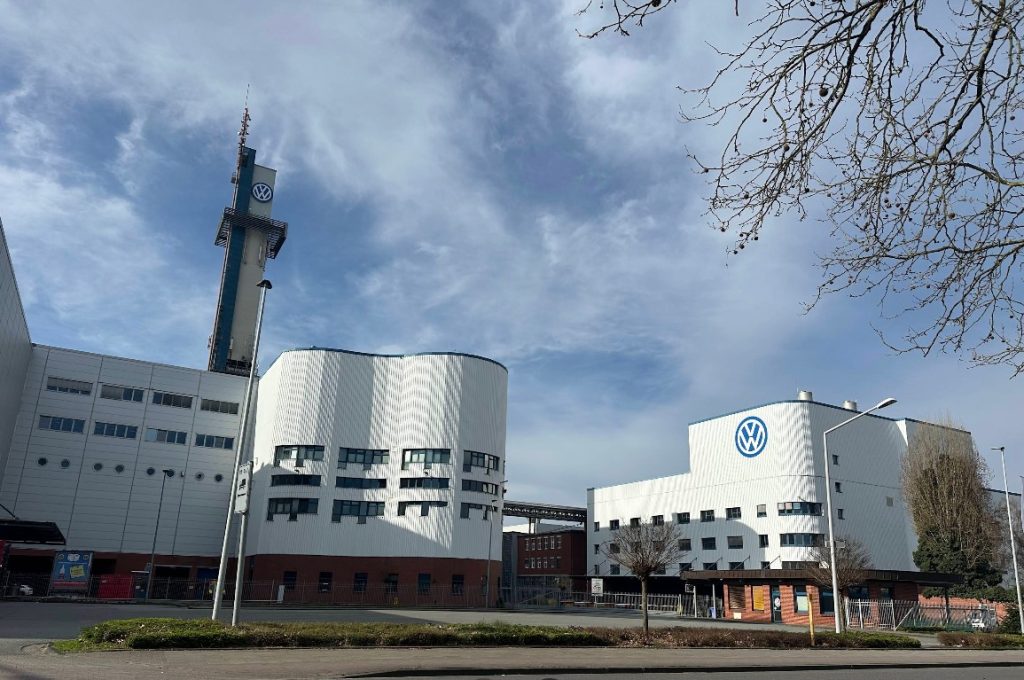
New Delhi: Volkswagen has agreed on the principal terms of a proposed sale that would transform its historic Osnabruck car factory in Germany into a manufacturing centre for security and defence equipment linked to Israeli military technology. The Israel-based investment company Aurelius Capital is expected to acquire a majority interest in the facility, with the German state of Lower Saxony joining as a minority shareholder.
The proposed factory’s first anchor project would involve cooperation with Israel’s state-owned Rafael Advanced Defense Systems, one of the principal developers of the Iron Dome, David’s Sling and Arrow air- and missile-defence systems. Volkswagen said the partnership could lead to the manufacture of air-defence systems and components for Germany and other European countries.
The agreement, announced on Monday, sets out the key terms for the possible sale of Volkswagen Osnabrück GmbH rather than completing the transaction. Detailed negotiations, regulatory scrutiny and internal approval procedures must still be concluded before ownership changes and defence production begins.
Although several reports have described the facility as a future Iron Dome factory, Volkswagen’s official announcement did not identify the specific Rafael system whose components might be manufactured there. Israeli and industry publications have, however, linked the proposed production programme primarily to Iron Dome equipment.
Under the plan, Rafael would supply its technological expertise and experience in modern air defence, while Osnabrück’s employees would support the industrialization and manufacture of the systems. The partners intend to establish production capacity in Germany, initially to meet German and wider European security requirements.
The Israeli company’s chief executive, Yoav Tourgeman, said the partnership was intended to enable the technology to be manufactured entirely in Germany. Rafael views localized manufacturing as a means of expanding its presence in the European defence market as countries accelerate procurement of air- and missile-defence systems.
Volkswagen decided in 2024 to end vehicle production at Osnabrück by the summer of 2027 as it confronted weak European demand, high manufacturing costs and intensifying competition from lower-cost Chinese carmakers. The company has been examining alternative uses for several underutilized German factories as part of the most extensive restructuring in its history.
The conversion could protect more than 1,200 jobs at a site whose industrial history stretches back 125 years. Labour representatives have estimated that approximately 1,400 of its 1,800 positions could ultimately be preserved if the transaction and subsequent projects proceed as envisaged, according to Reuters.
The proposal reflects a wider shift in European manufacturing as rising military expenditure creates opportunities to repurpose industrial capacity formerly devoted to civilian production. Automotive and engineering companies across Germany are increasingly exploring partnerships with defence groups as European governments seek larger domestic production bases and shorter supply chains.
The Rafael partnership has nevertheless drawn criticism from peace campaigners and some political groups because of Israel’s military campaign in Gaza and continuing international scrutiny of arms transfers to the country. Supporters of the project argue that it would preserve skilled employment and strengthen European air defence, while opponents object to converting a long-established civilian manufacturing site into a defence-production facility.