


New Delhi: The destruction of Iranian oil tankers by the United States has opened a potentially more consequential front in the economic contest surrounding the Iran war, threatening a crude supply chain on which a large segment of China’s independent refineries depends. While Washington has presented the strikes as a military response to Iranian attacks on US naval forces, their effect could extend well beyond Tehran by disrupting the flow of discounted Iranian crude to Chinese buyers.
The issue is particularly significant for China’s independent “teapot” refineries, many of them concentrated in Shandong province, which have built a substantial part of their business around processing cheaper Iranian, Russian and Venezuelan crude that larger state-owned refiners tend to avoid because of sanctions and financial exposure. These independent plants account for roughly a quarter of China’s refining capacity, making their access to alternative supplies an important factor in the country’s wider energy market.
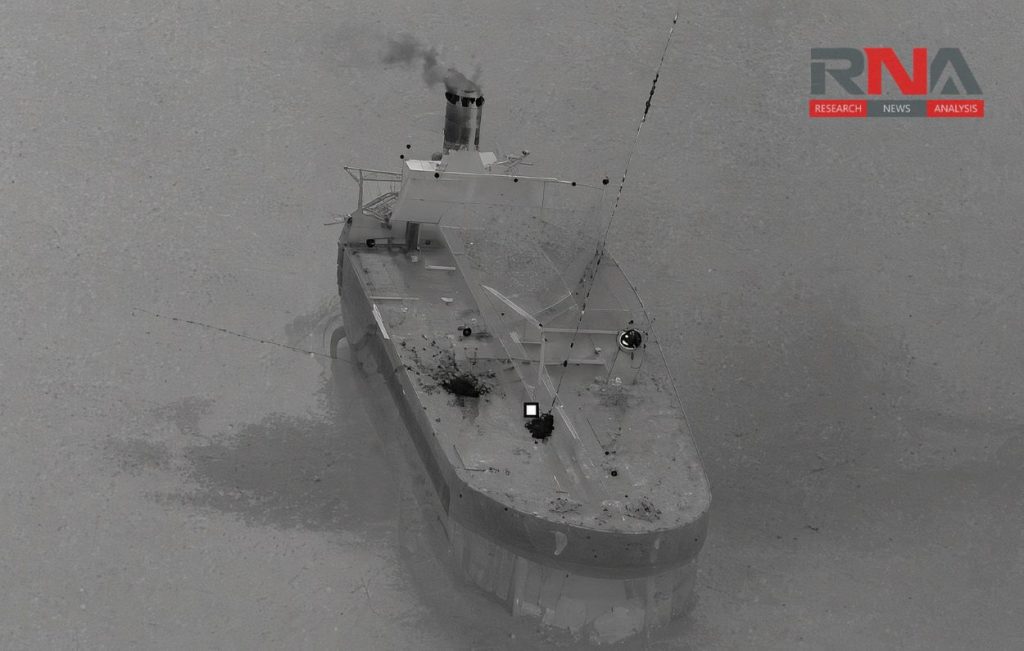
The immediate trigger is a series of US strikes on Iranian oil tankers in the Gulf region, including a vessel near Kharg Island, Iran’s principal crude export terminal. US Central Command said five tankers were destroyed in the latest round after Iranian forces launched missile attacks against American naval assets, with the crews ordered to abandon the vessels before they were struck.
The Kharg Island strike is strategically important because the terminal handles the overwhelming majority of Iran’s remaining seaborne oil exports. Modern Diplomacy argues that hitting the physical movement of Iranian crude represents a different kind of pressure from conventional sanctions, because restrictions on banks, companies and transactions can be circumvented, whereas a tanker that is disabled cannot complete its voyage regardless of how the payment is structured.
That distinction helps explain why the latest developments could have a disproportionate effect on China’s smaller refiners. For years, Iranian crude has reached Chinese buyers through a complex network involving intermediary companies, alternative payment arrangements, ship-to-ship transfers and vessels operating within what is commonly described as a shadow fleet.
Washington has already demonstrated that it is prepared to target Chinese entities involved in the trade. In April, the US treasury warned financial institutions about sanctions risks associated with Chinese teapot refineries and said China was purchasing about 90 per cent of Iran’s oil exports, while the US had previously sanctioned individual Chinese refiners for processing Iranian crude.
Beijing, however, has developed mechanisms to blunt the effectiveness of such financial measures. In May, China invoked its so-called Blocking Rules for the first time to shield five sanctioned teapot refiners from US measures, illustrating the extent to which the confrontation had moved from a conventional sanctions regime towards a contest between competing financial and legal systems.
Physical disruption presents a considerably harder problem. Chinese banks can be instructed not to comply with a US designation, but neither a Chinese regulation nor an alternative payment mechanism can guarantee that an oil tanker will safely leave an Iranian terminal, pass through a contested maritime zone and deliver its cargo.
The pressure on Chinese independent refiners is also arriving at a particularly difficult moment. Reuters reported in August that Iranian oil offers to Chinese buyers had fallen sharply as the US blockade tightened, with Iranian imports into China declining from an average of about 1.4 million barrels a day in 2025 to roughly 534,000 barrels a day in August, according to Kpler data.
The same report indicated that Shandong refiners were already looking towards alternative supplies, including crude from Iraq and Brazil, as Iranian availability deteriorated. That suggests the latest tanker strikes are not creating an entirely new vulnerability but are intensifying a supply problem that had already begun to emerge.
The economics of the teapot sector make the problem more acute. These refineries operate with relatively thin margins, and access to deeply discounted sanctioned crude has been central to their ability to compete with China’s larger, better-capitalised state refiners; a sustained loss of that discount could therefore force some plants to reduce throughput rather than simply switch suppliers.
China does have alternatives, but replacing Iranian crude is not simply a matter of finding another tanker. Chinese refiners have already increased purchases of Russian crude and examined supplies from other producers, yet higher prices, tighter availability and the logistical complications created by the wider disruption to Middle Eastern shipping can erode the commercial advantage on which teapot refiners depend.
The wider shipping picture is equally important. Reuters reported on Monday that only a small number of commodity vessels were moving through the Strait of Hormuz over the weekend, far below pre-war traffic levels, while the US blockade has effectively halted Iranian crude exports through the strait since July.
This creates a potentially important feedback loop for China: reduced Iranian exports constrain the supply of discounted crude, higher freight and insurance risks raise the cost of replacement barrels, and weaker margins make it harder for independent refiners to absorb the increase. The result could be a gradual squeeze on refinery operations rather than an immediate supply shock visible only through crude prices.
The consequences would also extend beyond China and Iran. Brent crude has already risen above $100 a barrel as the conflict has disrupted energy flows and raised concerns about the security of both the Strait of Hormuz and other regional shipping routes, increasing the risk that an initially bilateral confrontation could feed into inflation and energy costs across Asia and beyond.
For Washington, therefore, the tanker strikes carry an economic dimension even if their stated military rationale remains retaliation against Iranian attacks. By attacking vessels associated with Iran’s oil trade, the US is placing pressure not merely on Tehran’s revenue stream but also on the maritime infrastructure that has allowed Chinese buyers to continue accessing Iranian crude despite years of sanctions.
For Beijing, the challenge is more complicated than simply opposing US sanctions. China can provide alternative financial channels, support domestic insurers or facilitate new trading arrangements, but protecting an oil trade physically exposed to a widening conflict requires a much more direct response – and that could raise the stakes between Washington and Beijing.
The critical indicator now will be whether Iranian crude continues reaching China in significant volumes despite the attacks. Tanker movements from Kharg Island, Chinese refinery operating rates and the premium Chinese buyers are willing to pay for alternative crude will reveal far more about the durability of the Iran-China oil trade than the headline number of vessels destroyed.
The emerging contest is consequently not just about whether sanctions work. It is about whether a supply chain that survived years of financial pressure can withstand sustained physical disruption – and whether China is prepared to assume greater geopolitical and commercial risk to keep that supply chain alive.