


New Delhi: Washington is considering carrying out fresh military strikes on Tehran as Donald Trump, the president of the US, steps up pressure on Iran to reopen the Strait of Hormuz and return to meaningful negotiations. The warning came after Washington accused Iran of violating a truce agreement reached last month, as tensions continued to escalate around the key maritime route.
The US and Iran signed a memorandum of understanding (MoU) in mid-June, brokered by Pakistan, aimed at ending weeks of hostilities and reopening the Strait of Hormuz to shipping. Trump had hailed the agreement at the time, declaring on social media that ships should “start your engines” as the waterway reopened.
The truce, however, proved fragile from the outset and was repeatedly violated by both sides. By mid-July, Iran’s Islamic Revolutionary Guard Corps had resumed attacks on commercial vessels in the strait, prompting a fresh round of US strikes. Trump subsequently declared the ceasefire “over,” while Iranian officials said Washington’s continued strikes had voided the understanding altogether.
Trump signals more strikes against Iran
White House press secretary Karoline Leavitt said the US would continue pressuring Iran until Tehran agrees to negotiations on terms acceptable to Trump. She accused Iran of breaking the truce understanding and subsequently attacking commercial shipping and US personnel, according to the Associated Press.
Trump, speaking at Camp David on Friday, said the US would continue hitting Iran “very hard” until Tehran reaches a point where it can no longer sustain the confrontation. No fresh US strikes against Iran were reported overnight. The latest warning signals that Washington is prepared to maintain military pressure on Tehran despite the collapse of the recent truce.
Iran targets tankers in Strait of Hormuz
Iran’s Islamic Revolutionary Guard Corps claimed it had struck two oil tankers attempting to pass through the Strait of Hormuz. Iranian state media also reported that four other tankers had turned back from the waterway.
The reports came as the strategically important shipping route remained heavily disrupted amid the Iran-US confrontation. The Strait of Hormuz is a crucial corridor for global oil and gas shipments, making any prolonged disruption a major concern for international energy markets.
Kuwait intercepts drones amid regional escalation
The conflict also spilled into Kuwait, where the defence ministry said its forces intercepted drones inside Kuwaiti airspace. Several military facilities were reportedly targeted, with falling debris causing material damage but no casualties.
Iranian state media said the drones targeted a military airbase in Kuwait hosting US forces and described the attack as retaliation for American strikes against Iran.
Tanker hit by projectile off Oman
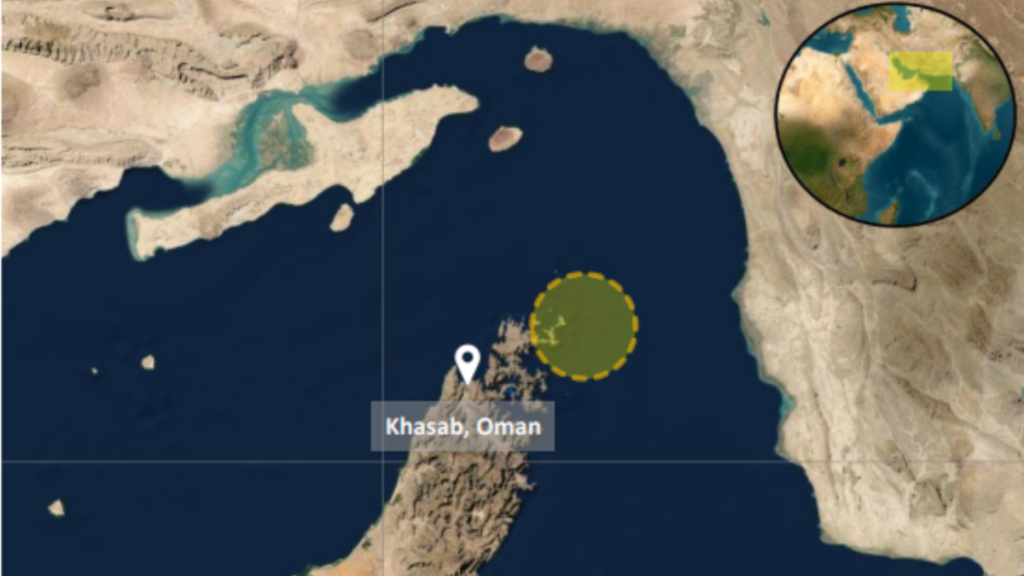
Separately, a tanker was struck by an unidentified projectile off Oman, according to the UK Maritime Trade Operations. The vessel reported damage to its engine room but no injuries.
The tanker was hit around 12.5 miles off Lima, Oman. The incident has added to concerns over the safety of commercial shipping around the Strait of Hormuz, with several vessels reportedly turning away from the route.
Hamas agrees to phased disarmament
In a separate development, Hamas said it would begin a phased disarmament process under a US-backed plan for ending the Gaza war. The proposal also calls for an Israeli withdrawal from Gaza, the deployment of an International Stabilization Force and the formation of a new Palestinian police force. However, Hamas said the surrender of its heavy weapons would be linked to the establishment of a Palestinian state, a condition opposed by Israel’s current government.
The UN secretary-general, António Guterres, welcomed the agreement and urged all sides to implement it fully. However, Israeli airstrikes continued in Gaza, killing at least one Palestinian and injuring four others, including a child, according to initial reports.