


New Delhi: The United States has held another round of confidential talks with Myanmar’s military-backed government in Tokyo, Reuters reported on Friday, signalling sustained engagement after years of efforts to isolate the generals. The meeting followed September discussions in Naypyidaw, although the latest agenda remains undisclosed.
The US assistant secretary of state for intelligence and research, Michael Vance, led more than a dozen American officials, according to one of three sources cited by Reuters. The agency could not establish who represented Myanmar, and neither government responded to requests for comment on the meeting.
Japan’s foreign ministry acknowledged communication with both sides but declined to disclose diplomatic exchanges, leaving its role beyond hosting unclear. The Tokyo discussions followed earlier US contacts addressing online fraud, a detained American and potential mineral cooperation.
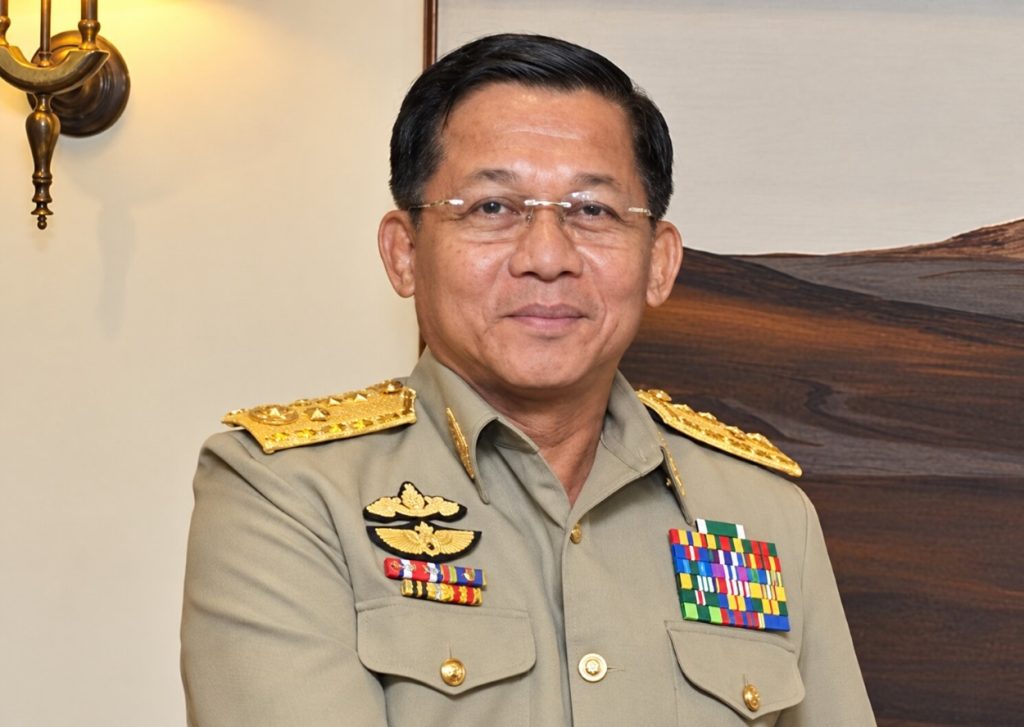
Vance met Myanmar’s coup leader-turned-president, Min Aung Hlaing, on September 15–16, according to Reuters’ earlier reporting. Those discussions sought the release of the American businessman, Adam Castillo, and built on another meeting in Tokyo in June, establishing a diplomatic channel that has continued into October.
Washington’s outreach has coincided with a separate sanctions decision involving a prominent Myanmar business family. On October 9, the US removed Theint Win Htet, daughter of the businessman, Thein Win Zaw, from its financial blacklist after she challenged her designation in court.
The US Treasury had sanctioned the family and the Shwe Byain Phyu business group in January 2024, alleging commercial support for Myanmar’s military. Theint Win Htet argued that she had no active role in her father’s business affairs, while Reuters reported that it was unclear whether her removal resulted from the diplomatic talks.
The scam networks that feature in Washington’s engagement present a wider international security problem involving both financial fraud and human trafficking. According to UN estimates cited by the European Commission, more than 300,000 people across Southeast Asia are being forced to conduct cybercrime, often under harsh and abusive conditions.
A regional assessment released by the UN Office on Drugs and Crime in July described an increasingly interconnected criminal economy linking scam operations with other illicit businesses. People from at least 80 countries and territories have been identified in the region’s scam compounds, illustrating why enforcement requires cooperation across borders rather than action within Myanmar alone.
Myanmar’s mineral resources give the diplomatic opening an additional strategic dimension, although interest in those deposits does not establish that a mining agreement is being negotiated. The Stimson Center’s research identifies Myanmar as the world’s largest producer of heavy rare-earth ores, which supply high-performance magnets used across major industries.
Access, however, depends on a fragmented political and military landscape rather than decisions in Naypyidaw alone. Stimson reported that the Kachin Independence Army seized most of the country’s rare-earth mines from a military-aligned warlord in late 2024, while mining has also expanded into territory held by the Ta’ang National Liberation Army.
China’s established commercial position creates another constraint on any prospective American involvement. Nearly all Myanmar’s heavy rare-earth output travels overland to China, according to Stimson, connecting the mines to Chinese processing and magnet-manufacturing industries through supply networks already embedded in the border economy.
The renewed diplomacy is unfolding against a continuing humanitarian crisis rooted in the military’s overthrow of the elected government in 2021. The UN human rights office’s assessment of 2025 recorded the highest verified civilian death toll from airstrikes since the coup and described that year as the deadliest for children over the same period.
For now, the Tokyo meeting establishes that Washington and Myanmar’s military-backed authorities are maintaining contact, while Min Aung Hlaing remains under US sanctions. It does not establish agreement on dismantling scam operations, opening mineral supplies or resolving the conflict that continues to shape both issues.