


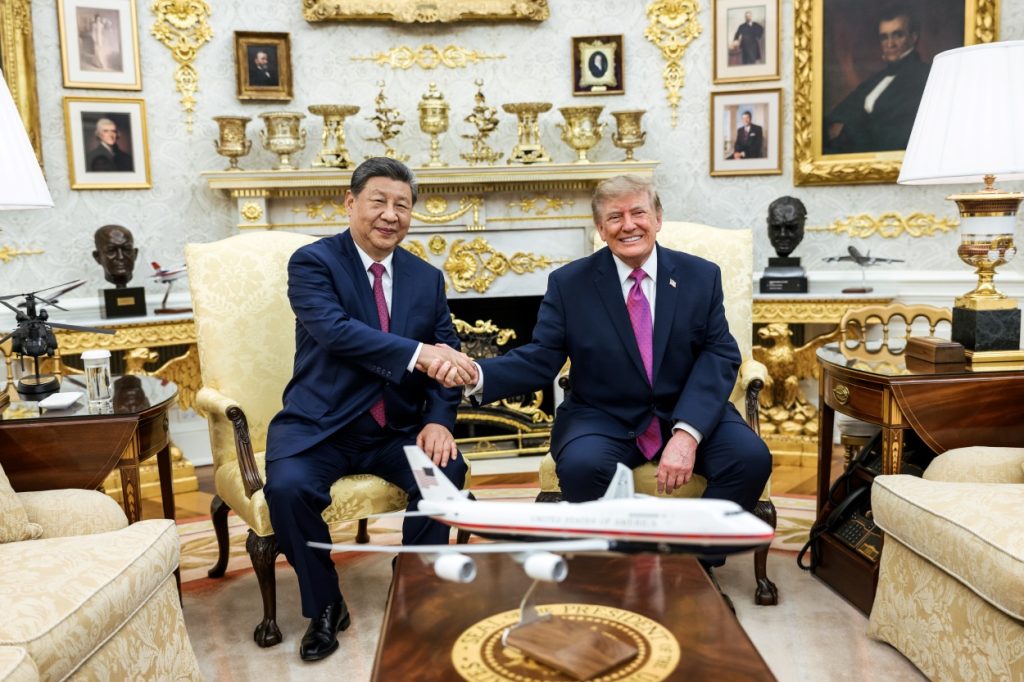
New Delhi: The United States and China have agreed on proposed tariff relief covering $30 billion of goods in each direction and new talks on artificial intelligence, following the Chinese president, Xi Jinping’s, visit to Washington. The arrangements combine efforts to ease selected trade barriers with measures to improve communication over emerging technologies and military crises, although implementation details remain outstanding.
The understanding emerged from Xi’s three-day visit for meetings with the US president, Donald Trump, which concluded on Friday. Both governments outlined progress after the summit, with Beijing describing an eight-point consensus and Washington publishing a statement detailing the commitments.
The tariff figure refers to the value of products eligible for more favourable treatment – potentially $60 billion of two-way trade – rather than the amount of duties being removed. The White House described agreement on recommendations, without specifying revised tariff rates or an implementation date, making the distinction between a negotiated commitment and effective customs relief significant.
American exports identified for relief include agricultural products, fish and seafood, timber and wood products, cosmetics and medical devices. Chinese goods covered by the proposed US concessions include small household appliances, toys, holiday decorations and children’s car seats, placing much of the initial emphasis on everyday commerce.
Further clarification is expected on Monday, after the US trade representative, Jamieson Greer, said Washington would release additional information on the negotiations on Monday. His announcement leaves businesses awaiting the detailed terms of the arrangement before assessing its practical effect on orders, pricing and sourcing.
The tariff initiative accompanies a two-month extension of the trade truce previously due to expire on November 10 this year. The US treasury secretary, Scott Bessent, said the additional negotiating time would allow the two countries to pursue a potentially broader agreement, according to Reuters reporting.
The latest summit also put bilateral trade and investment boards into operation, building on mechanisms agreed during Trump’s visit to Beijing in May. The trade board will address commerce in non-sensitive products, while the investment board provides a government-level forum for discussing investment opportunities and obstacles.
Alongside those mechanisms, a working group will examine barriers to agricultural market access, and China plans to import at least 10 million tonnes of American coal in each of 2027 and 2028. However, Washington’s account said discussions were continuing over shortages of rare earths and other critical minerals, indicating that this supply-chain concern remained unresolved.
On technology, the two governments established a dialogue on the risks and benefits of advanced AI, with another exchange scheduled by November this year. They also agreed to create a dedicated communication channel for AI-related incidents, adding a means of direct contact alongside the broader policy discussions.
The White House called the mechanism the “super intelligence” dialogue and said the leaders had agreed to use that terminology for the technologies concerned. Its announcement did not set out binding safety standards or explain how an incident would trigger communication, leaving the channel’s operating procedures unclear.
Military communication formed another part of the package, with the Chinese account saying the two armed forces would sign a memorandum of understanding as soon as possible on crisis communication and prevention. The countries also agreed to continue cooperation in locating the remains of American military personnel missing in China.
The summit’s wider diplomatic agenda included Iran and maritime access, with both sides opposing nuclear weapons for Iran and the imposition of tolls on international waterways. Those positions build on language announced during the May meeting, giving the latest commitments continuity with earlier negotiations rather than presenting an entirely new settlement.
Further meetings are envisaged around the Asia-Pacific Economic Cooperation and G20 summits, with each leader indicating an intention to attend the gathering hosted by the other country. For now, the immediate tests are whether the tariff recommendations become enforceable concessions and whether the promised communication mechanisms acquire procedures that make them usable during a crisis.