


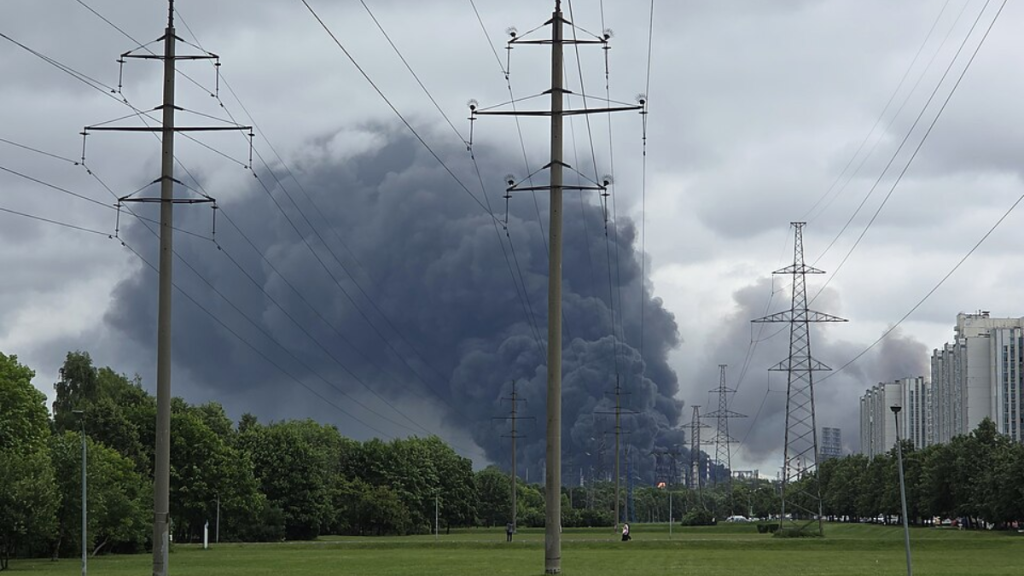
New Delhi: A Ukrainian drone attack set fire to Russia’s Afipsky oil refinery in the southern Krasnodar region on early Tuesday, in another major strike on Moscow’s energy infrastructure as Kyiv continues to take the war deep inside Russian territory. Falling drone debris at the nearby Afipsky railway station killed two people and injured two others, regional governor Veniamin Kondratyev said.
The attack adds to a growing series of Ukrainian strikes on Russian oil refineries and other energy facilities, which Kyiv has increasingly targeted as part of its wider action against infrastructure supporting Moscow’s war effort. The strikes are aimed at disrupting Russia’s fuel-processing capacity and putting pressure on an energy sector that remains a key source of revenue for the Russian economy.
The latest incident comes only days after the Perm oil refinery, Russia’s seventh-largest oil processing plant by volume, was hit by a Ukrainian drone attack on August 21. The attack caused a fire and damaged technological units, forcing the refinery to halt operations, according to Reuters.
The Afipsky refinery has itself been targeted by Ukrainian drones several times in recent months, underlining the growing pressure on Russia’s southern energy infrastructure. The largely export-focused facility processed 7.2 million metric tonnes of crude oil, equivalent to around 144,000 barrels per day, in 2024.
Ukraine’s refinery strikes are part of a broader steps to weaken Russia’s ability to sustain its military activities while expanding Kyiv’s ability to hit strategic targets at greater distances. Alongside drone warfare, Ukraine has continued to seek advanced Western weapons and technology while developing greater domestic capacity to produce long-range strike systems.
The push for greater missile-production capacity gained fresh attention after Britain cleared the transfer of Storm Shadow missile technology to Ukraine. The technology transfer could enable Ukraine to pursue local assembly of SCALP missiles, potentially reducing its dependence on complete missiles supplied from European stockpiles and giving Kyiv greater flexibility in sustaining long-range strike operations.
The transfer of Storm Shadow technology could enable Ukraine to increase domestic SCALP production as it looks to bolster its long-range strike capabilities, RNA Media reported on Monday. The development could take on increasing significance as Ukrainian attacks on Russian.