


New Delhi: The United Arab Emirates has suspended all trade, commercial exchanges and financial transactions with Iran until further notice, widening the economic fallout from the regional crisis. The move came hours after the UAE authorities accused Iran of launching two ballistic missiles that a later assessment said were aimed at maritime traffic.
The UAE foreign ministry announced the suspension on Wednesday, saying it was taken in light of regional escalation that threatened regional and international peace and security. A day earlier, the UAE defence ministry said its air defence systems had detected two ballistic missiles launched from Iran.
The ministry initially said one missile fell outside UAE territorial waters and the other inside them. A later assessment said both missiles had been aimed at “maritime traffic” and fell into the sea.
Iranian foreign ministry spokesman Esmaeil Baghaei rejected the allegation as “baseless” and said such accusations were harmful to efforts to build regional trust. The competing accounts could not be independently reconciled.
The economic move is significant because commercial links had only recently begun to recover. Direct cargo shipping between the UAE and Iran resumed through Dubai’s Jebel Ali Port in late June after being suspended in early March following the outbreak of the conflict. The latest measure now extends the rupture beyond shipping to trade and financial transactions.
Diplomacy stalls as Hormuz dispute hardens
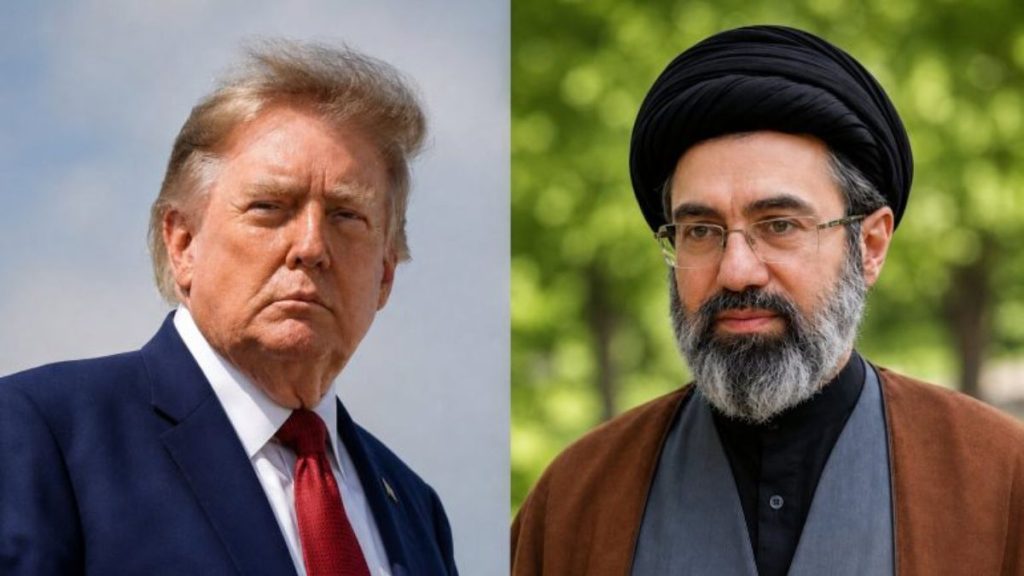
Meanwhile, the US president, Donald Trump, has said there are no talks taking place or scheduled with Iran, undercutting hopes of an early diplomatic settlement as Washington and Tehran remain locked in a separate dispute over the Strait of Hormuz. Trump also insisted that the strategic waterway was open and operating, a claim rejected by Tehran.
Iranian negotiator Mohammad Baqer Qalibaf said the strait would remain shut until Washington met conditions contained in the June interim arrangement. Those demands include ending the US blockade of Iranian ports, lifting oil sanctions, releasing frozen Iranian assets and ending military threats and operations.
The June 17 memorandum had set a maximum 60-day period for negotiations towards a broader agreement covering Iran’s nuclear programme and US sanctions. That period expired on Monday, although the arrangement had already largely unravelled in July, when Trump declared it “over” and Iran subsequently said it was suspended.
Trump has said he has no plans to extend the negotiating period. As RNA Media reported, a senior Iranian official recently said Tehran was moving towards a “fully offensive” military posture because diplomatic efforts had stalled.
The status of Hormuz remains disputed in practice as well as politically. Trump says the waterway is open, while Tehran says it remains shut. Kpler data cited by Reuters showed only six commodity vessels crossed the strait on Tuesday, down from nine on Monday and below the recent average of 11 a day.
The risks were underlined by another maritime incident on Tuesday. United Kingdom Maritime Trade Operations reported that a vessel sailing out through Hormuz had been struck by an unidentified projectile, damaging its engine room and causing a crew casualty. Oman’s coast guard was assisting the remaining crew, while there was no immediate claim of responsibility.
Before the conflict, roughly a fifth of global oil and liquefied natural gas flows passed through the Strait of Hormuz, making uncertainty over access a wider economic concern rather than only a US-Iran dispute. Brent crude was trading above $91 a barrel on Wednesday as markets weighed the stalled diplomacy and continuing shipping risks.