


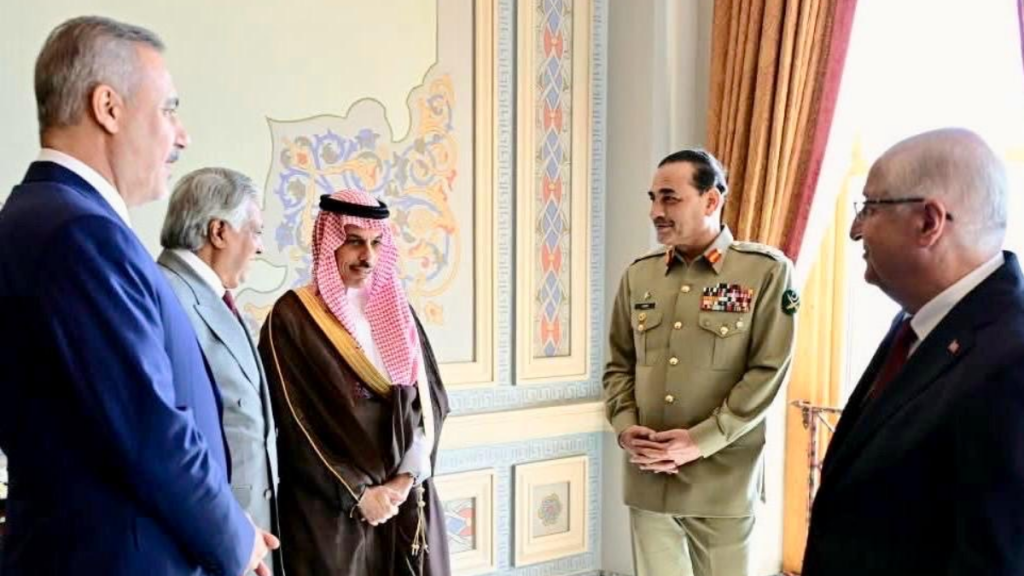
New Delhi: Turkiye, Pakistan and Saudi Arabia have begun building the machinery of their new defence alliance, with senior political and military officials meeting in Istanbul on Monday for the inaugural session of the strategic political and defence committee. The meeting produced the first concrete institutional arrangements for the grouping, including a Riyadh based secretariat, a Pakistani first secretary general and a new name for the alliance, the “Makkah Defence Alliance”.
The development marks the first move to operationalize the agreement signed by the three countries in Makkah on August 7. The Turkish foreign minister, Hakan Fidan, said the Istanbul meeting focused on the practical steps needed to implement the agreement and establish the alliance’s institutional structure.
The agreement had initially been referred to as the Makkah Joint Defence Agreement. Fidan announced after Monday’s meeting that the arrangement would now operate under the name Makkah Defence Alliance.
The new secretariat will be based in Riyadh, while Pakistan will provide the alliance’s first secretary general. The decisions give the three-country arrangement its first permanent institutional framework and set the stage for further work on how the alliance will function.
What was discussed at the first meeting?
The strategic political and defence committee is now expected to become the main mechanism for coordinating the alliance’s political and defence agenda, Dawn reported. The three countries are looking at practical areas of military cooperation, including greater interoperability between their armed forces, joint military exercises and deeper cooperation in defence technology and production.
Fidan said the alliance would be based on respect for the sovereignty and territorial integrity of states and non-interference in their internal affairs. He also stressed that the grouping was not created against any particular country.
The collective defence provision remains the core of the arrangement. Under the August 7 agreement, an armed attack against one member is to be treated as an attack against all three.
Fidan also clarified that the new alliance would exist alongside the countries’ existing bilateral and multilateral commitments and would not remove their responsibilities under other agreements or alliances.
Who attended the Istanbul meeting?
Pakistan was represented by the deputy prime minister and foreign minister, Mohammad Ishaq Dar; defence minister, Khawaja Muhammad Asif; and the Pakistan Army chief, Field Marshal Asim Munir. Dar confirmed their participation in a post on X.
Turkiye was represented by Fidan, national defence minister, Yasar Guler, and chief of the general staff general, Selcuk Bayraktaroglu.
Saudi Arabia’s delegation included foreign minister, Faisal bin Farhan; defence minister, Khalid bin Salman; and chief of the general staff general, Fayyad bin Hamed Al Ruwaili.
What are the rules for joining Makkah Defence Alliance?
Fidan said the grouping would remain open to other countries, but prospective members would have to accept its rules, conditions and standards. He also indicated that the founding members want the alliance to become fully functional before bringing in additional countries. That makes the creation of the institutional structure particularly important. The Riyadh secretariat and the appointment of the first secretary general will provide the framework through which future membership and cooperation can be handled.
Which countries could join next?
As RNA Media earlier reported, Bangladesh has already emerged as a potential candidate. Dhaka has publicly expressed interest in joining the arrangement, with state minister for foreign affairs, Humayun Kabir, saying Bangladesh was interested in the pact.
Egypt is another country being closely watched. Cairo did not sign the August 7 agreement, but it has participated in earlier regional discussions involving Pakistan, Saudi Arabia and Turkiye. According to Al Jazeera, The Turkish president, Recep Tayyip Erdogan, has said Egypt could join the alliance. The Egyptian foreign minister, Badr Abdelatty, has indicated that Cairo is examining the legal and constitutional implications before making a decision.
The possibility of wider Gulf participation has also been raised. Former Qatari prime minister, Hamad bin Jassim Al Thani, has called for all six Gulf Cooperation Council countries to join the framework, according to Al Jazeera.