


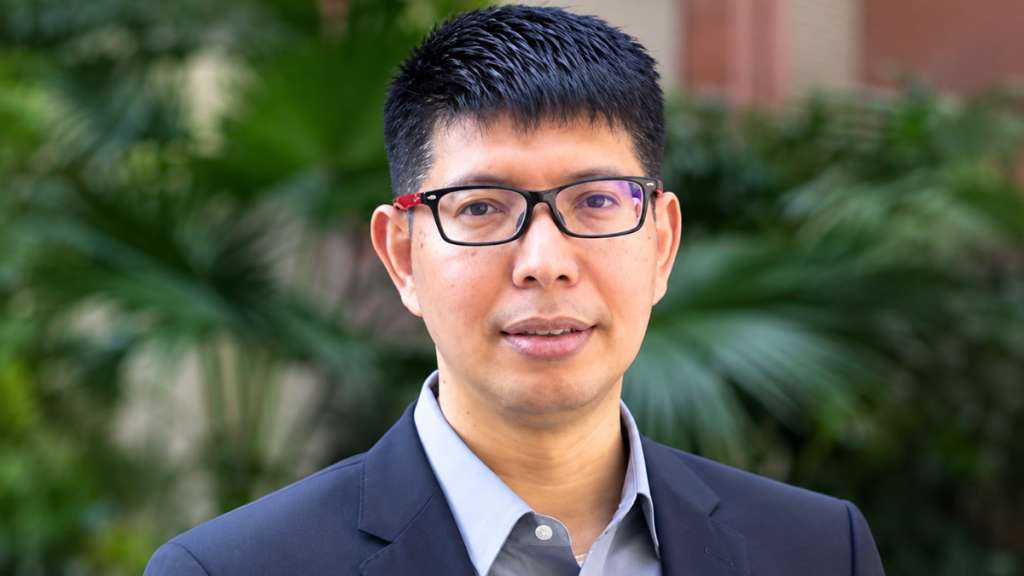
New Delhi: The detention of US citizen and Myanmar scholar Min Zin remains unresolved after the United States and China summit concluded in Washington, keeping his case among the issues surrounding Americans detained in China. The US had designated Min Zin as “wrongfully detained” in August, while Beijing has rejected the characterization and maintained that China is governed by the rule of law.
Min Zin was detained on June 3 after arriving in Kunming, Yunnan, to attend an academic workshop. According to reports Min Zin held a valid Chinese visa and had previously travelled to China to attend similar academic conferences, while a senior United State department official said he was detained at the airport and subjected to repeated interrogations, isolation and detention conditions for nearly 11 weeks.
The official also told Reuters that Min Zin’s family and colleagues lost contact with him shortly after his arrival and did not know where he was for about 48 hours. Yunnan authorities later informed the US embassy that he was under criminal investigation for allegedly endangering China’s national security.
China had confirmed Min Zin’s arrest in June and said he was suspected of spying and endangering national security. Beijing has maintained that there is no such thing as “wrongful detention”, rejecting the US designation and its characterization of the case.
The United States secretary of state, Marco Rubio, designated Min Zin as “wrongfully detained” on August 20 following an extensive review of the circumstances of his case. Reuters reported that the designation made securing his release a priority for the US government, with Washington also calling for the release of other Americans held in China.
The case has also prompted concern among academics in the US and abroad over academic freedom and the risks faced by researchers working on China and the wider region. A joint statement published by Scholars at Risk and signed by more than 100 scholars described Min Zin as a respected researcher and called for his immediate release.
The statement said Min Zin had travelled to Kunming for an academic workshop and highlighted his long association with the University of California, Berkeley. It said he had earlier fled Myanmar after years of pro-democracy activism, later studied political science at Berkeley and co-founded the Institute for Strategy and Policy-Myanmar in 2016.
Following Myanmar’s 2021 military coup, Min Zin and his research team relocated to Thailand, where the institute continued producing open-source research and analysis on Myanmar’s political, economic and security affairs. The scholars said independent researchers should be able to conduct such work without fear of intimidation or arbitrary detention.
The issue remained unresolved as the United States president, Donald Trump, and the Chinese president, Xi Jinping, concluded their summit in Washington on September 25. The meeting produced agreements on several areas of bilateral engagement, but no publicly announced resolution on Min Zin’s detention was reported.
The summit was followed by a symbolic gesture of continued US-China engagement, with two giant pandas arriving at Zoo Atlanta after being sent from China. The arrival came as the two countries sought to keep diplomatic and economic engagement on track, even as differences over trade, security and the detention of Americans in China remain.