


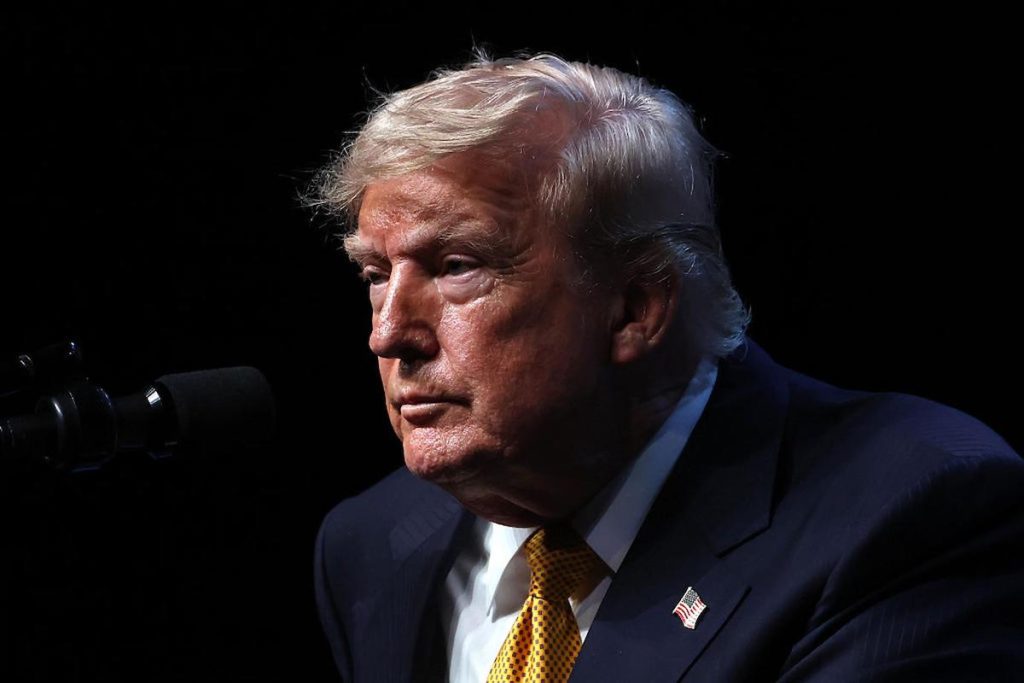
New Delhi: The United States president, Donald Trump, has said American military operations against Iran will continue until he decides they have achieved their objectives, signalling that Washington is prepared to intensify its campaign unless Tehran agrees to negotiate. In an interview with Fox News on Tuesday, Trump said the United States would maintain military pressure on Iran.
Trump warned that future strikes could extend beyond military facilities to include critical infrastructure if no diplomatic breakthrough is reached.
“They’ll continue until I say it’s enough,” Trump said when asked how long the military campaign would last. He added that if Iran refused to return to negotiations, the United States would expand its target list, mentioning power plants and bridges as potential objectives.
The remarks came as fighting between the United States and Iran entered its fourth consecutive day, with both sides exchanging strikes across the Gulf region following the collapse of an interim understanding that had briefly raised hopes of renewed diplomacy.
According to US Central Command (Centcom), the latest American strikes targeted military installations and capabilities that Washington says have been used to threaten commercial shipping through the Strait of Hormuz, one of the world’s most strategically important maritime chokepoints for oil and liquefied natural gas exports.
Iran has responded by launching attacks against US military facilities and partners across the Gulf. The Islamic Revolutionary Guard Corps (IRGC) claimed responsibility for strikes targeting facilities linked to the US Fifth Fleet in Bahrain, while regional governments including Jordan and Kuwait reported intercepting missiles and drones entering their airspace.
The latest escalation has further destabilized security across the Gulf, with repeated attacks on commercial shipping and energy infrastructure heightening concerns over global energy supplies. Oil markets have remained volatile as the Strait of Hormuz, through which roughly one-fifth of global oil consumption normally passes, remains at the centre of the confrontation.
Despite the military escalation, Trump disclosed that US officials had remained in contact with Iranian representatives. He said discussions had taken place earlier in the day and reiterated that Washington was prepared to halt further military action if Tehran agreed to negotiate a broader settlement.
Iranian officials, however, have accused Washington of destroying the basis for previous diplomatic understandings by reimposing a naval blockade and expanding military operations. Tehran has argued that continued American attacks leave little room for meaningful negotiations.
Meanwhile, the humanitarian toll inside Iran has continued to rise. Iranian authorities have reported civilian casualties from recent strikes, although the United States has maintained that its operations are directed solely against military objectives. Washington has also denied Iranian allegations that it deliberately targeted civilian infrastructure, including food storage facilities.
The widening conflict has prompted renewed international concern over the risk of a broader regional war involving Gulf states hosting US forces. Several countries have called for restraint, warning that continued military escalation could further disrupt international shipping, energy markets and regional stability.
The United Nations has also warned that the expanding conflict represents a serious setback for civilian protection and regional security, urging all parties to pursue dialogue before the situation deteriorates further.