


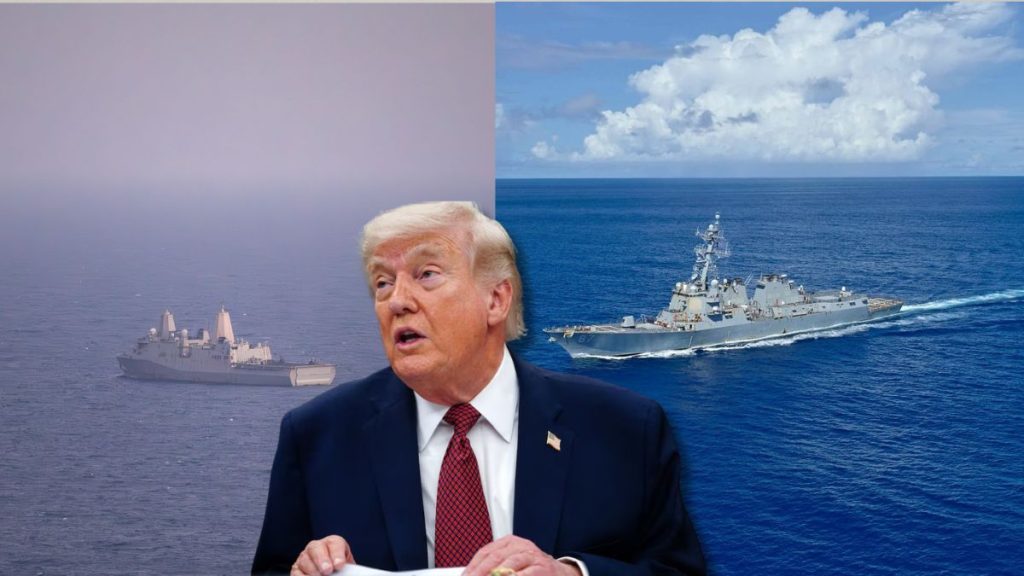
As the Strait of Hormuz remains one of the most dangerous flashpoints in global trade, US President Donald Trump has announced a sweeping new initiative aimed at breaking the maritime deadlock. Dubbed ‘Project Freedom’, the plan seeks to guide stranded commercial vessels out of the conflict-hit waterway.
The US military on Monday (May 4, 2026) launched the project and announced that two American-flagged merchant ships had successfully transited the Strait of Hormuz and are safely headed on their journey, after it launched a new initiative to restore the flow of ships through the crucial waterway.
Worth mentioning here is that the latest announcement by US President Trump comes at a critical moment, with hundreds of ships immobilised in the Persian Gulf and thousands of seafarers caught in what is rapidly becoming one of the worst shipping crises in recent history.
What is Trump’s ‘Project Freedom’ and why now?
Trump’s declaration that the United States will begin guiding “neutral and innocent” ships out of restricted waters marks a significant escalation in Washington’s response to the crisis. He described it as a “humanitarian gesture on behalf of the US”. While details remain sparse, the operation is expected to involve coordinated naval efforts to escort vessels through the Strait of Hormuz.
Commenting on Project Freedom, CENTCOM commander Admiral Brad Cooper said that over the last 12 hours, they reached out to dozens of ships and shipping companies to encourage traffic flow through Hormuz, consistent with Trump’s intent to help guide ships through the narrow trade corridor.
Since the outbreak of war on February 28, the Strait of Hormuz has been transformed from a vital global trade artery into a conflict zone. Trump framed the initiative as a humanitarian mission, pointing to the plight of nearly 20,000 stranded seafarers, many from India and Southeast Asia, who are facing dwindling supplies and constant security threats.
How has the Hormuz blockade crippled global shipping?
The impact of the blockade has been severe and far-reaching. The Strait of Hormuz typically handles around a fifth of the world’s oil and gas shipments, along with key commodities such as fertilisers. Its disruption has sent shockwaves through global supply chains. Dozens of vessels have been forced to turn back under US naval directives, while others remain anchored in limbo, unable to proceed without risking attack.
Reports of drone interceptions, missile strikes, and aggressive patrol boat manoeuvres have created an atmosphere of constant danger. In view of such incidents, shipping companies face an impossible dilemma: attempt passage and risk damage or seizure, or remain stranded and incur mounting losses. The result has been a sharp contraction in maritime traffic.
What risks could “Project Freedom” trigger?
While the plan aims to restore safe navigation, it also raises the spectre of further escalation. Trump has issued a stark warning that any interference with the operation will be met “forcefully,” signalling a readiness to confront Iranian actions directly.
“Our support for this defensive mission is essential to regional security and the global economy as we also maintain the naval blockade,” said Adm. Cooper. US military support to Project Freedom includes guided-missile destroyers, over 100 land and sea-based aircraft, multi-domain unmanned platforms, and 15,000 service members.
This comes as Iran continues to assert control over the strait, insisting that vessels can pass only under its conditions, including the controversial imposition of transit tolls. Tehran has also denied recent attack claims, maintaining that its actions are part of routine monitoring.
Meanwhile, Trump described part of what he called “Project Freedom” in humanitarian terms, designed to aid stranded seafarers, many on oil tankers or cargo ships, have been stuck in the Persian Gulf since the war began. He even framed stranded seafarers as “victims of circumstance”.