


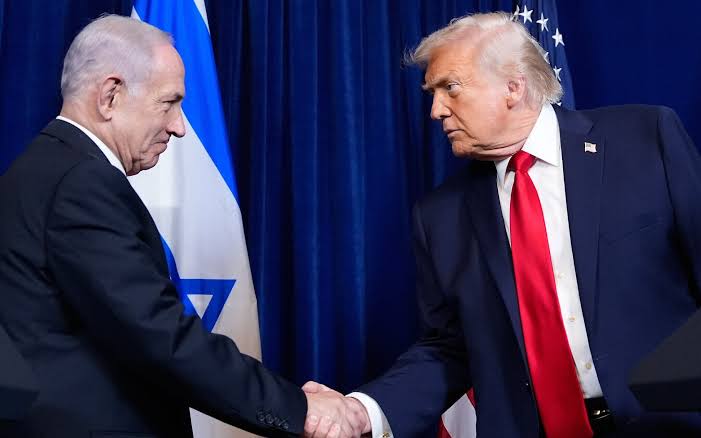
New Delhi: United States President Donald Trump has reportedly pressed Israeli Prime Minister Benjamin Netanyahu to begin withdrawing Israeli troops from southern Syria and proceed with further redeployments from southern Lebanon, signalling a possible shift in Washington’s approach to Israel’s military footprint in the region.
According to reports citing US and Israeli officials, Trump raised the issue during a telephone conversation with Netanyahu last week, arguing that the continued deployment of Israeli forces in Syrian territory risks fuelling fresh regional tensions. He is also said to have urged Israel to move ahead with troop withdrawals from Lebanon in line with understandings reached in recent diplomatic engagements.
One US official quoted in the reports said Trump told Netanyahu that Israel’s military presence in Syria was creating unnecessary friction and could trigger further escalation. “They don’t want you there. You should redeploy,” Trump reportedly said during the conversation.
The Israeli prime minister is understood to have defended the deployments, maintaining that Israel requires security buffer zones along its northern frontiers to guard against threats from hostile armed groups and prevent cross-border attacks.
The reported exchange comes as the Trump administration pursues a broader diplomatic effort to stabilize the Levant following months of conflict involving Israel, Iran and Tehran-backed militant groups. Washington has sought to encourage security arrangements involving Israel, Syria and Lebanon while attempting to reduce the risk of another regional military escalation.
Trump’s request reportedly followed his recent meeting with the Syrian president, Ahmad al-Sharaa, on the sidelines of the Nato summit in Türkiye, where regional security featured prominently in discussions. The US administration has since intensified diplomatic contacts aimed at encouraging confidence-building measures between Israel and Syria.
Despite the reported US pressure, analysts believe Netanyahu is unlikely to authorize any significant withdrawal from Syrian territory in the near term. Israel’s governing coalition has consistently argued that retaining military positions in southern Syria is essential to preventing Iranian-backed groups and other hostile actors from re-establishing a presence close to the Israeli border. Domestic political considerations are also expected to weigh heavily on any decision involving troop redeployments.
On Lebanon, the picture appears more nuanced. US-mediated talks involving Israeli and Lebanese officials have made limited progress towards implementing a phased withdrawal arrangement in selected sectors of southern Lebanon, although important differences remain over the sequencing of Israeli withdrawals and Hezbollah’s disarmament.
Lebanese authorities have insisted that Israeli forces must first leave agreed areas before negotiations advance further, while Hezbollah has continued to reject proposals requiring it to surrender its weapons. Israel, meanwhile, maintains that any redeployment must be matched by credible security guarantees from the Lebanese state.
Neither the White House nor the Israeli prime minister’s office has publicly confirmed the contents of the reported telephone conversation. However, US officials have not denied the reports, lending further attention to what could mark a notable difference in emphasis between Washington’s diplomatic objectives and Israel’s security calculations.
The reported conversation comes against the backdrop of the wider Middle East crisis, with the US, Iran and Israel engaged in an increasingly volatile confrontation that has heightened concerns over regional stability and the security of key maritime routes, including the Strait of Hormuz. Washington has simultaneously sought to contain the conflict while preventing additional flashpoints from emerging along Israel’s northern borders.