


New Delhi: The US military escorted 40 commercial vessels through the waterway, carrying the largest volume of oil moved through the strait under a single wartime escort operation. American forces deployed air, naval and space-based assets to protect the ships while countering Iranian drone attacks and intercepting anti-ship cruise missiles.
The escort mission took place alongside a major US attack on Iranian military infrastructure around the waterway, CNN reported. American forces struck nearly 60 targets, including radar installations, air-defence systems, maritime assets, communications facilities and equipment linked to Iran’s mine-laying capabilities.
Before the conflict began more than six months ago, about 20 million barrels of oil a day moved through the Strait of Hormuz. Washington is now seeking to restore commercial traffic through the passage while limiting Iran’s ability to disrupt shipments.
The US military has indicated that strikes around the strait could continue, as Iran has demonstrated its ability to rebuild some capabilities damaged in previous attacks. Washington is seeking to repeatedly degrade systems that could be used to threaten commercial vessels.
Iran targets US bases in Kuwait
Iran has targeted US military bases in Kuwait with missiles and drones, according to Iranian state broadcaster IRIB The attacks came as Tehran accused Washington of committing a war crime over a US strike on a wedding celebration in southern Iran that Iranian officials said killed four people, including two children.
The Iranian Red Crescent Society said shrapnel from a missile struck a family wedding ceremony at a home in southern Iran, causing the deaths. The Iranian foreign ministry spokesman, Esmaeil Baqaei, described the incident as a “war crime”, while a US central command spokesperson said American forces “never target civilians”.
Against this backdrop, Kuwait’s army said its air-defence systems were responding to hostile missile and drone attacks. It added that explosions heard in the area could have been caused by air-defence systems intercepting incoming threats and urged the public to follow security instructions.
IRIB described the attacks as a response to what Tehran called US “crimes against the Iranian people”. Kuwait’s military has not provided further details on possible casualties or damage from the attacks.
The United States president, Donald Trump, said the latest US strikes destroyed Iranian military equipment that Tehran had been rebuilding around the Strait of Hormuz following previous American attacks. Speaking to reporters on Wednesday, he said the targets included radar and missile systems that Iran was attempting to restore.
Trump said the strikes had left Iranian forces unable to track ships in the waterway. “They can’t see it because they have no radar,” he said, adding that the US had destroyed more than Iran’s radar systems.
Trump also claimed Iran was developing a rocket capable of laying mines and said US forces had destroyed it. He said Washington had eliminated both offensive and defensive equipment along the waterway and was prepared to strike again if necessary, while adding that the renewed tensions would not continue for “too long”.
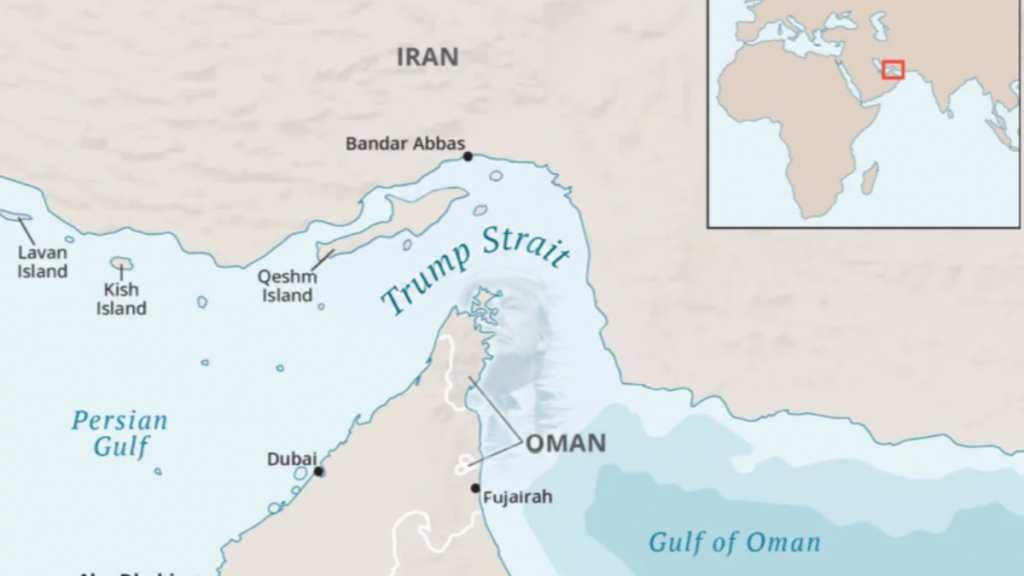
Trump proposes ‘TRUMP STRAIT’
Trump separately suggested renaming the Strait of Hormuz after himself. In a post on Truth Social, he wrote, “Now that we have it under USA control, should we change the name Hormuz Strait to TRUMP STRAIT??? [Sic]”
“Like America itself, it would be ‘hotter’ than ever before!” he added.
Trump’s proposal came as his administration continued to claim that the US has control over Hormuz.
The renewed military confrontation has put the spotlight on whether Washington can maintain a sustained flow of commercial energy shipments through Hormuz.
The treasury secretary, Scott Bessent, said earlier that more than 17 million barrels of oil had moved through the waterway on Monday. US officials have also argued that the actual volume could be higher because some vessels are switching off their tracking transponders to avoid detection.
CNN reported that most, if not all, of the 40 ships involved in Tuesday’s escort operation had switched off their transponders. The vessels included ships registered in countries including Saudi Arabia and France.
Despite the increase in traffic, shipping companies remain cautious. Industry representatives and analysts have questioned US claims that the waterway is under “total control”, while operators continue to decide whether to make the crossing on a case-by-case basis.
Tanker chartering costs have also surged, with some estimates exceeding $500,000 a day. Insurance premiums remain elevated because of the continuing threat of missiles, drones and mines.
The risks are particularly significant for vessels carrying liquefied natural gas. US officials told CNN that LNG operators appear even more reluctant to send ships through the strait because an attack on a vessel carrying the highly combustible cargo could have potentially severe consequences. For Washington, convincing the shipping industry that the route can be used safely is therefore a major challenge alongside its military operations.
The US military is trying to make the passage more usable for commercial vessels by clearing mines and developing a safer shipping corridor.
Officials hope to widen the cleared lane by next month, giving ships greater room to manoeuvre and potentially allowing more oil to move through the waterway.
Washington previously attempted a similar escort operation under the name Project Freedom. That effort was abandoned after the announcement surprised key Gulf allies, including Saudi Arabia, and triggered concerns over US access to regional bases and airspace.
The latest mission reflects a broader US attempt to combine military pressure on Iran with efforts to keep one of the world’s most important energy routes functioning.
Energy markets under pressure
The renewed fighting has already affected energy markets, with oil prices rising by around 4 per cent after the latest exchange of attacks. The conflict has also pushed up fuel prices in the United States. Petrol reached $4.12 a gallon on Wednesday, according to the American Automobile Association, compared with less than $3 before the war began.
With Iranian attacks now extending to US positions in Kuwait and other parts of the region, the security situation surrounding the Strait of Hormuz remains unsettled despite Washington’s efforts to demonstrate that commercial shipping can continue through the waterway.