


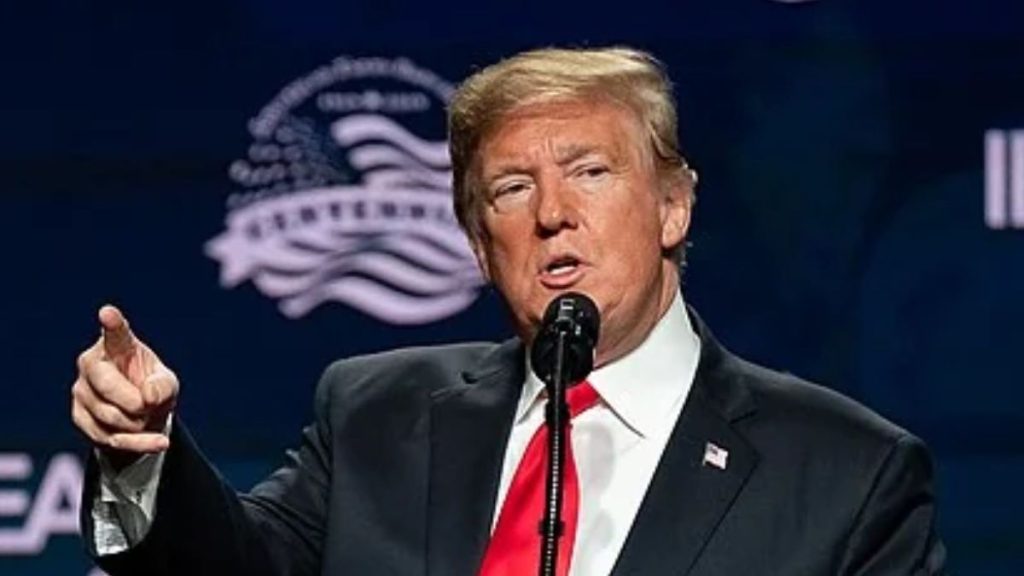
New Delhi: The US president, Donald Trump, declared on Monday that the war with Iran was militarily “effectively over”, signalling a retreat from threats of renewed large-scale strikes following talks with Qatar’s prime minister. However, Washington will maintain its naval blockade against Tehran and keep American forces prepared for further action, with no formal peace agreement in place.
“Iran militarily is effectively over,” Trump told reporters at the White House. “We’re just keeping it the status quo.” He added that further military action appeared unnecessary, although American forces remained “locked and loaded” if circumstances changed.
His remarks followed discussions with the Qatari prime minister, Sheikh Mohammed bin Abdulrahman Al Thani, who has been mediating between Washington and Tehran.
Trump cited “positive momentum” in negotiations and said there was a “good chance” the war could end. “They’re talking to us, and they’re talking very politely,” he said, referring to Iran.
Qatar’s diplomatic efforts reflect growing concerns among Gulf countries about renewed Iranian retaliation, threats to energy infrastructure and disruptions to shipping through the Strait of Hormuz.
Trump said Saudi Arabia, the United Arab Emirates, Bahrain and Kuwait also preferred a peaceful settlement over renewed bombing.
Blockade and nuclear dispute remain unresolved
Trump ruled out immediately lifting the naval blockade, declaring: “We’re keeping it going. We have the greatest military blockade ever.” He also gave no indication that Washington would withdraw the thousands of American troops deployed around Iran.
In a post on Truth Social, Trump reiterated that Iran would not be permitted to develop nuclear weapons and said Israel and Washington’s Gulf allies were protected against Iranian threats. He maintained that further military escalation appeared unlikely for now, but warned that American forces remained prepared to resume operations if circumstances changed.
US Central Command said its forces disabled the St Kitts and Nevis-flagged MV Huda in the Gulf of Oman on November 7 after the vessel allegedly attempted to breach the blockade. Washington has also established Task Force Iron Gate to disrupt Iran’s overland supply networks, as RNA Media reported earlier.
Iran has proposed implementing an arrangement to reopen the Strait of Hormuz and resume negotiations within two days, shortening an earlier seven-day timetable. Tehran insists that Washington must first lift its naval blockade, ease sanctions, release frozen Iranian assets and end regional hostilities before the proposed steps can proceed.
The Iranian foreign ministry spokesman, Esmaeil Baghaei, defended the conditions on Monday, describing Tehran’s proposal as reasonable, Reuters reported.
However, the US secretary of state, Marco Rubio, dismissed several Iranian demands as “outrageous and ridiculous”.
Washington continues seeking restrictions and verification of Iran’s nuclear programme, while Tehran insists that military and economic pressure must end before negotiations resume.
Military tensions and political pressure
Despite Trump’s remarks, American military operations have not completely stopped, with US forces conducting limited strikes against Iranian air defences during the preceding week. Washington had also reinforced its military presence in the region ahead of the midterm elections, maintaining the capability to resume major operations even as Trump publicly signalled a preference for negotiations.
Trump also faces domestic pressure after Republicans lost control of both chambers of congress in the midterm elections. The Vice-president, JD Vance, identified the Iran war as a major factor behind the defeat, while rising fuel prices and the conflict’s prolonged duration have added to public dissatisfaction.
Disruptions to Gulf shipping have affected global energy markets, increasing costs for businesses and consumers.
Trump’s remarks therefore signal a possible pause in major military escalation rather than an end to hostilities. A lasting settlement still depends on resolving the blockade, sanctions, nuclear inspections and competing regional security demands.