


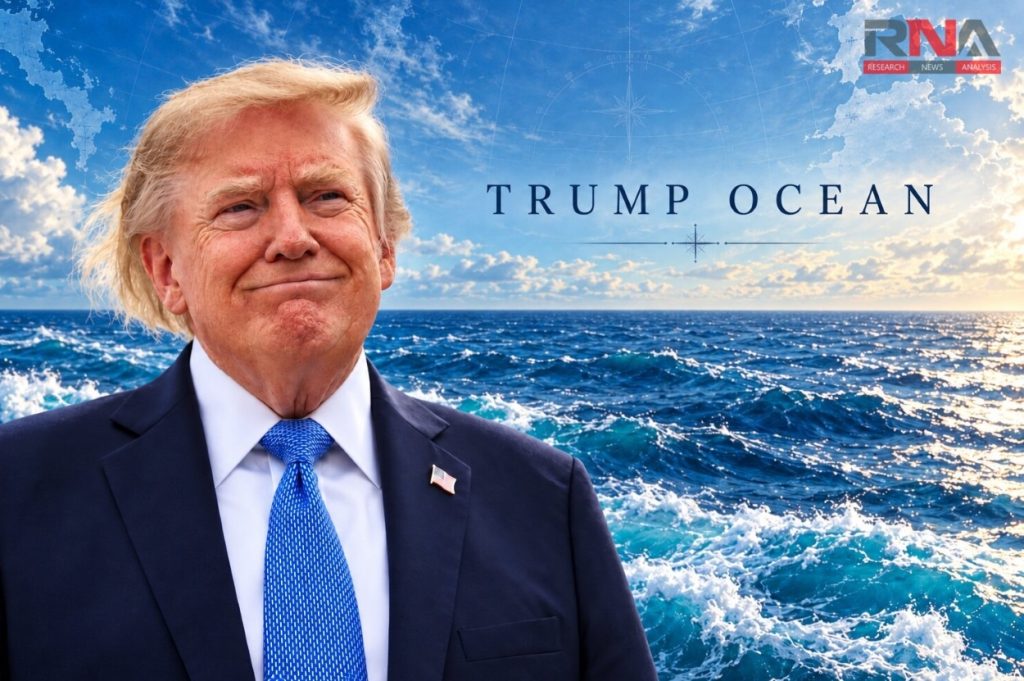
New Delhi: The United States president, Donald Trump, has said Google’s chief executive, Sundar Pichai, turned down his suggestion to rename the Atlantic Ocean, an idea he has promoted under names including “Trump Ocean”. Speaking at a rally in South Carolina on Wednesday, Trump said Pichai objected because oceans border numerous countries and indicated that he would probably abandon the proposal.
The account remains Trump’s description of an alleged conversation rather than a decision independently confirmed by Google. The Washington Post reported that the company had not confirmed the call and had not immediately responded to a request for comment.
Recounting the exchange, Trump said he had approached Pichai after Google adopted earlier geographical name changes introduced by his administration. According to Business Insider’s report, he attributed the response, “Oceans are different, sir,” to Pichai, before suggesting to his audience that the Atlantic should retain its existing name.
The remarks followed an earlier appearance in Clarksville, Tennessee, on October 10, when Trump floated renaming either the Atlantic or Pacific Ocean “Trump Ocean” or “Ocean of the Americas”. He presented the suggestion as a possible addition to his administration’s changes involving the Gulf of Mexico and Lake Ontario, while also expressing interest in renaming a river.
However, Trump has also described the ocean proposal as a joke, a qualification relevant to assessing how seriously it was being pursued. In an earlier account carried by CNN Newsource, he told a rally in Dalton, Georgia, on October 16 that he had contacted Google about naming an ocean after himself but had not been serious on that occasion.
During that appearance, Trump said he had sent the company a picture displaying the proposed name and received a response explaining that oceans involved many countries. “I said I was only kidding. That time I was,” he told supporters, while suggesting that he did not consider the idea entirely unreasonable.
The discussion nevertheless follows actual changes to geographical names used by the US government and commercial mapping services. Trump ordered the Gulf of Mexico renamed the Gulf of America in January 2025, followed by an order in August 2026 to rename Lake Ontario as Lake America for US purposes.
The gulf episode illustrates how a name adopted in Washington can appear on digital maps without becoming the universally accepted designation. In its February 10, 2025, explanation, Google said it began updating the label after the US Geographic Names Information System incorporated the change, describing the move as consistent with its established practices.
Under that arrangement, Google Maps users in the United States see “Gulf of America”, those in Mexico see “Gulf of Mexico”, and users elsewhere see both names. Google explained that the display depends on the user’s country location, with its mobile application drawing on device information and its web service using regional settings or device location.
Those changes have also generated diplomatic objections, demonstrating that the choice of a map label can extend beyond a technology company’s product decisions. In February 2025, the president of Mexico, Claudia Sheinbaum, raised the possibility of legal action against Google over its use of “Gulf of America”, challenging the company’s treatment of the shared body of water.
For the Atlantic, the available accounts describe a suggestion discussed publicly by Trump, rather than an implemented naming change. His latest remarks indicate that he is prepared to leave its name intact, although Google’s position on the alleged conversation remains unconfirmed.