


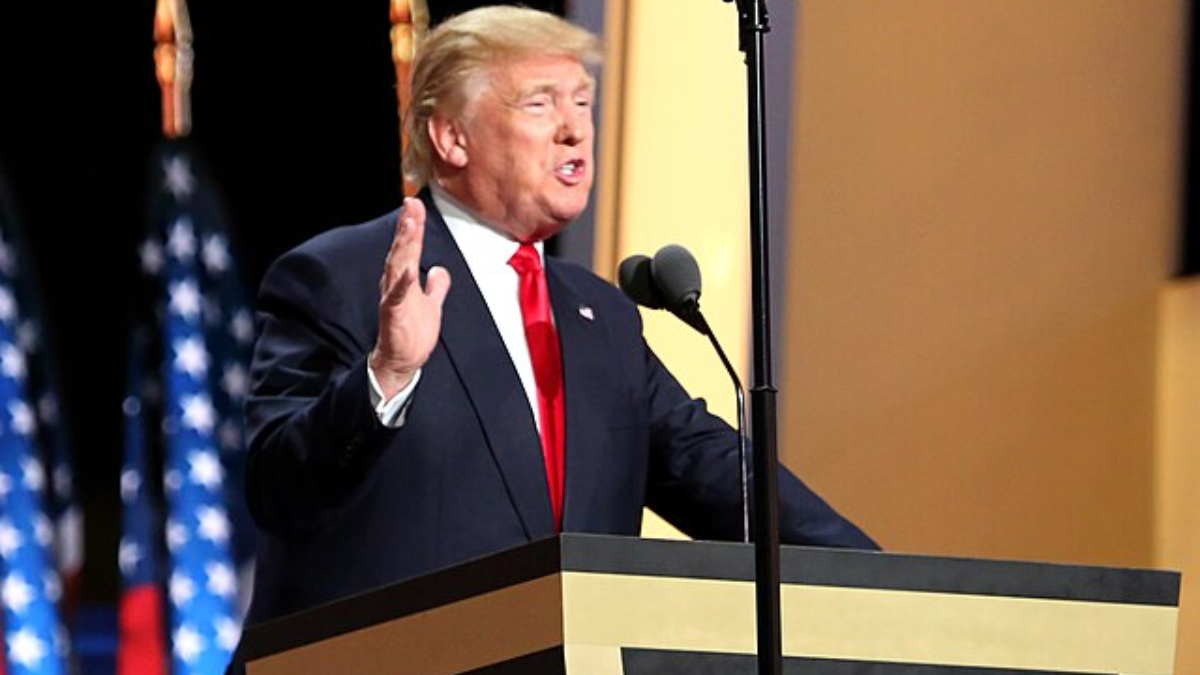
US President Donald Trump on Tuesday (May 5, 2026) stopped a military operation to escort cargo vessels through the blockaded Strait of Hormuz to provide time for a peace deal with Iran.
The US-Iran fragile ceasefire held tight despite military clashes in the Strait of Hormuz and despite the Iranian airstrikes on UAE territory.
Meanwhile, the US and Gulf nations jointly drafted a United Nations Resolution to reopen the Strait of Hormuz and to end the Iranian blockade of the narrow waterway.
In Washington, Trump announced that he was stopping the ‘Project Freedom’ under which the US Navy was escorting stranded cargo ships through the Strait of Hormuz and aiding their exit from the narrow waterway.
Trump decided to enable a peace deal with Iran, particularly on the reopening of the Strait of Hormuz, which has been under an Iranian blockade since the West Asia war started on February 28.
The US President said the American blockade of Iranian ports would continue, even as negotiations with Iran were progressing toward an agreement to end the war.
“Great progress has been made toward a complete and final agreement with representatives of Iran,” Trump said in a post on Truth Social.
He claimed the pause in ‘Project Freedom’ for a short time on a Pakistani request to give room for the US efforts to agree with Iran on ending the war, though the recent days have witnessed a spike in military operations from both sides.
“Based on the request of Pakistan and other Countries, the tremendous Military Success that we have had during the Campaign against the Country of Iran and, additionally, the fact that Great Progress has been made toward a Complete and Final Agreement with Representatives of Iran, we have mutually agreed that, while the Blockade will remain in full force and effect, Project Freedom will be paused for a short period of time to see whether or not the Agreement can be finalized and signed,” he said.
Trump’s announcement came hours after US Secretary of State Marco Rubio said a ceasefire in West Asia continued, though the conflict remained unresolved.
Rubio and US military leaders also claimed that the initial military operations against Iran had concluded. “The operation is over. Epic Fury — as the president notified Congress — we’re done with that stage of it,” Rubio said, echoing what a US military officer had said earlier in the day on US forces being ready to resume combat when ordered.
Rubio, however, insisted that for peace to be achieved, Iran must agree to Trump’s demands on its nuclear programme and also agree to reopen the Strait of Hormuz, a vital waterway for global energy.
Soon after, Iran’s Islamic Revolutionary Guard Corps (IRGC) navy warned of a “firm response” if ships deviated from its approved route through the strait. Iran’s chief negotiator said Tehran “had not even started yet”, following a spate of attacks in the crucial trade route.
At the same time, the United Arab Emirates announced intercepted a barrage of missiles and drones from Iran for the second day, a claim Tehran “categorically” denied. “The armed forces…did not launch any missile or drone operation,” Iran’s Khatam al-Anbiya command said.
The UAE said it intercepted almost all the roughly 20 projectiles fired from Iran, though three Indians were injured in a strike on an oil terminal part-owned by Vitol Group at the port city of Fujairah.
The UAE security agencies sent out missile attack alerts in Dubai and Abu Dhabi, as authorities announced online classes for school children due to the airstrike threats from Iran.
The fragile US-Iran ceasefire announced less than a month ago held on Tuesday (May 5) after a day of clashes involving shipping in the Strait of Hormuz and missile attacks against the United Arab Emirates.
The military operations came after Trump announced US Navy operations under ‘Project Freedom’ to escort cargo ships exiting the blockaded Strait of Hormuz, which was described as a humanitarian effort.
Two US warships entered the Gulf, even as two merchant vessels transited the waterway with US assistance in fending off attacks from small Iranian attack boats.
Iran, meanwhile, warned all ships against trying to cross the Strait of Hormuz without its permission. Iranian military struck a South Korean bulk carrier and attacked an empty tanker belonging to the UAE’s state oil firm, Abu Dhabi National Oil Company. There were no reports of injuries on either ship.
The US Navy repelled attacks from Iranian drones, missiles, and armed small boats as it facilitated the passage of the two merchant vessels, US Central Command chief Brad Cooper said late on Monday (May 4).
These military operations came as the efforts to bring the US and Iran to the negotiating table continued, though there were no signs of the two sides agreeing to meet in Islamabad, mediated by Pakistan.
Iran insisted that the US must lift the blockade of its ports for it to return to the negotiations. The US said it blockade would continue, as Iran was choking oil imports and squeezing the global economy.
In the UN, the US joined Arab nations to draft a Security Council resolution condemning Iran’s blockade of the Strait of Hormuz.
US Ambassador to the UN Mike Waltz said on Monday (May 4) that negotiations on the resolution would happen this week.
The resolution drafting came after Russia and China blocked another resolution last month that the US hoped would gather international support to achieve freedom of navigation through the Strait of Hormuz.
The fresh UNSC resolution was being drafted by the US along with Bahrain, with inputs from Kuwait, Qatar, the UAE, and Saudi Arabia, Waltz said, in a media briefing.
The resolution would require Iran to cease attacks on merchant vessels and impose tolls on cargo shipping through the Strait of Hormuz, it is learned.
It will also demand that Iran stop sea mining in the Strait of Hormuz and disclose the locations of the already planted mines in the waterway.
Waltz said the resolution drafting was a “narrower effort” than the April 2026 failed resolution and comes while a fragile ceasefire with Iran still holds.
“This is a much more focused on mining international waterways and on tolling, which all of the economies of the world are affected by, particularly those in Asia,” he said.