


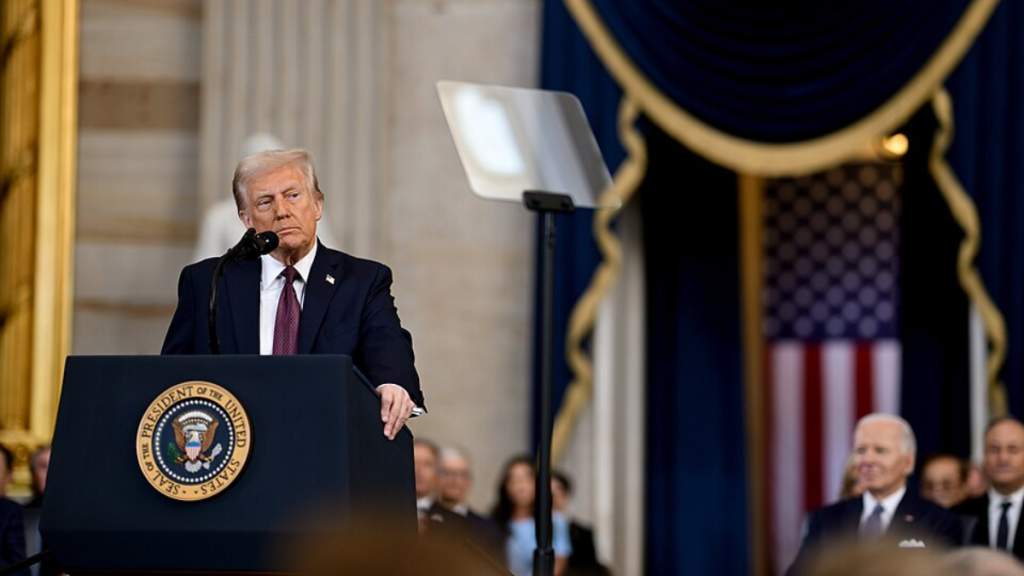
New Delhi: The US president, Donald Trump, lost his “peace” plot in West Asia, as Iran and Israel returned to war, striking each other with missiles, effectively ending a two-month ceasefire brokered by several Gulf nations, including Pakistan. Just moments before Iran hit Israel, resulting in retaliatory attacks by Tel Aviv, Trump had boasted of “calling the shots” in West Asia and that the Israeli prime minister, Benjamin Netanyahu, would have to “accept” the peace deal the US president negotiates.
The two months of back-and-forth between the US and Iranian negotiators on a peace deal, including a one-time face-to-face meeting in Islamabad in mid-April, all came to naught on Monday. Israel claimed on Monday that it launched airstrikes in the early hours to target central and western Iran, retaliating to Tehran’s missile attacks on its northern territories.
Iran’s state television reported explosions in several cities, including Tehran, where Imam Khomeini international airport, the nation’s main airfield, was closed, after the Israeli missile strikes. The Islamic Revolutionary Guard Corps (IRGC) claimed Israel used air-launched ballistic missiles to hit Iranian territory in the Monday attacks.
The Israeli military, in a short statement in the early hours of Monday, said it hit Iranian territory, particularly military targets, in response to missile strikes on its territory. The two-way attacks were triggered by Tel Aviv’s airstrikes in Beirut, supposedly against Iran-supported armed groups’ sites, on Sunday.
Trump says he ‘calls the shots’ in West Asia
On Sunday, Trump spoke over the phone with the Israeli prime minister, according to officials, when the US president asked Benjamin Netanyahu not to continue his missile strikes on Lebanon. “We are close to doing something good in terms of a deal,” Trump was quoted as telling Netanyahu. Later, hours before the West Asia war resumed between Israel and Iran, Trump told Financial Times, “It’s (new strikes by Israel and Iran) not going to have any impact on the deal.”
Trump was quoted as saying, “I call the shots. I call all the shots. He (Netanyahu) doesn’t call the shots.” He also said, “We’re very close. I would say an agreement would be signed on Monday, Tuesday, or Wednesday of this coming week. And now this takes place (Israel-Iran missile attacks),” Trump said in another interview with an American television network. “You’ve shot your missiles, that’s enough. Get back to the table and make a deal,” Trump said, appealing to both Iran and Israel.
The US president said he was hopeful Israel would not retaliate. “The Iranian strikes didn’t hurt anybody. Hopefully, Israel is not going to retaliate,” he said. “If Bibi (Netanyahu) strikes them back, it’s just going to keep going like the last 47 years, or the last 3,000 years.”
Trump claimed that Netanyahu would have to accept any deal the US signs with Iran. “He won’t have any choice,” he said. The US president also noted he was “not happy” about Israel’s strikes on Beirut on Sunday. Netanyahu, reports said, pushed back against Trump’s deal prospects, but “pseudo-agreed” to stop the fighting. The two leaders “did not raise” their voices during the phone call this time.
US-Iran nowhere near peace deal
Even 100 days after the West Asia war began on February 28, and two months after a ceasefire agreement, the peace deal between the US and Iran is nowhere in sight. Both the US and Iran had rejected each other’s discussion points for negotiations shared through Pakistan, since the ceasefire was announced on April 8, and after their first direct talks in Islamabad in mid-April failed.
Among the bones of contention between the two sides are Iran’s enriched uranium and nuclear programme, reopening of the Strait of Hormuz that has been under Tehran’s blockade, lifting of the US naval blockade of Iranian ports, and unfreezing of Iranian assets, apart from Israel stopping its airstrikes on Lebanon.
On Sunday, US Central Command claimed it shot down two Iranian attack drones that threatened maritime traffic in the Strait of Hormuz, a key chokepoint in the Gulf region through which one-third of global oil traffic passes. On Friday, Iranian ballistic missile attacks on Kuwait and Bahrain were intercepted.
In Washington, the Trump administration was acquiescing to a proposal to utilize Iranian assets in the US to help its Gulf neighbours rebuild damaged infrastructure. In a contradictory statement, Trump also told some American media platforms that he was inclined to unfreeze the Iranian assets as part of an initial deal with Tehran.