


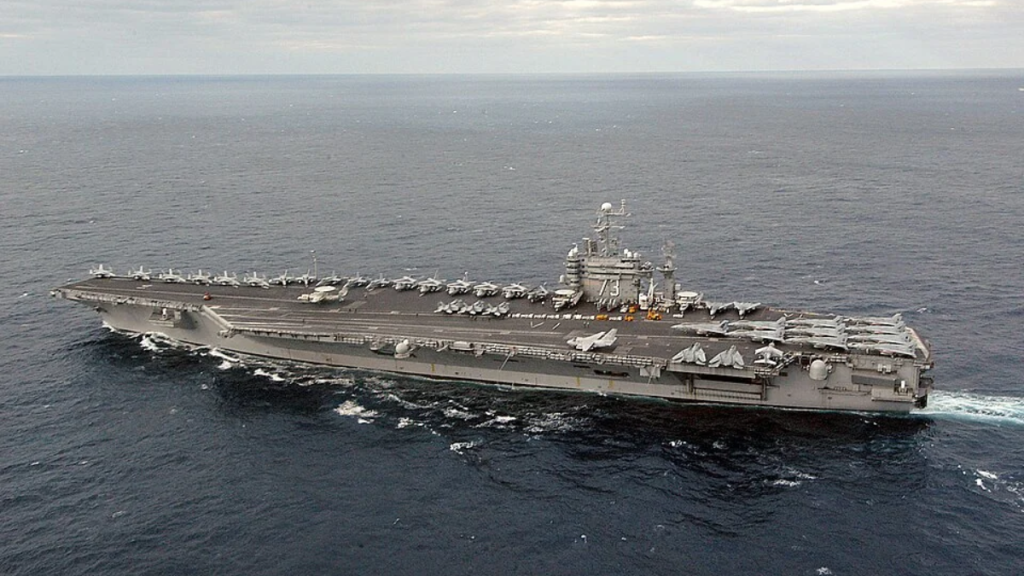
New Delhi: Amid the Iran war, the US Navy’s plan to acquire 15 large nuclear-powered “Trump-class” guided-missile battleships has exceeded the cost of its new fleet by billions of dollars. The challenges facing the world’s biggest naval force were highlighted this week, with the return of the USS George Washington from the Middle East on Wednesday, thus ending a rare three-month period when the US had no aircraft carrier across all of the Pacific.
For making itself battle ready, the US navy aspires to increase its fleet of 286 battle force ships to 381 over the next 30 years.
US Navy’s projections have underestimated the costs of its new fleet by billions because some ships’ designs have proven more complicated than expected, and the “estimated costs of some ships were unrealistically low in earlier shipbuilding plans”, as reported by the Guardian.
In its review of the navy’s fiscal 2027 30-year shipbuilding plan, the nonpartisan congressional budget office (CBO) estimates that total shipbuilding costs would average about $54 billion annually (over the next three decades. That figure is roughly 18 per cent higher than the navy’s own projections and about 41 per cent above the average annual shipbuilding appropriations of the past five years, as reported by DefenseNews.
The US president, Donald Trump, initially described the proposed battleships as far more powerful than previous US surface combatants and capable of inspiring fear in adversaries. The ships are envisioned as roughly 35,000-tonne vessels equipped with extensive missile batteries, hypersonic weapons, lasers, and other advanced systems.
The CBO report also highlighted the broader industrial-base challenges. Building the planned fleet would require substantially higher annual tonnage output from US shipyards than recent levels, particularly for large surface combatants and nuclear-powered vessels.
The CBO report is to be carefully watched and developments are required to be tracked.