


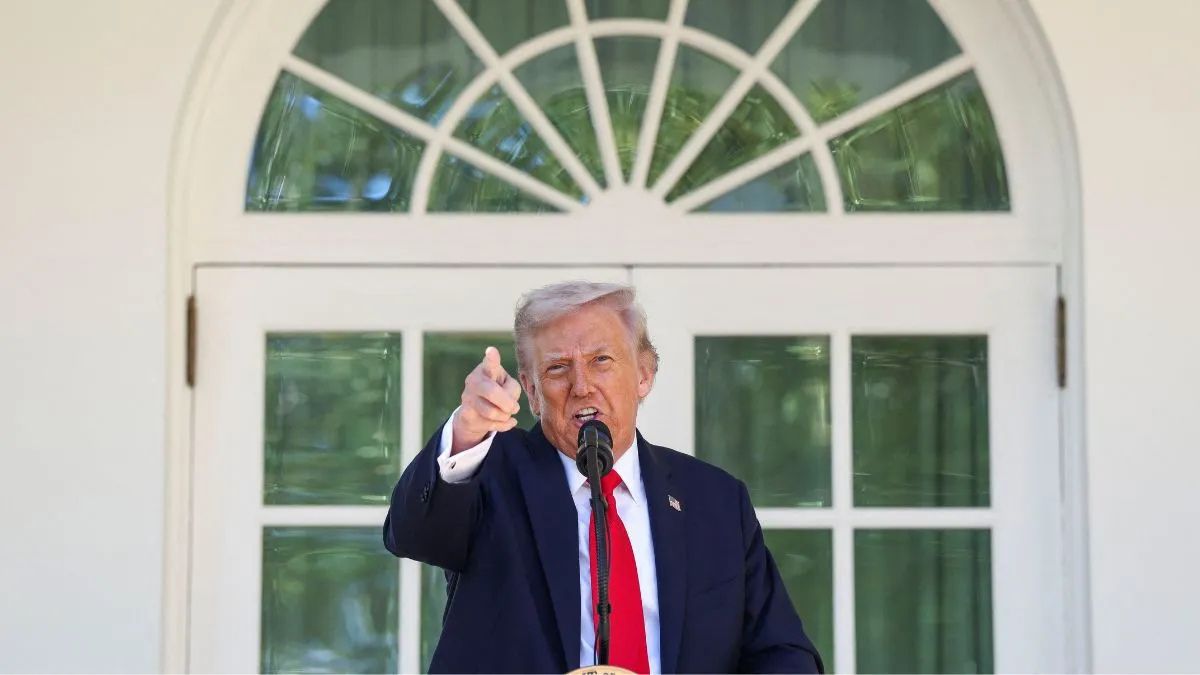
New Delhi: The US president, Donald Trump, announced on Monday, June 1, that Israel and Hezbollah had agreed to stop attacking each other, following a series of contacts involving the United States, Israel, and Lebanese intermediaries. The development has raised hopes of a pause in one of the most dangerous fronts of the wider Middle East conflict.
Trump said he had held a “very productive” telephone conversation with the Israeli prime minister, Benjamin Netanyahu, and that Israel had agreed not to send troops into Beirut. He added that, through senior intermediaries, he had received assurances from Hezbollah that “all shooting will stop”, with both sides refraining from attacking one another.
The announcement came after a sharp escalation in fighting between Israel and the Iran-backed Lebanese group. Earlier on June 1, Israel had ordered strikes on Beirut’s southern suburbs, a Hezbollah stronghold, while the group continued launching rockets and drones towards northern Israel. The confrontation has become the most significant spillover from the broader regional conflict involving Iran, Israel, and the United States.
According to Reuters and other international media reports, Hezbollah conveyed through the Lebanese parliament speaker, Nabih Berri, that it was prepared to stop attacks on northern Israel if Israel refrained from targeting Beirut and its suburbs. Lebanese officials were reported to have communicated the proposal to Washington through diplomatic channels.
Trump’s intervention also appeared aimed at preserving ongoing diplomatic efforts involving Iran. Tehran had warned that continued Israeli operations in Lebanon could jeopardize wider ceasefire and negotiation efforts with Washington. Iranian officials argued that escalation on the Lebanese front would undermine attempts to reduce tensions across the region.
Questions remained, however, over the durability of the arrangement. Neither Israel nor Hezbollah immediately issued formal statements fully endorsing Trump’s description of a comprehensive ceasefire. Several reports noted that exchanges of fire and military activity continued shortly after the US president’s announcement, underscoring the fragility of the situation.
The latest violence has displaced more than a million people in Lebanon and caused extensive destruction across the south of the country and Beirut’s southern suburbs. Israeli forces have also expanded operations in southern Lebanon in recent weeks, citing the need to eliminate Hezbollah’s military infrastructure and prevent attacks on communities in northern Israel.
Netanyahu warns of Beirut strikes if Hezbollah violates truce
Even as Trump declared that both sides had agreed to stop attacks, Netanyahu signalled that Israel would respond forcefully to any future Hezbollah action, warning that Beirut itself could again become a target if the group violated the understanding.
In statements reported by Israeli and international media, Netanyahu said Israel’s position had not changed and that the Israel Defense Forces would continue planned operations in southern Lebanon. He stressed that if Hezbollah continued attacking Israeli towns, communities, or civilians, Israel would strike what it described as terror targets in Beirut.
The warning followed Israeli air strikes on Beirut’s southern suburbs earlier on June 1 after Hezbollah rocket attacks on northern Israel. Israeli defence officials argued that the Lebanese capital could not remain insulated from the consequences of attacks originating from Hezbollah-controlled areas. Reports in the Israeli media quoted senior officials as saying there would be “no calm in Beirut” if residents of northern Israel remained under threat.
Netanyahu also rejected suggestions that Israel would suspend all military activity in Lebanon, maintaining that operations against Hezbollah positions in the south would proceed. His remarks underscored a gap between Trump’s announcement and Israel’s stated military objectives, indicating that any cessation of hostilities would depend on Hezbollah fully halting attacks.
Analysts cited by Israeli media noted that Israel’s leadership remains determined to preserve freedom of action against Hezbollah despite diplomatic pressure from Washington. Although Trump’s announcement may have lowered the threat of an assault against Beirut, the situation on the Israel-Lebanon border remains extremely volatile and vulnerable to renewed escalation.