


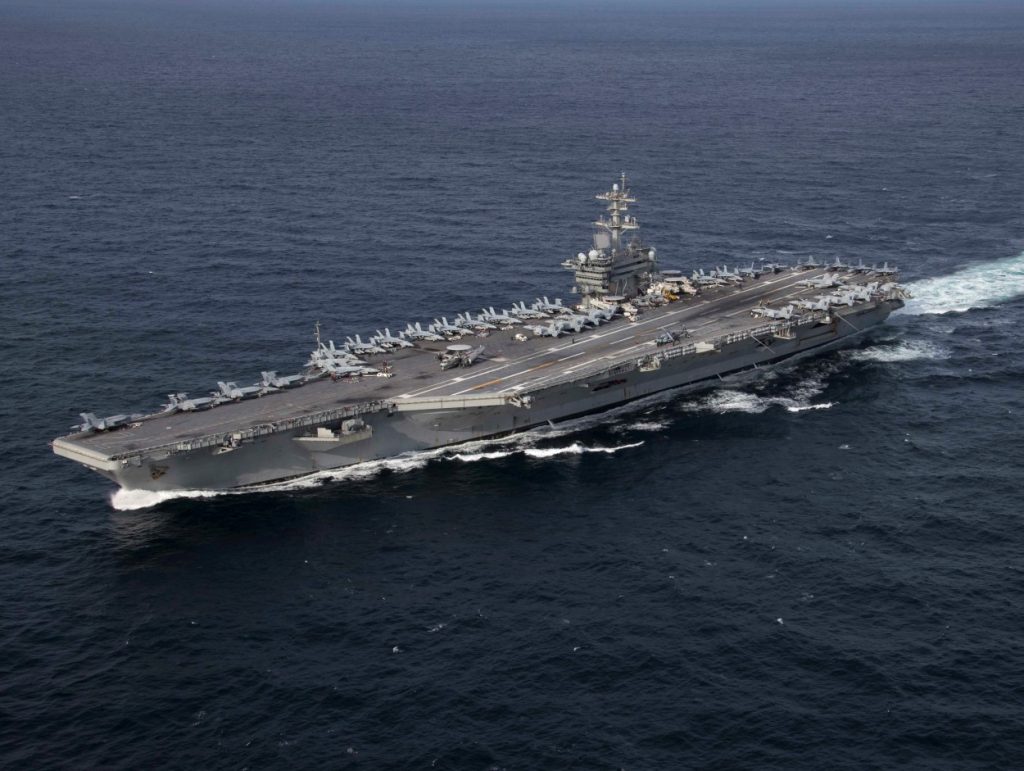
New Delhi: Thai police have intensified patrols and checks against prostitution in Pattaya as the resort city prepares for the arrival of nearly 5,000 US sailors and marines aboard the aircraft carrier USS Abraham Lincoln. The carrier and two accompanying US Navy vessels are scheduled to call at Laem Chabang port from Wednesday to Sunday, after an exceptionally long Middle East deployment.
Police operations over the weekend resulted in between 40 and 50 people being detained on suspicion of prostitution, while additional personnel were assigned to the beachfront and main nightlife districts. The Pattaya police chief, Anek Srathongyoo, acknowledged that enforcing the law remained difficult because solicitation could take place in public areas without immediately coming to the attention of the authorities, Reuters reported.
Prostitution is illegal in Thailand, although the sex trade remains conspicuous in parts of Pattaya and Bangkok despite periodic enforcement drives. The arrival of thousands of service personnel has consequently presented the authorities with the parallel tasks of preventing illegal activity and ensuring the safety of visitors, local residents and workers.
Officials are planning an increased police presence along Pattaya Beach and Walking Street, while businesses have been warned against overcharging visiting personnel. Following consultations with US representatives, the city also said the service members would be prohibited from using marijuana or taking part in activities such as parasailing during their shore leave, according to an Associated Press report.
The mayor of Pattaya, Poramet Ngampichet, estimated that each visiting service member could spend between 1,000 and 3,000 baht a day, depending on the duration of shore leave and whether accommodation was required. If every member of the contingent visited the city and spent within that range, businesses could receive between 5 million and 15 million baht, although shore leave is normally staggered and some personnel may travel to Bangkok.
Restaurants, hotels, transport providers and entertainment establishments hope the port call will provide temporary relief during a difficult period for the local tourism industry. However, the scale of the benefit will depend on how many personnel are authorized to leave the ships, where they travel and how long they remain ashore, Nation Thailand reported.
Pattaya’s association with visiting American troops dates to the Vietnam War, when the former fishing community developed into a major rest-and-recreation destination. The city has since attempted to diversify its image by promoting beaches, cultural attractions, conferences and family tourism, but its extensive adult-entertainment sector continues to shape international perceptions.
The USS Abraham Lincoln left San Diego on November 21, 2025, and was subsequently redirected to the Middle East to support US military operations during the war with Iran. It went for more than 250 consecutive days without a port call – described as a modern-era record – before being relieved in the region by the USS George Washington and beginning its journey home.
The extended deployment prompted reports of supply shortages, fatigue, falling morale and mental-health concerns among some crew members. US defence officials disputed descriptions of deteriorating conditions, while the Navy said the carrier had counsellors, chaplains and medical personnel available and that its commanders were continuously assessing the crew’s psychological readiness, according to Navy Times.
The Royal Thai Navy has described the stop as a routine visit intended to provide rest, recuperation and logistical support, rather than a joint military exercise. Thailand has been a US treaty ally since 1954 and was designated a major non-Nato ally in 2003, giving the port call a wider defence-diplomatic context beyond its immediate economic and policing implications.
For Pattaya, the visit offers a potentially valuable injection of tourist spending but also exposes the persistent tension between its economic dependence on nightlife and its efforts to curb exploitation and illegal activity. The effectiveness of the security operation will therefore be judged not merely by the number of detentions, but by whether the city can protect visitors and vulnerable people without resorting to indiscriminate enforcement.