


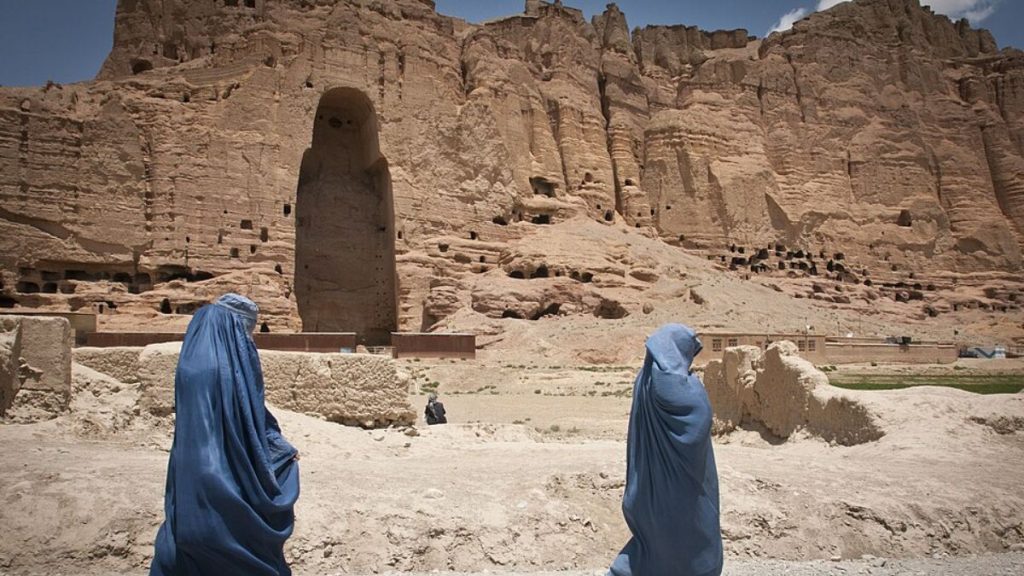
New Delhi: Afghanistan’s Taliban authorities are preparing to mark August 15 as the fifth anniversary of what they describe as their victory and the end of foreign occupation. For millions of Afghans, however, the date also marks five years since the previous political order collapsed and everyday life changed profoundly, particularly for women who had studied, worked and participated in public life under the former republic.
The Taliban entered Kabul on August 15, 2021, after a rapid military advance across Afghanistan and the collapse of government forces. The president, Ashraf Ghani, left the country and the Western-backed republic established after 2001 effectively ceased to exist.
The takeover came as US and Nato forces withdrew after two decades of war. It ended the nationwide conflict between Taliban fighters and the former Afghan security forces, but also ushered in a radically different political and social system.
Five years later, the central question is no longer simply whether Afghanistan is more secure. It is whether ordinary Afghans are living better lives.
Afghan life then and now
For Afghans who lived outside Taliban-controlled areas before August 2021, particularly in Kabul, Herat, Mazar-i-Sharif and other government-held urban centres, the change has been especially profound.
The Afghanistan of the former republic should not be romanticized. Poverty was widespread, corruption weakened institutions, the war killed civilians and conservative social practices limited women even in areas controlled by the government.
Nor were the gains of the post-2001 period evenly distributed. Girls in insecure rural districts and areas where the Taliban exercised influence often faced restrictions on schooling long before Kabul fell. A professional woman in the capital could therefore experience an Afghanistan very different from that of a woman in a remote district of Helmand or Kandahar.
Yet in areas where the republic retained functioning institutions, the expansion of women’s education and public life was substantial.
Between 2001 and 2021, millions of girls returned to classrooms. More than 2.5 million girls were enrolled in primary schools, while the number of women and girls in higher education rose from about 5,000 in 2001 to more than 90,000 by 2018. Female literacy increased from 13% in 2000 to about 30% in 2018.
Women increasingly entered professions that had largely been closed to them during the Taliban’s first period in power. Schools and universities employed nearly 80,000 women instructors, including more than 2,000 university professors.
Women worked as doctors, nurses, journalists, television presenters, lawyers, prosecutors, judges, police officers, soldiers, entrepreneurs and civil society activists. Of nearly 400,000 civil servants under the republic, more than 100,000 were women.
Their presence extended into politics. In the last parliament under the republic, 89 of its 352 members were women. Women also served as ministers, deputy ministers, ambassadors, governors, mayors and other public officials.
Those figures did not make Afghanistan equal. They did, however, mean that for a growing number of girls, particularly in towns and cities outside Taliban control, there was a visible pathway from school to university and then into a profession.
For many, that pathway has now disappeared.
Afghanistan is the only country where girls and women are barred from secondary and higher education. About 2.2 million adolescent girls are excluded from secondary schooling as a result of the restrictions.
The effect grows with every academic year. A girl who completed primary school in 2021 but was prevented from continuing her education is no longer merely missing individual classes. Five years later, she has lost much of the educational period that should have prepared her for university or skilled employment.
That has consequences far beyond individual aspirations.
Without girls progressing through secondary school and university, Afghanistan is gradually weakening its future supply of female doctors, nurses, teachers and other skilled workers. This is particularly consequential in a society where restrictions on interaction between unrelated men and women can make female health and education workers essential for providing services to other women.
Women pushed out of work, public
The transformation is equally visible in the workplace. Before the Taliban returned to power, female labour force participation was about 19%. Employment among women has since fallen sharply. UN data have put employment among female household members at about 7%, compared with more than 80% among men.
Women who once travelled each morning to ministries, schools, universities, courts, hospitals, television studios and private offices have been excluded from large sections of the formal economy.
Restrictions on female government employees and women working with non-governmental and international organizations have narrowed opportunities further. Rules governing movement and interaction with men have also made it more difficult to take up jobs that technically remain open to women.
The media industry provides a stark example. More than 80% of women who worked in Afghan media have lost their jobs since 2021.
Behind each statistic is a wider economic loss. When a teacher, journalist or civil servant stops receiving a salary, the effect is not confined to her career. Her household loses income and the wider economy loses skills in which families, institutions and international donors had invested for years.
Some women have responded by moving into home-based or small businesses, including tailoring, handicrafts, food processing and agriculture. Such enterprises can provide crucial household income but do not fully replace formal employment, professional advancement or financial independence.
The restrictions increasingly shape even the most routine parts of life.
New UN women research released around the fifth anniversary found that 52% of women surveyed leave their homes twice a month or less. The typical Afghan woman leaves home only once or twice a month, while 96% of men surveyed leave home every day.
The contrast captures how profoundly public space has changed.
For women, restrictions on movement affect much more than leisure. They can limit access to employment, markets, healthcare, education, social networks and government services. A country can therefore become safer from battlefield violence while simultaneously becoming much smaller in practical terms for half its population.
Safer from war, but are Afghans better off?
The Taliban’s strongest claim to improvement since 2021 lies in security.
The nationwide frontline war between Taliban fighters and the former government forces ended with the collapse of the republic. For rural families that had spent years living amid air strikes, roadside bombs, military operations, night raids and clashes between insurgents and security forces, the disappearance of large-scale fighting was a tangible change.
That improvement should not be understated. The communities that were once battlefields no longer experience the same sustained national conflict.
But physical security is only one component of quality of life.
Afghanistan’s economy has returned to growth after the severe contraction that followed the 2021 political transition. The World Bank estimated real GDP growth at 4.8%, but the return of about 3.7 million Afghans and rapid population growth meant GDP per person fell by 5.6%.
Inflation had risen to 7.6% by March this year, putting additional pressure on household purchasing power.
The broader measure of living conditions is even more sobering. UNDP found that 74% of Afghans were unable to meet their basic subsistence needs in 2025, with deprivation affecting food, water, housing, healthcare, heating and clothing.
There has been little meaningful improvement in that measure for three consecutive years.
Afghanistan also remains heavily dependent on humanitarian assistance. Around 21.9 million people, about 45% of the population, are projected to require humanitarian support in 2026.
The World Food Programme says 17.4 million people require urgent food assistance, while 4.9 million women and children are expected to need treatment or support for malnutrition.
Nor has violence disappeared altogether.
Terrorist attacks remain a threat and Afghanistan’s deteriorating relationship with Pakistan has produced another source of insecurity. Between January 1 and March 31, 2026, the UN Assistance Mission in Afghanistan documented 372 civilians killed and 397 injured as a result of cross-border armed violence affecting Afghanistan.
The five-year balance sheet is therefore contradictory.
For many Afghans, particularly in communities that once sat along active front lines, life is less exposed to nationwide warfare. But lower battlefield violence has not translated into broad prosperity, secure livelihoods or better access to basic needs.
For women, the contrast is sharper still. A woman may face less risk of being caught between two armies than she did before August 2021, yet she may also have lost her school, university, profession and much of her ability to move independently through public life.
India returns as Pakistan ties fray
India’s approach has meanwhile evolved from the caution that followed the Taliban takeover towards sustained diplomatic and economic engagement.
New Delhi deployed a technical team at its mission in Kabul in June 2022 to coordinate humanitarian assistance and maintain engagement with the Afghan people.
The relationship gathered momentum in January 2025 when the foreign secretary, Vikram Misri, met Afghanistan’s acting foreign minister, Amir Khan Muttaqi. Their discussions covered humanitarian assistance, development projects, trade, visas and the use of Iran’s Chabahar port.
A significant expansion followed when Muttaqi visited New Delhi in October 2025.
India and Afghanistan discussed healthcare, development projects, trade, investment, air freight and capacity-building. The Afghan side also said it would not allow Afghan territory to be used against India.
India subsequently upgraded its Technical Mission in Kabul to the status of the Embassy of India in Afghanistan in October 2025.
Engagement has continued since then. On July 9, officials held the fourth meeting of the Joint Committee between the foreign ministries of Afghanistan and India in New Delhi, with political ties, economic cooperation, visas and trade among the issues discussed.
This deepening engagement has acquired wider geopolitical significance because Afghanistan’s relations with Pakistan have moved in the opposite direction.
Islamabad says Tehrik-e-Taliban Pakistan terrorists and associated groups operate from Afghan territory and have used sanctuaries there to carry out attacks inside Pakistan. It has repeatedly demanded what it describes as concrete and verifiable action by the Taliban authorities against the TTP.
Kabul disputes Pakistan’s characterization of the issue and has maintained that Afghan territory should not be used against other countries. The disagreement has increasingly spilled beyond diplomacy into border closures, military exchanges and cross-border strikes.
India did not create the deterioration in Afghanistan-Pakistan relations. The immediate drivers are the TTP dispute, longstanding border tensions and disagreement over responsibility for terrorism inside Pakistan.
India’s expanding engagement does, however, alter the strategic environment in which that dispute is unfolding.
Chabahar port in Iran and direct India-Afghanistan air freight links give Kabul alternatives to transit routes through Pakistan. The more Afghanistan can diversify trade and diplomatic relationships, the less exclusively dependent it is on any single neighbour for access to the outside world.
That could potentially reduce Pakistan’s leverage over Afghanistan’s external connectivity, although the extent of that shift should not be overstated. Geography ensures that Pakistan will remain an important neighbour and trading route for Afghanistan.
For India, renewed engagement serves a different set of interests. It restores a diplomatic presence in a country where New Delhi made substantial development investments before 2021, keeps channels open with the authorities controlling Afghan territory and allows India to directly raise its central security concern: that Afghanistan should not become a base for terrorist groups targeting India.
It would therefore be misleading to describe the emerging relationship as an India-Taliban alignment against Pakistan.
What is developing instead is a more fluid regional balance. Afghanistan is seeking wider political and economic options, India is rebuilding influence it lost after August 2021 and Pakistan is discovering that the Taliban’s return to Kabul has not produced the uncomplicated strategic relationship many in Islamabad once expected.