


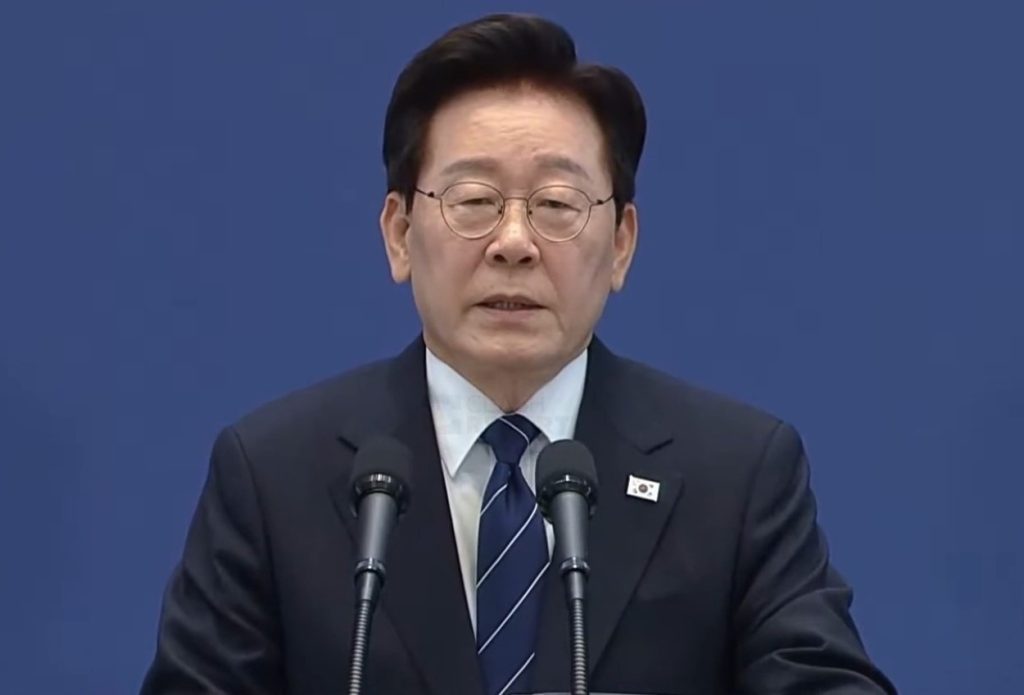
New Delhi: South Korea’s president, Lee Jae-myung, has ruled out sending troops or military assets to back the United States’ war against Iran, resisting weeks of pressure from Washington. Speaking at a news conference in Seoul on Friday, Lee said his government would not be drawn into any deployment that could pull the country into the conflict.
The stance sets Seoul on a collision course with the US president, Donald Trump, who has criticized South Korea for what he called an inadequate contribution to the war effort. Trump’s has spent weeks pressing Seoul, in talks held in both Washington and the South Korean capital, for troops, logistical backing or financial support toward the Iran campaign.
“There won’t be deployment that would involve or enter war. I can tell you that very clearly,” Lee said, adding that no military assets would be sent for that purpose.
But he left the door open to a narrower administration contribution, saying he was examining whether South Korea should do more to protect commercial shipping and crude oil cargoes moving through the region. He pointed to the navy’s existing anti-piracy mission off the coast of Somalia as the kind of role Seoul might expand.
The distinction carries real weight for South Korea’s economy. The Strait of Hormuz is the source of 61 per cent of the country’s crude oil imports and 54 per cent of its naphtha imports in 2025.
Dozens of South Korean-operated transport vessels are reported to pass through the strait regularly, according to accounts tracking the war’s fallout on regional trade. Any move to send military assets to the Gulf would also require parliamentary approval, and Seoul’s presidential office has denied reports that Washington set a deadline for a decision.
Iran’s foreign ministry has already warned Seoul against any military role in Gulf operations, cautioning that participation would be treated as support for American aggression with serious consequences. That warning is likely to weigh further on a government already facing resistance at home.
Public opinion in South Korea has hardened against involvement. Protests have broken out in recent weeks opposing any deployment to the Strait of Hormuz, reflecting broader unease about being drawn into a distant war with little direct bearing on Korean security.
Trump has not hidden his frustration with allies who have declined to help. In a Fox News interview in August, he said other countries had turned down his requests, adding that he would “remember” their refusal.
He has also pared back major joint military exercises with South Korea this summer, a move Seoul read as a signal of Washington’s displeasure. The reduced drills came even as tensions with North Korea remain unresolved and Pyongyang continues to expand its nuclear arsenal.
On that front, Lee struck a more hopeful note, saying Trump appeared genuinely interested in reviving dialogue with North Korea’s leader, Kim Jong-un. He said Seoul was continuing quiet coordination work to help facilitate a meeting, though he cautioned that success was far from guaranteed.
Trump has separately said he wants to meet Kim before the year is out, hoping to recreate the rapport the two leaders built during his first term. He has also claimed North Korea now possesses 57 nuclear weapons, a figure that, if accurate, would mark a substantial expansion of Pyongyang’s arsenal since their last summit.
The dispute over Iran comes at a delicate moment in the wider US-South Korea relationship. Seoul is also negotiating the terms of a $350 billion investment commitment in American manufacturing, agreed last year in exchange for Washington lowering tariffs on Korean goods to 15 per cent.
Lee acknowledged that concerns over the commercial viability of that package remain the main sticking point in talks, though he said the two sides were nearing an agreement. A parliamentary briefing on the investment plan has been postponed this week, underlining how closely the trade and security disputes are becoming intertwined.
The nearly 28,500 US troops stationed in South Korea remain unaffected by the dispute, and Washington has announced no changes to that arrangement. Both allies are due to hold their annual security consultative meeting later this year, where the disagreement over Iran is likely to resurface.