


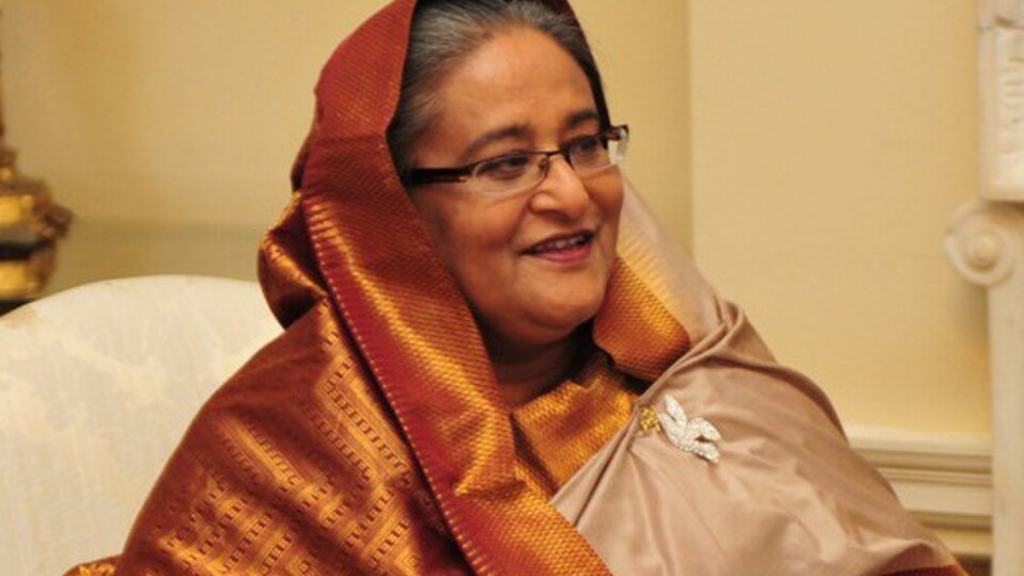
New Delhi: December 16 is the day Bangladesh marks its victory in the 1971 Liberation War, and Sheikh Hasina wants to be back in the country by then. The former prime minister, who is in India and has been sentenced to death in Bangladesh, is reportedly weighing a land route home, a move that Dhaka has already said it will not treat as a simple return. The Petrapole-Benapole route is reportedly among the options. Awami League leaders and supporters have surveyed several potential entry points along the borders of West Bengal and Tripura.
A land journey is being explored because Hasina does not currently hold a valid passport for international air travel, the Indian Express reported. Bangladesh withdrew her diplomatic passport on August 22, 2024, followed by the cancellation of her national identity card on February 16, 2025.
The issue of fresh travel documents has also been taken up with Bangladeshi authorities. On November 9, Hasina’s lawyers from London’s Matrix Chambers approached the Bangladesh high commission in New Delhi, seeking a new passport and national identity card to enable her return.
Why Hasina chose December 16
December 16 is observed as Victory Day in Bangladesh. It marks the end of the 1971 Liberation War, when Pakistani forces in East Pakistan surrendered to the joint command of the Indian armed forces and the Mukti Bahini. The surrender led to the creation of an independent Bangladesh.
After first saying she wanted to return on August 5, 2026, the second anniversary of her ouster, Hasina proposed December 16 as her date of return. She left for India on August 5, 2024, amid protests against her rule.
Her spokesperson had earlier said Hasina hoped the Bangladesh government under Prime Minister Tarique Rahman would provide an aircraft from Delhi to Dhaka. But Dhaka has taken a different stance.
Bangladesh says Hasina should be returned through extradition, either in handcuffs or under strict surveillance. Hasina has been sentenced to death in Bangladesh. She has said she is ready to return on her own, without extradition.
Return plan adds pressure to India-Bangladesh ties
The planned return has put the extradition issue back in the spotlight. It is at the centre of Bangladesh’s diplomatic relations with India. New Delhi has said it is a legal matter and will be handled as such.
The development comes as both countries were trying to strengthen bilateral relations. However, according to a report, Hasina’s planned trip has made the matter difficult for the two nations. A visit by Rahman to India had been discussed for sometime between late November and late December, but this is now unlikely.
Bangladesh’s domestic politics is also tense after recent clashes between Awami League members and workers of the ruling Bangladesh Nationalist Party. Hasina’s announcement has coincided with these clashes.
The land-route plan adds a new dimension. Dhaka’s stance suggests she would be arrested if she entered the country by this route.
Zara shifts orders from Bangladesh
Bangladesh’s apparel sector has also been hit by labour unrest, prompting global fashion brands to look for other production sites.
According to Reuters, global clothing brands such as Zara, H&M and Marks & Spencer redirected orders worth almost $254 million away from Bangladesh between November 1 and 18. Three factory owners told the agency the redirected orders were equivalent to about one-tenth of their monthly orders.
Most of the work went to India, Vietnam, Cambodia and Indonesia. The owners cited labour unrest and production and delivery problems as reasons for the shift.
Worker protests in the garment sector caused production losses of more than $400 million, according to the Bangladesh Garment Manufacturers and Exporters Association. The protests followed a 36 per cent increase in the minimum wage, which workers said fell short of their expectations.
The disruption matters because the garment industry accounts for more than 80 per cent of Bangladesh’s export earnings and almost 40 per cent of its manufacturing employment. Some factory owners also cited energy shortages, high raw material costs and production delays.
According to the reports, the shift in orders is due to concerns about labour unrest and production reliability, not any direct link to Hasina’s proposed return.