


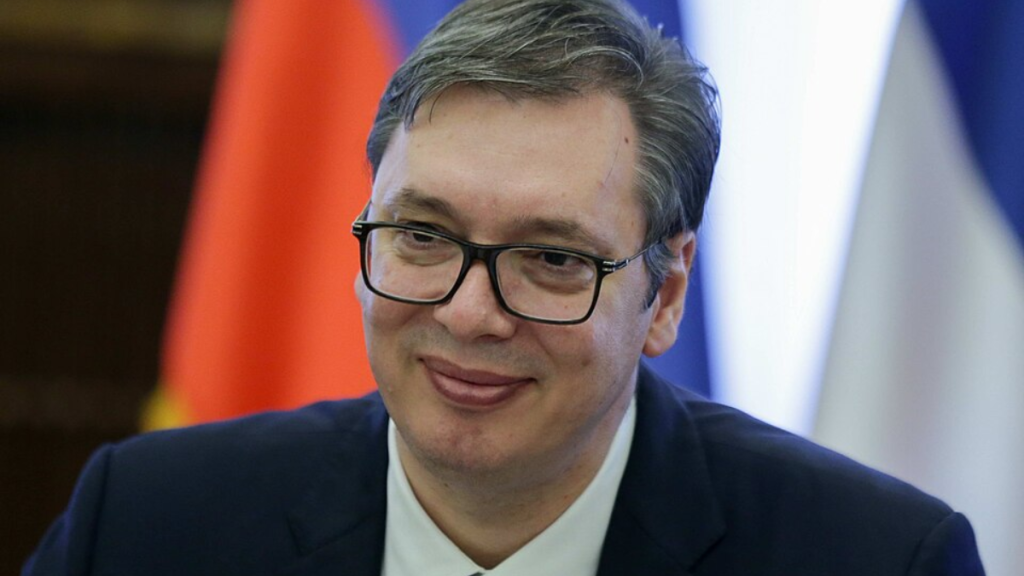
New Delhi: Serbia’s student-led opposition “Students’ List” has secured a projected victory in the parliamentary election. The result deals a major blow to Aleksandar Vucic’s ruling political camp after nearly two years of anti-government protests. Vucic’s conceded defeat on Sunday, after preliminary figures showed his alliance trailing the student list.
According to preliminary results reported by Serbia’s republic electoral commission (RIK) quoted by Tanjug on Monday, the Students’ List secured 52.54 per cent of the vote, while the Aleksandar Vucic’s alliance received 39.29 per cent. The figures were based on results from 8,077 of the country’s 8,392 polling stations processed at the time.
The protests began after a deadly infrastructure disaster in November 2024. They later grew into a nationwide campaign against corruption, government negligence and alleged political interference in public institutions.
How the protests began
On November 1, 2024, a concrete canopy collapsed at the railway station in Novi Sad, Serbia’s second-largest city. The disaster killed 16 people, renovations to the station had just been completed, which raised issues regarding building codes and construction management.
After incident students launched protests demanding accountability for the deaths. They also called for the release of documents related to the renovation. University blockades and street demonstrations soon spread to other cities, including the capital, Belgrade.
The movement gradually attracted farmers, teachers, actors, academics and other sections of society. In March 2025, thousands gathered in Belgrade for a major anti-government demonstration. The rally increased pressure on Vucic’s administration.
The demonstrators extended their list of demands to include the fight against corruption and the establishment of transparency and democracy within the government. It was alleged that the government under Vucic was exerting pressure on the independent media and was politicizing the country’s institutions.
The government has denied the charges of corruption and rejected charges of political interference.
The students were mobilized via the university assemblies and local associations. This organizational setup assisted in expanding the movement all over the nation. Eventually, they decided to take part in the general election via the Students’ List.
The movement fielded candidates from different professional backgrounds rather than students themselves. Its campaign focused on fighting corruption, protecting citizens’ rights and reforming public institutions. It also promised greater media independence and an end to political appointments in state-owned enterprises.
Who will lead Serbia now?
The Students’ List’s leading candidate was Ilija Srdanovic, a cardiology professor from Novi Sad. However, the movement did not field students as parliamentary candidates. Its elected representatives must now determine the leadership and composition of the next government.
Vucic’s Serbian Progressive Party (SNS) has dominated Serbian politics since coming to power in 2012. He served as prime minister from 2014 to 2017. He then became president in 2017 and won re-election in 2022. His presidential term was due to run until 2027.
During the campaign, Vucic accused protesters of seeking to destabilize Serbia. He also alleged that foreign forces were supporting the movement. He conceded defeat on Sunday after preliminary projections showed his alliance trailing the Students’ List.
What does the Students’ List promise?
The movement has pledged to tackle corruption and strengthen the rule of law. It also wants to reform the media and reduce political influence over public institutions. Its programme calls for action against officials accused of violating rules while handling protests. It also seeks to prevent political loyalty from determining appointments to state-owned enterprises.
The Students’ List’s victory brings an end to the ruling alliance’s parliamentary dominance, with the formation of the next government and the selection of its prime minister now the key developments to watch.