


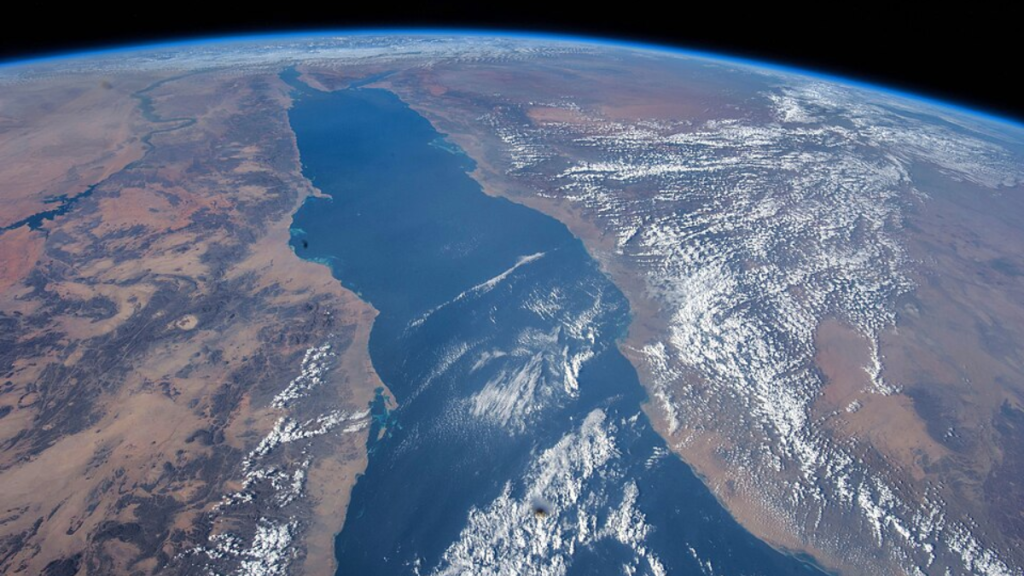
New Delhi: Saudi Arabia’s oil shipments through the Red Sea are facing growing risks as Yemen’s Houthi rebels threaten Saudi-linked ships. Several tankers carrying Saudi crude have started going “dark”, making their movements harder to track as the security situation around the region’s key shipping routes worsens.
Saudi oil is being shipped from the Red Sea port of Yanbu, but some tankers are now switching off their automatic identification system (AIS) while sailing. The system normally broadcasts a vessel’s location, speed and direction, allowing ships and authorities to track its movement.
By switching off AIS, the tankers become harder to identify and follow. This is making it difficult for shipping companies, traders and analysts to know exactly how much Saudi crude is being loaded and transported from Yanbu.
The move comes after the Houthis announced a maritime blockade against Saudi Arabia in July and threatened Saudi-linked shipping. The group has also claimed attacks on vessels and oil facilities linked to Saudi Arabia, raising fears that ships using the Red Sea could come under attack.
The threat is particularly important for Saudi Arabia because the Bab el-Mandeb Strait is a key route connecting the Red Sea with the Gulf of Aden. Some large oil tankers are now avoiding the waterway because of security concerns.
Saudi Arabia is also trying to move more crude through alternative routes. More Saudi oil is being sent north through the Suez Canal, while the Sumed pipeline in Egypt is being used to move crude between the Red Sea and the Mediterranean.
The security risks are also increasing the cost of shipping. Tankers operating in the area are facing higher war-risk insurance costs, while some operators are choosing longer routes to avoid dangerous waters.
Houthi attack kills six in Red Sea
The threat became more serious after a Houthi missile attack on a vessel in the Red Sea killed six people. The attack involved three ballistic missiles and highlighted the danger faced by ships travelling through the region.
The attack comes as shipping through the Strait of Hormuz is also facing major disruption because of the conflict involving Iran and the United States. With both routes under pressure, concern is rising over the flow of oil and other goods from the Middle East to world markets.
A prolonged disruption could force more ships to take longer routes around Africa. This would increase sailing time, fuel use and insurance costs and could further raise pressure on global energy markets.
Oil spill spreads along Oman coast
The region is also dealing with an oil spill after the tanker Caroline Bezengi was damaged off the coast of Oman. The vessel was carrying nearly one million barrels of crude oil when it ran into trouble and began leaking.
The oil has now reached parts of Oman’s mainland coast, while authorities are concerned that it could spread further towards Masirah Island. The spill has also threatened environmentally sensitive waters around the Hallaniyat Islands.
Satellite images showed the oil slick spreading across more than 600 square kilometres. Strong winds and sea currents are pushing the oil towards the coast, making efforts to contain the spill more difficult.
The tanker is believed to be part of Russia’s so-called “shadow fleet”, a group of vessels used to transport Russian oil despite Western sanctions. The exact cause of the incident remains unclear and no group has claimed responsibility.
The spill could damage marine life and coastal ecosystems in Oman, particularly because some of the affected areas are environmentally protected.
Middle East shipping routes under pressure
The developments in the Red Sea, Gulf of Aden and Strait of Hormuz show how security threats are increasingly affecting commercial shipping and energy supplies. For Saudi Arabia, keeping oil exports moving has become more difficult as tankers avoid risky waters and operate without visible tracking signals. For the global market, the combination of attacks, longer routes, higher insurance costs and the Oman oil spill is adding to concerns over the security of Middle East energy supplies