


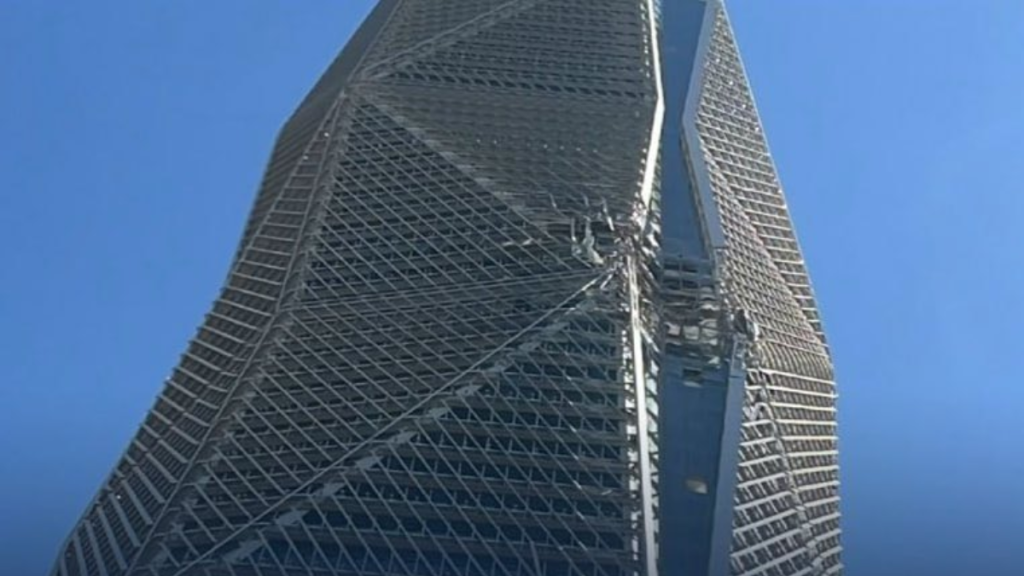
New Delhi: Saudi Arabia has warned of possible retaliatory action after a Houthi missile attack damaged a major skyscraper in Riyadh on Thursday. The strike hit the King Abdullah Financial District (KAFD), damaging several floors of the building housing the headquarters of Saudi Arabia’s sovereign wealth fund.
Saudi Arabia’s civil defence confirmed that the attack also damaged nearby buildings, but no casualties or injuries were reported, the Saudi Press Agency reported.
The missile strike shattered windows across seven to eight floors and damaged sections of the tower’s metal exterior. Three people familiar with the incident said the building was hit by an incoming Houthi missile, Reuters reported. The Saudi-led coalition also confirmed that it had dealt with a missile threat directed towards the capital, with debris falling in the area.
Later, Houthis claimed that they had targeted Riyadh’s financial district twice on Thursday, including an attack in the early morning. The group also claimed strikes on King Khalid International Airport, Khamis Mushait airbase and SADAF Petrochemical Company in Jubail. Saudi authorities had not independently confirmed these additional claims.
In response, Saudi Arabia’s foreign ministry strongly condemned the attacks and said the kingdom reserved the right to take all necessary measures to protect its sovereignty, citizens and national assets, QNA reported. It also called on the international community, particularly the permanent members of the UN security council, to take action against the continued attacks.
Why is the PIF Tower an important target?
The damaged skyscraper houses the headquarters of Saudi Arabia’s Public Investment Fund (PIF), one of the world’s largest sovereign wealth funds. The fund plays a central role in crown prince of Saudia Arabia, Mohammed bin Salman, Vision 2030 programme, which aims to reduce the kingdom’s dependence on oil and develop sectors such as tourism, technology, infrastructure and finance.
The King Abdullah Financial District is also a major centre for international businesses and financial institutions. Authorities closed the district to visitors following Thursday’s attack as emergency teams responded to the damage.
This is the second time in less than two weeks that a major building in Riyadh’s financial district has been damaged. On November 8, a Houthi attack damaged a building belonging to Saudi state-owned oil company Aramco.
The latest attack comes amid renewed fighting between Saudi Arabia and Yemen’s Iran-backed Houthi group. The conflict intensified in July 2026, with the Houthis stepping up attacks on Saudi airports, military installations and energy infrastructure.
Meanwhile, Houthi-run Saba news agency reported that Saudi aircraft carried out airstrikes on the Yemeni capital, Sanaa, early on Friday. The report did not provide further details, and Saudi authorities had not immediately commented on the reported strikes.
Saudi officials are also preparing for a prolonged military campaign. The kingdom expects its campaign against the Houthis to continue for up to six months, citing Western officials and another source familiar with Saudi Arabia’s plans, Reuters reported.
According to report, on Wednesday, Mohammed bin Salman met US Central Command chief, Admiral Brad Cooper, in Riyadh. The discussions covered military cooperation and regional developments amid growing security concerns.
Saudi Arabia first intervened in Yemen in 2015, leading a military coalition after the Houthis seized the capital, Sanaa, and large parts of the country. A ceasefire reached in 2022 reduced the fighting, but renewed hostilities have now brought the conflict back into focus, raising concerns over the security of Saudi infrastructure and regional trade routes.