


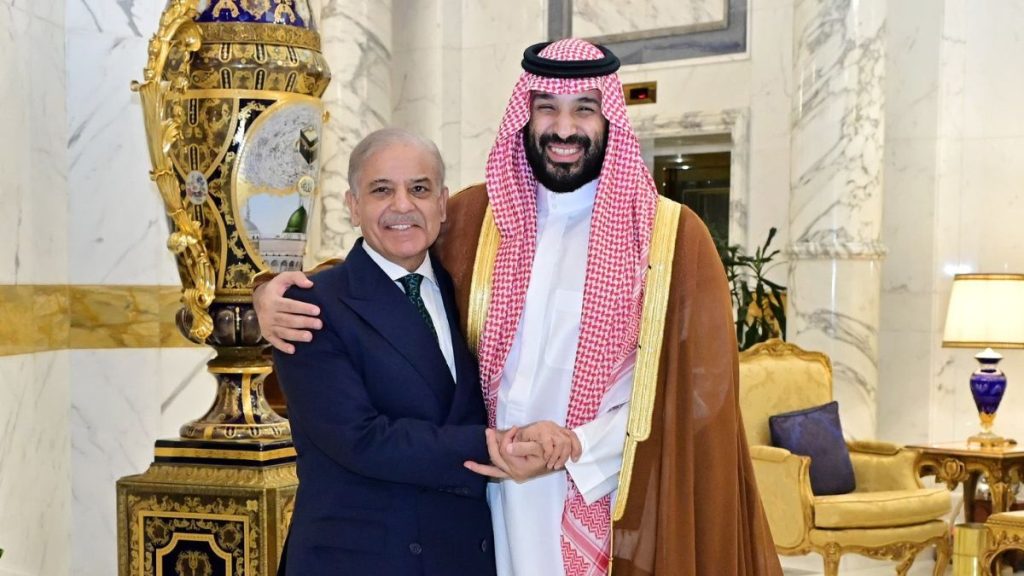
New Delhi: Saudi Arabia has rolled over a $3 billion financial deposit for Pakistan, easing immediate repayment pressure as prospects of securing a proposed $10 billion US liquidity-support facility remain uncertain. The extension comes as Islamabad seeks longer-term financing through international bond markets while attempting to strengthen foreign-exchange reserves and reduce external debt.
Pakistan’s finance minister, Muhammad Aurangzeb, confirmed that Riyadh had extended the facility, which matured on October 31, without disclosing a revised repayment date, Dawn reported on Thursday. The rollover postpones an existing repayment obligation rather than providing fresh financial assistance.
Saudi Arabia provided the additional $3 billion in April after Pakistan faced $3.5 billion in repayments to the United Arab Emirates. Riyadh had separately extended its existing $5 billion deposit facility until 2028, while Aurangzeb recently discussed financial cooperation with Saudi finance minister, Mohammed Al-Jadaan, during World Bank-IMF meetings in Bangkok.
Aurangzeb said Islamabad was not seeking additional Saudi assistance, citing improved foreign-exchange reserves and planned access to international capital markets. He maintained that Pakistan had sufficient financial buffers to meet immediate requirements.
The proposed $10 billion exchange stabilization support facility (ESSF), requested from Washington in July, remains uncertain. Aurangzeb said Pakistan had already achieved its objective of regaining international market access through a $3 billion bond issuance in September, which attracted approximately $6 billion in investor orders.
The minister said the American facility would provide additional liquidity if approved, but Islamabad could proceed without it. No formal US decision approving or rejecting the proposal has been announced.
Islamabad is also exploring financing through the US export-import bank and development finance corporation to support American investors and exporters operating in Pakistan. Aurangzeb distinguished these potential credit arrangements from the proposed ESSF, which was intended to provide liquidity support directly to the government.
Pakistan is considering further Eurobonds, Panda bonds in China, rupee-linked dollar-settled bonds and private placements. Aurangzeb said meetings with 70-80 institutional investors in Bangkok generated interest in five-year and 10-year maturities, although these discussions have not resulted in confirmed financing agreements.
The government aims to replace expensive short-term borrowing with longer-maturity instruments to reduce refinancing risks and avoid concentrating repayments.
Pakistan’s central bank reserves stood at $21.52 billion on October 23, while total liquid foreign-exchange reserves, including commercial banks, reached $26.75 billion, according to the State Bank of Pakistan. Aurangzeb said the government was targeting four months of import cover by the fiscal year’s end, compared with more than three months currently.
Pakistan expects the International Monetary Fund’s executive board to consider a $1.2 billion disbursement in December, Aurangzeb said. The anticipated funding remains subject to IMF approval.
The government is targeting a $4 billion reduction in external debt this fiscal year and another $3.5 billion next year, following a reported $4.5 billion reduction last year. Aurangzeb said annual external debt growth had slowed to approximately $1 billion over the past two years, compared with earlier increases of $5-6 billion.
The finance secretary, Imdadullah Bosal, said public debt declined from 75.1 per cent of GDP in 2022-23 to 68.6 per cent by June 2026, while annual debt growth slowed to 7.7 per cent. Foreign debt stood at approximately $98.2 billion in August.
Pakistan faces net external financing requirements of $11 billion after rollovers and refinancing, with $5 billion repaid during the fiscal year’s first four months and another $6 billion remaining. The Saudi extension reduces near-term repayment pressure as Islamabad pursues longer-term borrowing and continued creditor support.